

 The Home Growns
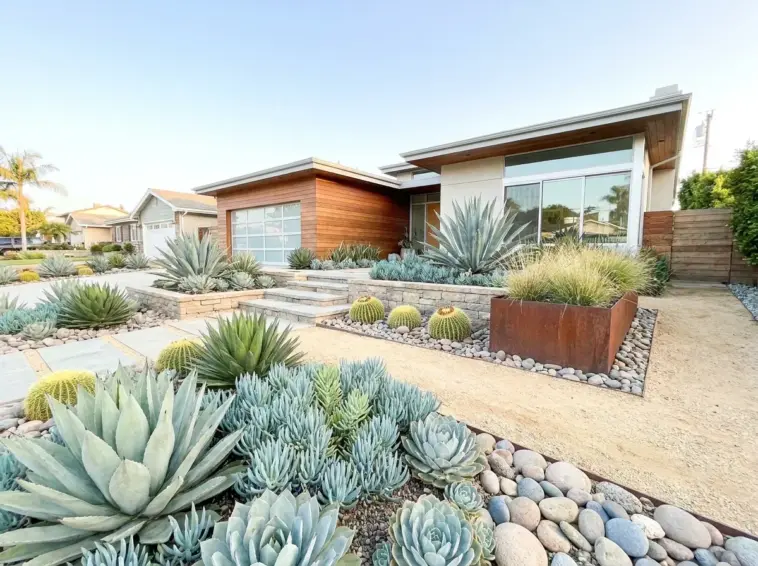
Let’s confess something right off the bat. I used to be an absolute serial killer when it came to drought tolerant plants.
Seriously, I once dropped nearly two hundred bucks on a gorgeous flat of echeveria rosettes, only to turn them into absolute mush in less than a month. It was incredibly embarrassing, especially since I’m supposed to be the gardening expert among my friends!
Most people think hiring a professional landscape architect—which can easily run you north of $5,000—is the only way to get that magazine-worthy look. But honestly, you don’t need a massive bank account to get a stunning modern garden design.
The crazy thing is that nearly 40% of standard nursery succulents actually die within their first year in home landscapes. It almost always boils down to simple, totally preventable beginner errors like awful soil drainage or terrible plant groupings.
After years of trial, error, and way too many dead plants, I finally cracked the secret layout rules that high-end designers use.
Today, I’m giving you the exact formulas, spacing ratios, and layout patterns to build a flawless succulent garden design without paying the premium pro price tag.
The Rule of Three: Layering Heights Like a Landscape Architect
I remember walking through a high-end estate tour a few years ago and feeling totally overwhelmed by how perfectly balanced their beds looked. My own front yard looked like a messy, flat salad bar by comparison, and I couldn’t figure out why until I discovered the designer’s golden layout rule.
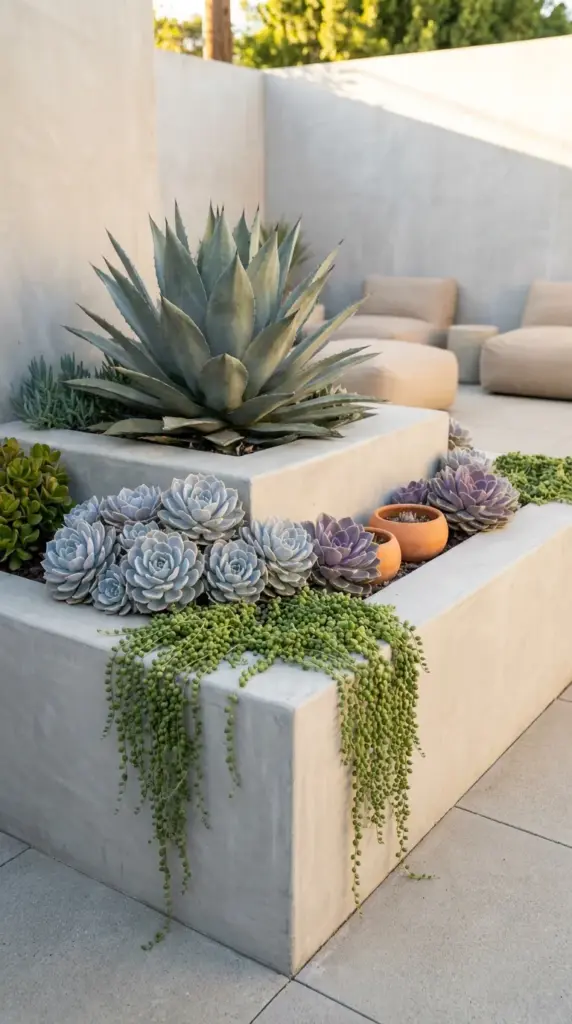
Take a close look at how this path uses different pot heights and plant sizes to build incredible depth. Notice how the taller accents draw your eye upward while the lower, spreading clusters fill out the ground space seamlessly.
Scaling the Heights with Thrillers and Fillers
Pro landscapers never just throw plants in the ground randomly; they design in three distinct vertical dimensions.
First, you need thriller elements to act as your bold architectural anchors. Think of things like massive, dramatic Agave, spiky Yucca, or dinner-plate Aeonium rosettes that instantly catch your eye from across the street.
Right below those big showstoppers, you pack in your filler elements to create lush volume. I love using tight Echeveria clusters, woody Jade, and powdery Blue Chalksticks to bridge the gap and hide any bare stems.
Softening the Edges with Spillers
Finally, you absolutely cannot forget the magical spiller elements to tie the whole scene together.
These are your cascading beauties like String of Pearls, plush Donkey’s Tail, or trailing Sedum that drape beautifully over retaining walls and container edges. They add movement and completely erase those harsh, unappealing hardscape lines.
Now that your plant hierarchy is perfectly sorted out, we need to talk about the absolute foundation of your garden’s survival. Go ahead and click that next button below so we can brew up the ultimate, top-secret soil cocktail that keeps nasty root rot far away from your precious new design!


GIPHY App Key not set. Please check settings