

 The Home Growns
How to Prune Bigleaf Hydrangeas Without Losing Next Year’s Flowers
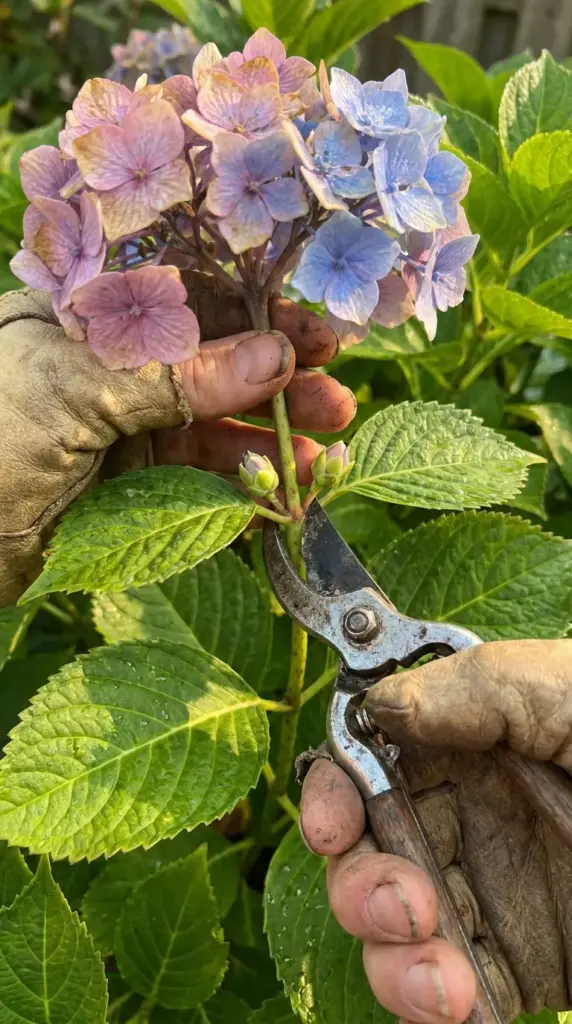
Prune Right After Flowering
Bigleaf hydrangea usually blooms on old wood hydrangeas, so the safest time to prune is right after the flowers fade in summer. Not in fall, not in late winter, and definitely not during a random March cleaning spree.
If you wait too long, the plant may already be setting buds for next year.
Deadhead, Don’t Chop
To remove faded flowers, trace the stem down to the first strong pair of buds and cut just above them. That’s the classic move for mophead hydrangea and lacecap hydrangea types.
If the plant still looks good, you can even leave dried blooms on through winter for a little winter bud protection. They’re not magic, but they help shield tender tips a bit.
Thin the Oldest Stems
Every year or two, remove a few of the oldest, thickest stems at the base. This improves airflow and encourages younger flowering stems.
I never remove all the old stems at once. I do a slow rotation, and the plant stays fuller and less dramatic about it.
Be Extra Careful in Cold Climates
Late frosts can damage buds even when you pruned perfectly. That’s why spring hydrangea care should start with patience, not panic.
Wait until you see where growth is emerging before removing stems, because what looks dead in April can surprise you in May. Next up, let’s talk about reblooming bigleaf and mountain hydrangeas, which bend the rules a little—hit the next button below.

GIPHY App Key not set. Please check settings