
 The Home Growns
The Safe-Pruning Basics Every Hydrangea Needs
Use the Right Tools
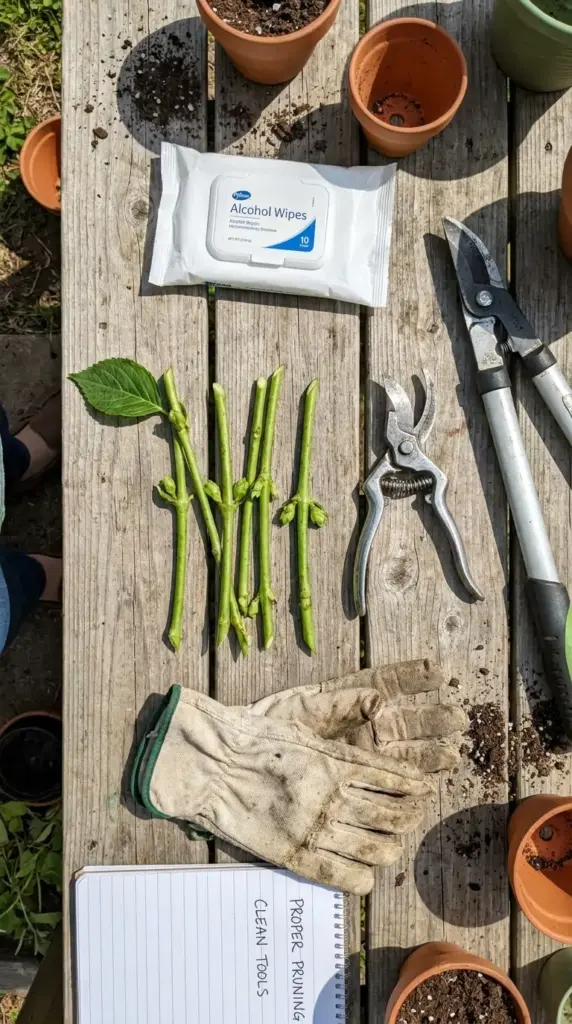
Grab bypass pruners for small stems and loppers for thicker ones. Clean blades matter more than people think, because dirty tools can spread disease.
I keep alcohol wipes in my garden bucket now. Learned that one after pruning a questionable shrub and then touching half the yard. Not my finest moment.
Know the Difference Between Deadheading and Pruning
Deadheading hydrangeas means removing spent blooms. That is not the same as cutting the whole shrub back.
Light shaping means tiny adjustments. Hard pruning means reducing major stem length or removing old canes, and that should only happen when the plant type allows it.
Cut in the Right Spot
Make cuts just above a healthy bud or pair of buds. Do not leave long stubs, and do not cut so close that you damage the bud itself.
For healthy bud cuts, I like to leave about a quarter inch above the bud. It’s simple, tidy, and easy to repeat.
Don’t Overdo It
Even on shrubs that tolerate pruning, taking too much at once can stress the plant. A good general limit for shaping is around a third of the shrub unless you’re doing a planned rejuvenation pruning on the right type.
Now that the foundation is set, let’s get into the most commonly butchered type of all: bigleaf hydrangea—hit the next button below.

GIPHY App Key not set. Please check settings