

 The Home Growns
How to Plant Your Prickly Pear Safely (Without the Ouch!)
My first time handling an Opuntia, I wore my favorite thick leather work gloves, thinking I was completely invincible. Big mistake—those microscopic, fuzzy-looking spines pierced right through the leather, and I spent three hours using tweezers under a magnifying glass just to clear my palms.
Mastering the Microscopic Menace of Glochids
What most people don’t realize is that the large, scary-looking needles aren’t the real problem here. The true villain is the cluster of tiny, hair-like prickles called glochids that sit right at the base of the main spines.
They easily detach with the slightest breeze or lightest touch, causing weeks of intense skin irritation if you aren’t careful. For ultimate safety, skip standard cloth options entirely and grab thick, heavy-duty rubber gloves for cactus handling instead.
A Foolproof Step-by-Step Repotting Strategy
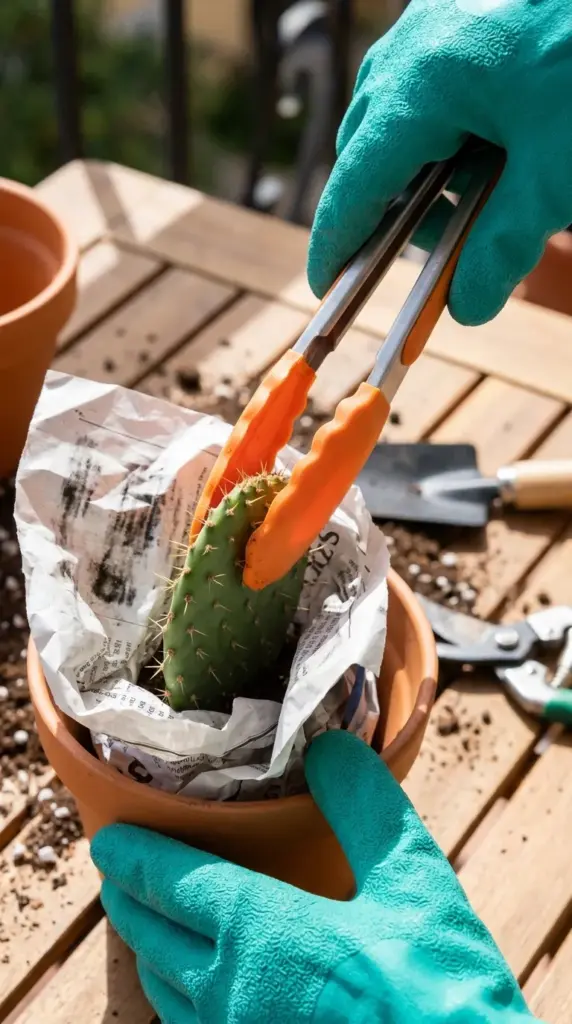
When executing your cactus potting routine, you want to build a mechanical barrier between your hands and the plant. I always recommend using a pair of silicone kitchen tongs for planting or wrapping a thick layer of rolled-up newspaper securely around the center pad.
Gently lift the root ball using your improvised paper handles, lower it into your custom gritty soil blend, and firm down the edges with a wooden spoon. Once nestled into its new home, remember these crucial repotting tips: leave the soil bone-dry for at least five full days to let any damaged roots heal cleanly before introducing moisture.
Now that your gorgeous cactus is safely potted without a single painful poke, we need to make sure it actually survives on your patio, so click that next button below to master the specific sunlight and seasonal secrets that keep these desert beauties thriving all year long.

GIPHY App Key not set. Please check settings