

 The Home Growns
From Garden to Table: Harvesting, Cooking & Sharing Your Bounty
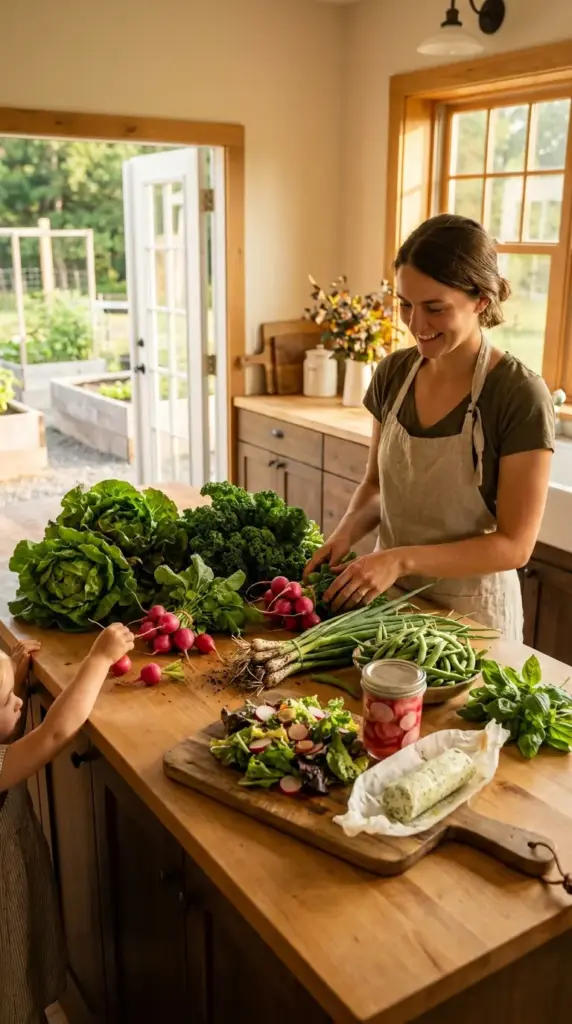
The first time I harvested a full salad’s worth of lettuce from my own raised bed, I stood in my kitchen and just stared at it.
I grew that. From a tiny seed. In my backyard. Unreal.
How to Know When Your Veggies Are Ready
This is where intuition meets observation — and it develops faster than you’d think.
Here are the most reliable harvest-ready signs for mini farm staples:
| Vegetable | Ready When… |
|---|---|
| Lettuce | Leaves are 4–6 inches long — harvest outer leaves first |
| Radishes | Shoulders visible at soil surface, about ¾–1 inch diameter |
| Spinach | Leaves are 3–4 inches — before flower stalks appear |
| Kale | Outer leaves reach 8–10 inches — always harvest bottom-up |
| Green Onions | 6 inches tall with pencil-thick stems |
| Bush Beans | Pods are firm and snap cleanly — before seeds bulge visibly |
| Baby Carrots | Shoulders show at soil line, tops are vibrant green |
| Basil | Just before flowering — pinch tops to encourage bushiness |
The universal rule? When in doubt, harvest early. Most greens taste better young and tender.
Quick & Delicious Recipes From Your Mini Farm
Here’s what I love most about growing fast-growing vegetables — the recipes are just as quick as the harvest.
5-Minute Garden Salad: Toss fresh arugula, spinach, and thinly sliced radishes with olive oil, lemon juice, salt, and shaved parmesan. Done. Genuinely restaurant-worthy.
Quick Stir-Fry: Sauté bok choy, green onions, and bush beans in sesame oil with garlic and a splash of soy sauce. Serve over rice in under 15 minutes.
Garden Green Smoothie: Blend a handful of fresh spinach or kale with frozen banana, almond milk, and a tablespoon of honey. The homegrown spinach flavor is noticeably fresher than store-bought — you’ll taste the difference immediately.
Herb-Infused Butter: Mix softened butter with finely chopped chives, basil, and a pinch of sea salt. Roll in parchment paper and refrigerate. Incredible on bread, pasta, or grilled vegetables.
Preserving Your Harvest Like a Pro
Sometimes everything ripens at once — and that’s actually a beautiful problem to have.
Freezing is the easiest preservation method for beginners. Blanch greens like spinach and kale in boiling water for 2 minutes, transfer immediately to ice water, drain, and freeze flat on a baking sheet before bagging.
Quick pickling requires zero canning experience. Submerge sliced radishes or green onions in a mixture of 1 cup white vinegar, 1 cup water, 1 tablespoon sugar, and 1 teaspoon salt. Refrigerate for 24 hours. They last 2–3 weeks and are absolutely addictive.
Drying herbs is even simpler — bundle basil, chives, or mint with twine and hang upside down in a warm, dry spot for 1–2 weeks. Store in small glass jars for a pantry that looks like a lifestyle magazine.
Sharing Your Garden Journey on Social Media
Let’s be real — half the joy of a beautiful mini farm is sharing it.
Natural light is everything. Shoot your garden content in the early morning or golden hour for that warm, dreamy quality that performs beautifully on Pinterest and Instagram.
Focus on process over perfection — people connect deeply with real moments. A muddy trowel, a tiny seedling emerging, a harvest laid out on a wooden cutting board — that’s the content that resonates.
Use hashtags like #minifarm, #growyourown, #urbangarden, #cottagegardenlife, and #gardentoplate to reach communities already passionate about this lifestyle.
Gifting Homegrown Produce: More Thoughtful Than You Think
There is something genuinely special about receiving food someone grew themselves.
A small basket of mixed herbs, a jar of quick-pickled radishes, or a bundle of fresh kale tied with twine makes a beautiful, personal gift for neighbors, teachers, or event hostesses.
Pair your produce with a handwritten recipe card for an extra touch that people never forget. It’s the kind of gift that feels expensive and intentional without costing much at all.
Growing Food, Raising Kids & Living Healthier
This is the part that hits differently once you experience it firsthand.
Gardening with kids is one of the most effective ways to teach patience, responsibility, and where food actually comes from. Children who grow vegetables are statistically more likely to eat them — and that alone is worth every muddy handprint.
Research from Harvard’s School of Public Health consistently links home food growing with increased vegetable consumption, reduced stress, and stronger family connection.
It’s not just a garden. It’s a lifestyle — one that quietly improves almost every area of your life without you even realizing it’s happening.
Your mini farm journey doesn’t end at harvest — it’s really just beginning. 🌿
Conclusion
Starting a mini farm doesn’t have to be complicated, expensive, or time-consuming — and it definitely doesn’t require patience you don’t have!
From a handful of radish seeds to a thriving balcony garden bursting with greens, the journey is faster and more rewarding than you might think.
You’ve got everything you need to get started: a little space, the right seeds, and this guide.
So go ahead — dig in, get your hands dirty, and enjoy the incredible satisfaction of eating something you grew.
Your mini farm is waiting. 🌿
Ready to start? Pin this guide, grab your seeds, and tag us in your mini farm journey!


GIPHY App Key not set. Please check settings