

 The Home Growns
Step 9: Manage Health, Hygiene, and Common Chicken Issues
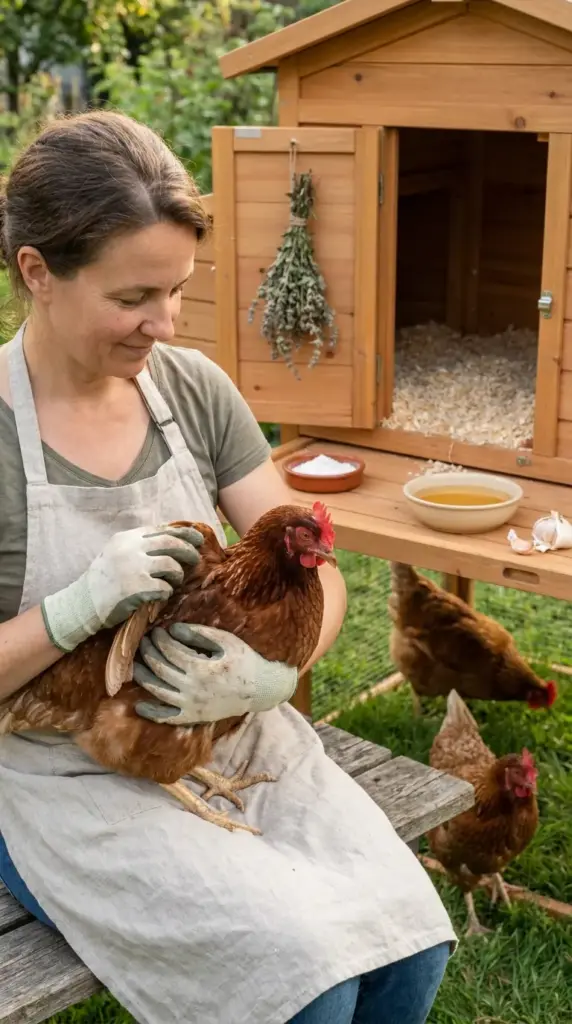
Nobody likes talking about sick chickens — but every experienced keeper will tell you this step separates thriving flocks from struggling ones.
I’ll be real with you. My first year, I lost a hen to something I probably could’ve prevented with better hygiene habits. It was heartbreaking. And completely educational.
Routine Health Checks — What to Actually Look For
Daily observation is honestly your most powerful health management tool.
You don’t need veterinary training — you just need to know your birds well enough to notice when something feels different.
During your morning routine, quickly scan for:
- 👁️ Eyes — clear and bright, never cloudy or swollen
- 🪶 Feathers — smooth and full, not ruffled or missing in patches
- 🦵 Legs and feet — no swelling, limping, or crusty buildup
- 💩 Droppings — firm with white urate cap is normal; watery, bloody, or green warrants attention
- 😮 Breathing — quiet and effortless, never labored or wheezy
Monthly hands-on checks are equally important. Gently handle each hen individually and feel for unusual lumps, weight loss, or crop abnormalities.
Common Chicken Illnesses and Natural Prevention
Prevention is infinitely easier than treatment — especially in urban backyard flocks.
Here are the most common issues beginners encounter:
Respiratory Infections
- Caused by poor ventilation, damp bedding, or introducing new birds without quarantine
- Always quarantine new flock additions for minimum 30 days before integration
- Ensure consistent airflow in your coop year-round
Mites and Lice
- Incredibly common and not a reflection of poor keeping — they just happen
- Inspect under wing feathers and around the vent area weekly
- Diatomaceous earth dusted in bedding and dust bath areas is a highly effective natural deterrent
Bumblefoot
- A staph bacterial infection causing swollen, scabbed footpads
- Prevented by keeping bedding dry and avoiding rough perch surfaces
- Particularly common in wet climates like Seattle and Minneapolis
Egg Binding
- Occurs when a hen struggles to pass an egg — a genuine emergency
- Calcium deficiency is a primary cause — maintain consistent oyster shell access
- Warm baths and gentle massage can help in mild cases
Marek’s Disease
- A highly contagious viral disease affecting the nervous system
- Vaccination at hatch is the only reliable prevention — request this when purchasing chicks
Coop Cleaning Schedules and Bedding Best Practices
A clean coop is genuinely the foundation of flock health. Full stop.
The deep litter method is popular among backyard keepers — and for good reason.
Here’s how it works:
- Start with 4-6 inches of pine shavings as your base layer
- Add fresh bedding on top of soiled material regularly rather than removing it
- The composting action generates gentle heat and beneficial microorganisms
- Perform a complete cleanout every 3-6 months depending on flock size
For urban keepers in cities like New York and Chicago where space is limited, more frequent partial cleanouts may be necessary to manage odor and neighbor relations!
Always finish a full cleanout with a white vinegar and water spray — natural, effective, and completely safe for hens returning to the coop.
Finding a Poultry-Friendly Vet in Urban Areas
This is genuinely trickier than most beginners anticipate.
Standard small animal vets often have limited poultry experience. You need someone who actually knows chickens.
Practical strategies for finding the right vet:
- 🔍 Search AASRP.org — the Association of Avian Veterinarians maintains a searchable directory
- 📱 Ask in local Facebook farming groups — fellow urban keepers always have trusted recommendations
- 🏫 Contact your nearest agricultural university extension office — they often provide poultry health resources and referrals
- 📞 Establish a relationship before an emergency — don’t wait until you desperately need one
Most urban areas including Los Angeles, Atlanta, and Washington DC have at least one avian specialist within reasonable distance.
Natural and Holistic Approaches to Chicken Health
If you’re someone who gravitates toward natural wellness solutions in your own life — this approach translates beautifully to chicken keeping.
These are my favorite evidence-backed natural health practices:
- 🌿 Apple cider vinegar — add 1 tablespoon per gallon of water weekly to support gut health and immunity. Use plastic waterers only — ACV corrodes metal.
- 🧄 Garlic — a natural antimicrobial. Crush one clove per liter of drinking water periodically.
- 🌸 Dried herbs in nesting boxes — lavender calms broody hens, mint deters rodents, and oregano has documented natural antibiotic properties
- 🌑 Diatomaceous earth — food-grade only, dusted in bedding and dust bath areas for mite and lice prevention
- ☀️ Fermented feed — soaking layer feed in water for 3 days creates a probiotic-rich meal that dramatically improves gut health and reduces feed consumption by up to 30%
Holistic chicken keeping isn’t about avoiding all conventional medicine — it’s about building such a strong foundation of health that you rarely need it.
And honestly? That philosophy applies pretty beautifully to life in general.
Get ready for the most rewarding step of this entire journey — in Step 10, we’re celebrating everything you’ve built and exploring how to truly enjoy the incredible lifestyle your backyard mini farm creates. 🥚🌿✨



GIPHY App Key not set. Please check settings