

 The Home Growns
Step 8: Learn the Basics of Chicken Care and Daily Routines
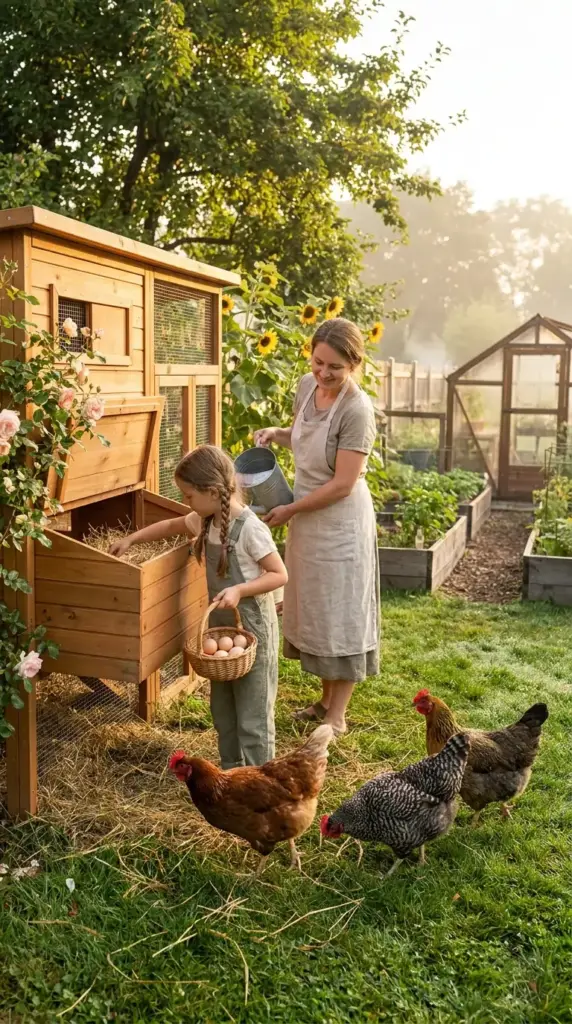
This is the step where backyard chicken keeping stops being a project and starts becoming a lifestyle.
And I mean that in the absolute best way possible. There’s something genuinely grounding about a morning routine that starts outside, breathing fresh air, checking on living creatures that depend on you.
Daily, Weekly, and Monthly Care Tasks Broken Down Simply
New chicken keepers often imagine this being overwhelming. It really, truly isn’t.
Here’s the honest breakdown:
Daily Tasks (15-20 minutes total)
- 🌅 Open coop and do a quick visual health check
- 💧 Refresh water — always fresh, never stagnant
- 🍽️ Top off feeders as needed
- 🥚 Collect eggs — ideally morning and afternoon
- 🔒 Secure coop at dusk without fail
Weekly Tasks (30-45 minutes)
- 🧹 Spot clean bedding and remove soiled areas
- 🔍 Inspect coop for damage, pests, or moisture
- 🌿 Refresh nesting box bedding as needed
Monthly Tasks (1-2 hours)
- 🧼 Full coop cleanout and disinfection
- ⚖️ Assess flock health and body condition
- 📦 Restock supplies before running low
Honestly? Once this rhythm becomes habit, it feels effortless.
Feeding Schedules and Egg Collection Tips
Layer pellets should be available ad libitum — meaning freely accessible throughout the day rather than rationed at set times.
Supplement with oyster shell calcium offered separately — it’s essential for strong eggshells and often overlooked by beginners.
For egg collection, aim for twice daily if possible. Eggs left sitting attract broody behavior and occasionally breakage — which leads to the very bad habit of egg eating.
Fresh eggs stored at room temperature stay good for 2-3 weeks. Refrigerated eggs last up to 3 months. Pretty incredible, right?
Recognizing Healthy vs. Unhealthy Chickens
This skill develops naturally over time — but knowing the basics early genuinely saves lives.
Signs of a Healthy Hen:
- ✅ Bright, alert eyes
- ✅ Clean, smooth feathers
- ✅ Active foraging behavior
- ✅ Regular, consistent egg production
- ✅ Firm, well-formed droppings
Warning Signs Requiring Attention:
- ⚠️ Lethargy or isolation from the flock
- ⚠️ Labored breathing or wheezing
- ⚠️ Swollen eyes or nasal discharge
- ⚠️ Dramatic sudden drop in egg production
- ⚠️ Pale or discolored comb
When something feels off — trust that instinct. Early intervention makes an enormous difference in outcomes.
Seasonal Care Adjustments Across U.S. Cities
Chicken care genuinely shifts with the seasons — especially in cities with dramatic temperature swings.
For Minneapolis, Detroit, and Chicago winters:
- Insulate coops without completely blocking ventilation — moisture is more dangerous than cold
- Use heated waterers religiously — dehydration in winter is a silent killer
- Increase scratch grain portions in evening to generate body heat overnight
For Atlanta, Dallas, and Los Angeles summers:
- Provide constant shade and multiple water stations
- Add electrolytes to water during heat waves
- Freeze treats like watermelon chunks — chickens go absolutely wild for these
For Seattle’s wet climate:
- Focus heavily on mud management in the run
- Ensure roofing over the run keeps bedding consistently dry
- Monitor for bumblefoot — a common foot infection worsened by damp conditions
Involving Kids in Chicken Care
This might genuinely be my favorite unexpected benefit of backyard chicken keeping.
Kids who participate in animal care develop responsibility, empathy, and patience in ways that classroom lessons simply can’t replicate. I’ve watched it happen firsthand and it’s beautiful.
Age-appropriate tasks make this accessible for every family:
- 🐣 Toddlers (2-4) — Supervised egg collecting, gentle hen petting
- 🌱 Young kids (5-8) — Filling feeders, refreshing water with supervision
- 🐔 Older kids (9-12) — Full daily care routines, health monitoring, coop cleaning
- 📓 Teens — Managing supply inventory, tracking egg production, researching flock health
Consider keeping a simple chicken care journal together as a family. It becomes a treasured record of your homesteading journey — and an amazing educational tool.
In Step 9, we’re tackling something every chicken keeper eventually faces — health issues, hygiene management, and keeping your flock thriving naturally through every season. 🌿🐔



GIPHY App Key not set. Please check settings