

 The Home Growns
Step 10: Enjoy the Rewards — Fresh Eggs, Community, and a Thriving Homestead
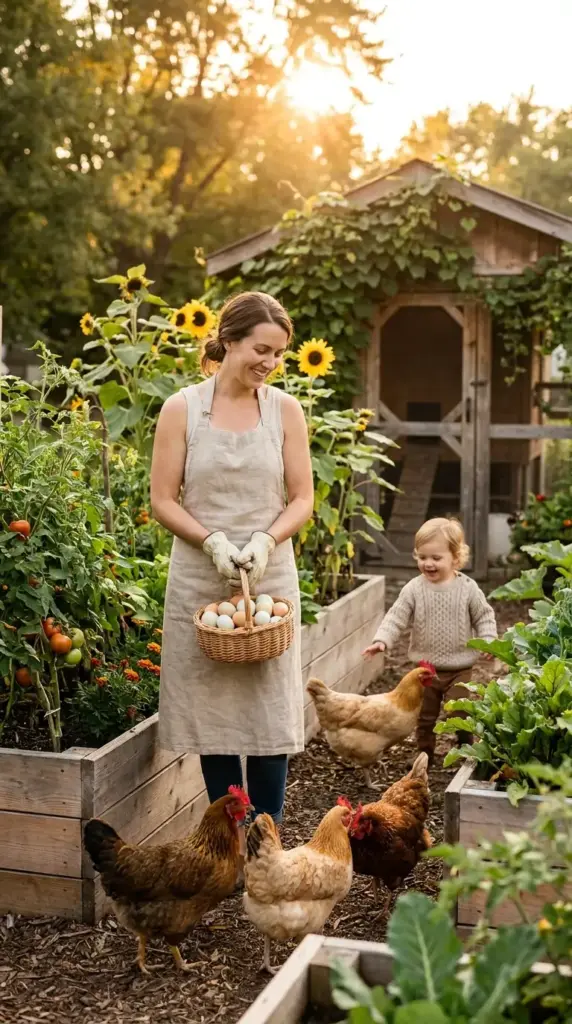
You made it. And honestly? Take a moment to appreciate that.
Building a backyard mini farm from scratch is no small thing — and everything you’ve learned, built, and invested in these first nine steps has been leading to exactly this moment.
What to Expect From Your Very First Egg
I remember my first egg like it was yesterday.
It was small — almost comically so. Slightly misshapen. Sitting alone in the nesting box like a tiny miracle. I actually called my sister about it. She was significantly less excited than I was, but that didn’t matter one bit!
Here’s what’s completely normal with first eggs:
- 🥚 Small sizing — first eggs are often called “pullet eggs” and are noticeably smaller than mature hen eggs
- 🔄 Irregular laying patterns — young hens take 2-4 weeks to establish consistent laying rhythms
- 🫧 Occasional soft shells — calcium regulation takes time to fully develop
- 🎨 Color variations — shell color stabilizes over the first several weeks
That first egg though? Frame-worthy. Genuinely.
Creative Ways to Use and Share Your Farm-Fresh Eggs
Here’s a beautiful problem to have — more eggs than you know what to do with!
A healthy flock of just four hens produces roughly 20-24 eggs weekly at peak laying. That’s a lot of omelets.
In the Kitchen:
- 🍳 Homemade pasta — farm-fresh yolks create a richness that store-bought eggs simply cannot replicate
- 🎂 Baking — the difference in cakes, custards, and quiches is immediately noticeable
- 🥗 Pickled eggs — a surprisingly delicious preservation method with endless flavor variations
- 🍮 Homemade custards and curds — lemon curd made with backyard eggs is life-changing
Gifting and Sharing:
- 🎁 Package eggs in kraft paper cartons with a handwritten label — they make genuinely thoughtful gifts
- 👩👩👧 Share surplus with neighbors — this single gesture builds incredible community goodwill
- 🏫 Donate to local food banks — many urban areas including Detroit and Philadelphia actively welcome fresh egg donations
Selling Your Surplus:
- Most states allow cottage food sales of fresh eggs without commercial licensing
- Neighbors, coworkers, and local farmers markets are natural starting points
- A dozen farm-fresh eggs typically sells for $5-8 in most urban markets — a lovely way to offset feed costs
How a Backyard Mini Farm Impacts Mental Health and Family Wellness
This benefit genuinely surprised me — and it’s the one I talk about most passionately now.
Research consistently shows that contact with nature and animals reduces cortisol levels — the primary stress hormone. Spending even 20 minutes daily in your backyard with your flock produces measurable mental health benefits.
The rhythm of farm chores creates something increasingly rare in modern life — predictable, purposeful daily routine.
There’s also something profoundly satisfying about food sovereignty — knowing exactly where your food comes from, how it was produced, and what went into it. For health-conscious families across Los Angeles, Seattle, and Atlanta, this connection to food source is increasingly meaningful.
Additional wellness benefits reported consistently by backyard farmers:
- 🧘 Reduced anxiety through mindful, present-focused outdoor activity
- 💪 Increased physical activity naturally woven into daily routine
- 🌱 Improved family nutrition through garden-fresh produce and eggs
- 😴 Better sleep quality — seriously, fresh air and physical activity work wonders
- 🤝 Stronger family bonds through shared purposeful projects
Building Community With Other Urban Farmers
One of the most unexpected gifts of this lifestyle is the community it creates.
Urban farming is experiencing a genuine renaissance across American cities — and the people involved are warm, generous, and endlessly helpful.
Here’s how to find and build your tribe:
- 📱 Facebook Groups — search “backyard chickens [your city]” for hyperlocal communities full of advice and support
- 🌐 BackYardChickens.com — the largest online backyard poultry community in the world, with forums covering every conceivable topic
- 🌿 Local urban farming organizations — cities like Chicago, Minneapolis, and Washington DC have thriving urban agriculture networks
- 🛒 Farmers markets — attending regularly connects you with like-minded growers and keepers in your area
- 🏡 Neighborhood chicken tours — increasingly popular in cities, these events let you visit established backyard farms and learn directly from experienced keepers
Community transforms this from a hobby into a genuine lifestyle movement. And trust me — once you’re in it, you’ll wonder how you ever lived without these connections.
Expanding Your Mini Farm — Exciting Next Steps
Once chickens and gardening feel natural and manageable — and they will — the possibilities for expansion are genuinely thrilling.
Composting:
- Chicken manure plus garden waste creates extraordinarily rich compost
- A simple three-bin composting system processes waste efficiently and produces free fertilizer year-round
- Finished compost dramatically reduces the need for purchased soil amendments
Beekeeping:
- A natural next step that perfectly complements both your garden and your lifestyle
- Bees pollinate your garden, produce honey, and require surprisingly minimal daily maintenance
- Many cities including New York and Los Angeles have active beekeeping communities and beginner courses
Expanding Garden Beds:
- Add perennial food plants — fruit trees, berry bushes, and asparagus beds that produce for decades
- Incorporate a dedicated herb spiral — a beautiful, space-efficient design that grows dozens of culinary herbs in minimal square footage
- Explore vertical growing systems along fences and walls for maximum production in limited urban spaces
Adding More Flock Members:
- Consider ducks — they’re excellent foragers, produce rich eggs, and are endlessly entertaining
- Guinea fowl provide remarkable tick and pest control for larger properties
- Expanding your chicken flock gradually as your confidence and infrastructure grows
A Final Word From One Urban Farmer to Another
Here’s what I want you to truly take away from this entire guide.
You don’t need a sprawling rural property. You don’t need unlimited time, money, or experience. You don’t need to have everything perfectly figured out before you start.
What you need is exactly what you already have — curiosity, commitment, and the willingness to learn as you go.
Your backyard mini farm will teach you things no book fully prepares you for. It will frustrate you occasionally, surprise you constantly, and reward you beyond what you currently imagine possible.
From that first nervous chick arriving home to the morning you casually collect a basket of beautiful eggs before breakfast — this journey transforms not just your backyard, but genuinely how you live.
So go build something amazing. Your chickens are waiting. 🐔🌱✨
Conclusion
Starting a backyard mini farm with chickens is one of those life decisions you’ll wonder why you didn’t make sooner.
From the joy of collecting your first egg to the pride of serving a meal grown right in your own backyard — it’s a journey that touches every part of home life.
Whether you’re in a cozy Atlanta suburb or a compact urban lot in New York City, these 10 steps give you everything you need to get started with confidence.
So grab your garden gloves, sketch out that coop design, and take the leap! Your backyard — and your family — will thank you. 🐔🌱
Ready to start?
Pin this guide, share it with a friend, and let’s grow something amazing together.


GIPHY App Key not set. Please check settings