

 The Home Growns
Watering Protocols That Defy Root Rot
I used to be a total control freak about my plant chores, watering my kitchen herbs every single Tuesday morning like clockwork because an online app told me to. It took a near-fatal case of root rot on my favorite trailing rosemary to realize that plants don’t care about our digital calendars.
Ditching the Calendar for Sensory Tricks
Now, I use a method that relies entirely on how the plant actually feels and weighs. Instead of sticking to a rigid rosemary watering schedule, wait until the top two inches of soil are completely dry, or better yet, pick up the pot to see if it feels feather-light.
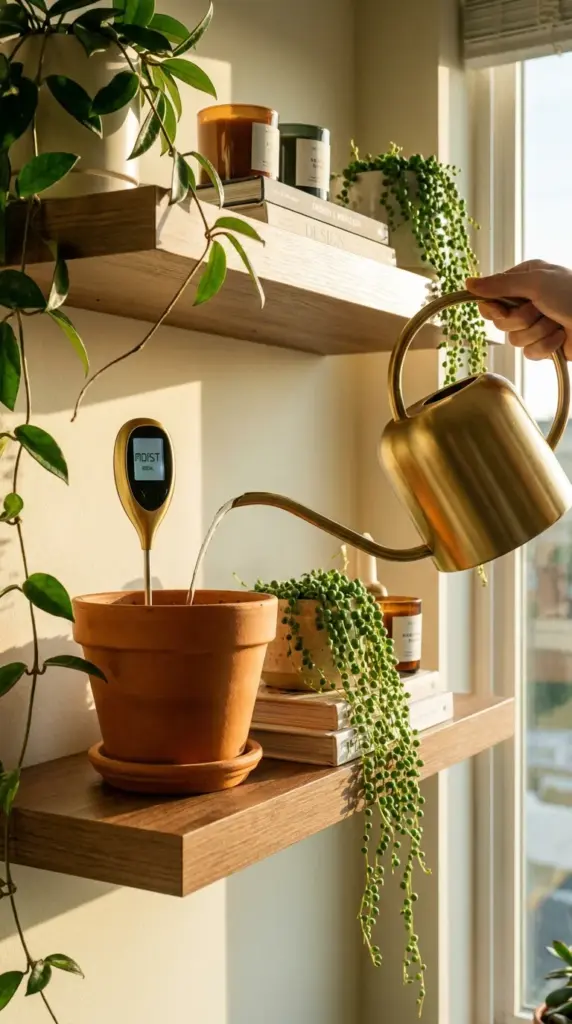
If you are unsure, using a cheap indoor plant moisture meter is a total game-changer for beginners. You want the needle to drop all the way into the “dry” zone before you even think about grabbing your watering can. When you do water, drench it thoroughly until water flows out of the bottom holes, then empty the saucer immediately.
Terracotta vs. Plastic: The Pot Material Equation
Your choice of container radically changes how often to water rosemary indoors. I absolutely swear by unglazed terracotta pots because the porous clay naturally breathes, pulling excess moisture out of the soil walls.
If your rosemary is trapped in a plastic or glazed ceramic pot, that moisture stays locked inside for much longer. You will have to cut your watering frequency way back compared to a clay pot, or risk suffocating those fragile roots.
Mastering the watering can is a total triumph, and now that your soil and hydration are dialed in, we just need to wrap everything up into a neat little game plan. Hit that next button below so we can jump into the final summary and get your indoor herb garden completely thriving!



GIPHY App Key not set. Please check settings