

 The Home Growns
The One Secret Behind True Blue Blooms: Soil pH
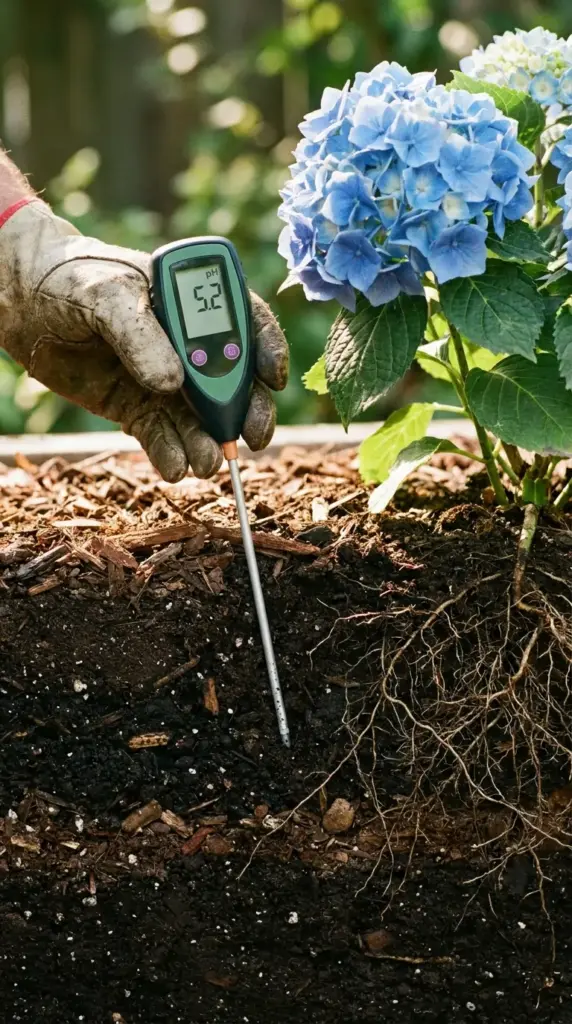
Why pH Changes Color
In acidic soil for hydrangeas, roots can access aluminum more easily. That aluminum is what pushes blooms toward blue instead of pink.
The Sweet Spot for Blue
For most bigleaf hydrangea color change, I aim for a pH around 5.2 to 5.5. If you’re sitting closer to 6.0 or above, you may get purple or pink instead of that crisp electric tone.
Slightly Acidic Is Not Always Enough
This is where people get tripped up. A soil that’s “kind of acidic” may still not be acidic enough for strong blue hydrangea care results.
Water and Soil Push Back
If your tap water and soil alkalinity run high, your pH can creep upward all season. That means your hydrangea pH chart might look great in spring and way less cute by midsummer.
But pH alone isn’t the whole story, and the next section covers the missing piece most gardeners never hear about, so hit next below.



GIPHY App Key not set. Please check settings