

 The Home Growns
The Safest Ways to Acidify Soil for Hydrangeas
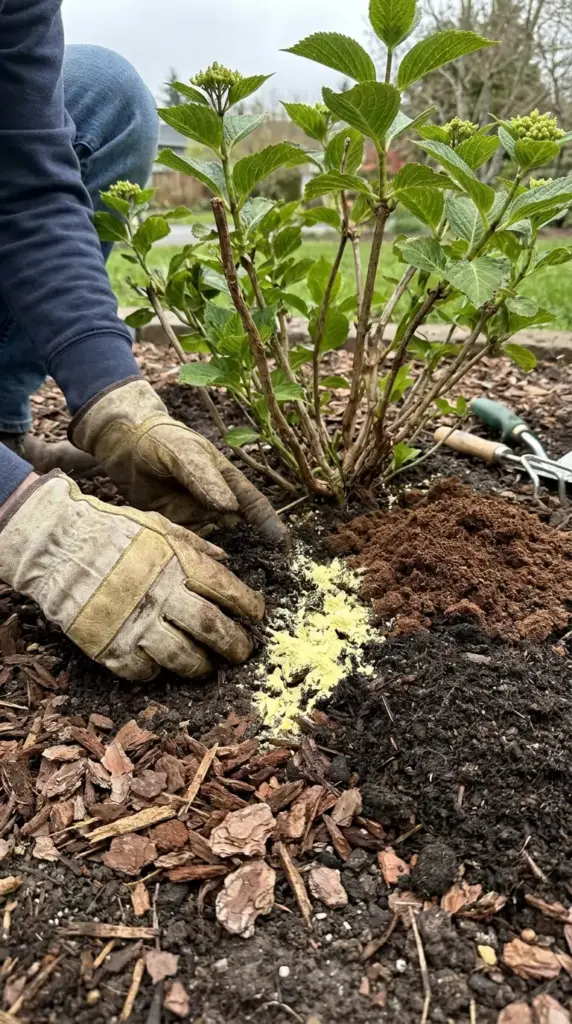
Use Slow, Steady Amendments
Elemental sulfur is one of the best long-game tools for lowering pH. It works gradually, which is annoying if you want instant results, but much safer for roots.
Build an Acid-Friendly Root Zone
I also like pine bark mulch, peat moss for hydrangeas, and pine needle mulch in moderation. These won’t perform miracles overnight, but they support better conditions over time.
Avoid Overcorrecting
Dumping too much garden soil amendment into one spot can stress the plant. I’ve done that once, and the poor shrub responded with leaf drop and pure attitude.
Timing Matters
For 2026 gardens, the best time to start adjusting soil is still fall through early spring, before peak flowering. That gives the soil time to shift before the plant starts putting all its energy into buds and blooms.
If you want the faster-acting option, the next section covers it, but there’s a right way and a very wrong way to do it, so hit next below.



GIPHY App Key not set. Please check settings