

 The Home Growns
Step-by-Step Execution: How to Prune Without Damaging Your Blooms
Two summers ago, I was in such a rush that I grabbed a pair of crusty, unwashed kitchen scissors to pinch back my stems. That lazy move spread a nasty bacterial infection down an entire row of my plants, and I literally watched my prize dinnerplate dahlias turn to black mush within a week.
Gear Up: Sanitizing and Selecting Your Snips
Before you even touch a stem, your gardening tools absolutely must be surgically clean. I always keep a jar of isopropyl alcohol wipes right in my garden caddy to disinfect my pruning shears between every single plant transition.
Using dull or dirty blades creates jagged, frayed tears that invite powdery mildew prevention failure and insect damage. A clean, lightning-fast snip keeps the plant’s vascular system perfectly intact so it doesn’t leak out too much sap.
The Surgical Strike: Popping the Side Buds
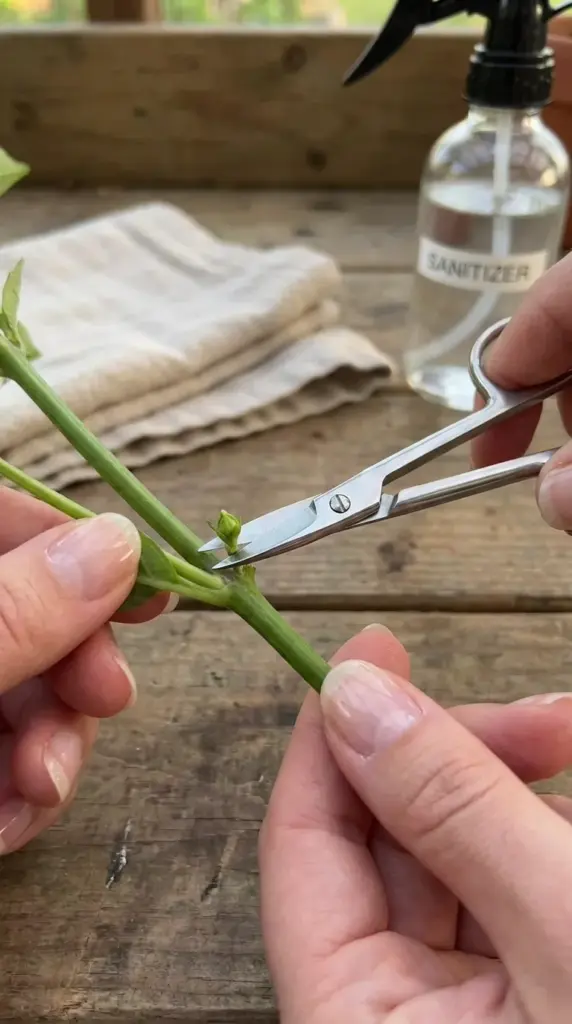
First, locate that top cluster and gently stabilize the main stem with your non-dominant hand so it doesn’t bend or snap under pressure. Take your sharp micro-snips or your thumbnail and cleanly pop out the two smaller lateral buds hugging the center queen bee.
You want to pinch them off right at their tiny base where they connect to the main leaf axle. Be super careful not to rip the outer green skin of the main stalk, or you’ll leave a weak spot that can buckle later under the weight of the massive flower.
Now that your main bud has the spotlight all to itself, it is going to get incredibly hungry for a very specific type of plant food, so definitely hit that next button below because we need to talk about the exact nutrient shift that supercharges these giant blooms.


GIPHY App Key not set. Please check settings