

 The Home Growns
Let’s be completely real for a second. Between managing work, family life, and a never-ending to-do list, most of us busy modern parents are juggling up to 40 hours of domestic and professional tasks every single week.
Who actually has the time to baby a finicky houseplant that drops all its leaves if you look at it wrong? I used to feel so much plant guilt when my high-maintenance green babies died because I missed a single watering.
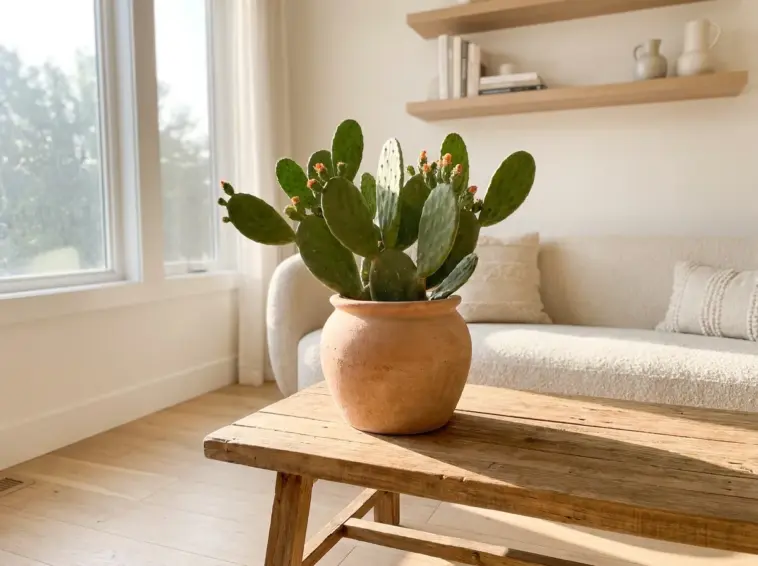
That is exactly why you need to meet the prickly pear cactus (Opuntia). It is honestly the ultimate aesthetic, virtually unkillable green roommate you could ever ask for.
These gorgeous desert beauties don’t want you hovering over them constantly. In fact, they absolutely thrive on a little bit of love and a whole lot of intentional neglect.
I’ve compiled the easiest low-maintenance houseplant hacks to keep your prickly pear gorgeous without draining your precious time. Let’s dive into how you can get that stunning desert vibe in your home with zero stress.
1. The “Neglect-Friendly” Soak-and-Dry Watering Schedule
I’ll never forget the first prickly pear I brought into my classroom years ago. I thought being a good plant parent meant watering it every single Friday like clockwork, which completely rotted the roots into total mush.
The Secret to Intentional Neglect
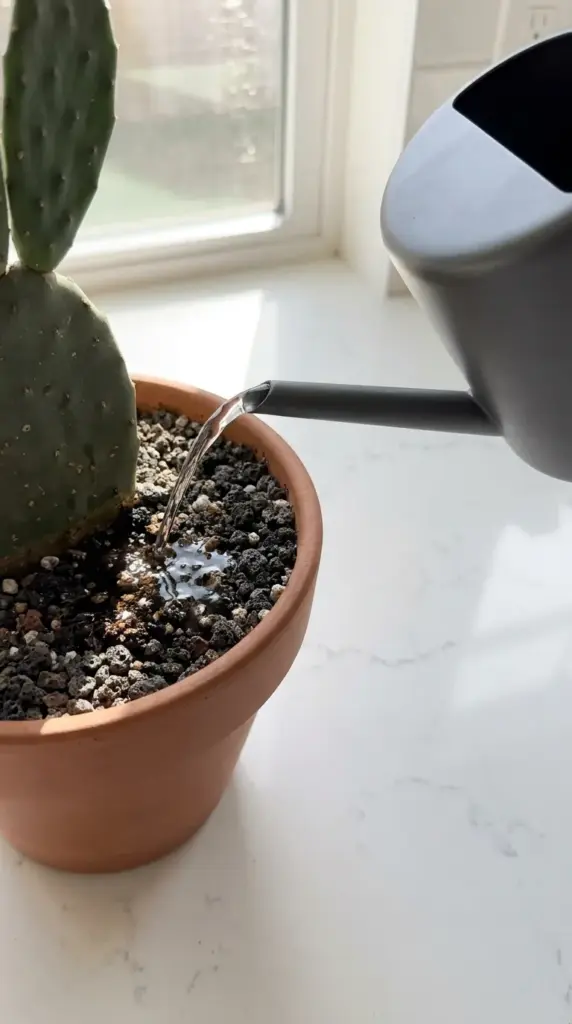
Cacti don’t care about your calendar, and trying to force a strict weekly routine is the fastest way to kill them. Instead, you want to master the soak-and-dry watering method, which perfectly mimics a natural desert rainstorm.
When you water, you need to drench the soil completely until water pours out of the bottom of the pot. After that, you completely forget about it until the soil is one hundred percent dry all the way to the bottom.
I usually check this by shoving a wooden chopstick deep into the dirt. If it comes up with any damp soil clinging to it, just walk away and check again next week.
Spotting the Signs: Happy vs. Overwatered Paddles
Your cactus will actually tell you exactly what it needs if you know how to look at the paddles. A perfectly hydrated Opuntia paddle looks plump, firm, and stands completely upright.
If the paddles start looking a bit wrinkled or puckered, don’t panic! That is just your plant’s way of saying it’s thirsty and ready for a deep soak.
On the flip side, if the base turns yellow, translucent, or feels squishy, you are overwatering and heading toward root rot.
And honestly, nailing this watering routine won’t mean a single thing if your soil stays swampy for days on end. Smash that next button below because I’m going to show you a weird kitchen-sieve trick that guarantees perfect drainage every single time.


GIPHY App Key not set. Please check settings