

 The Home Growns
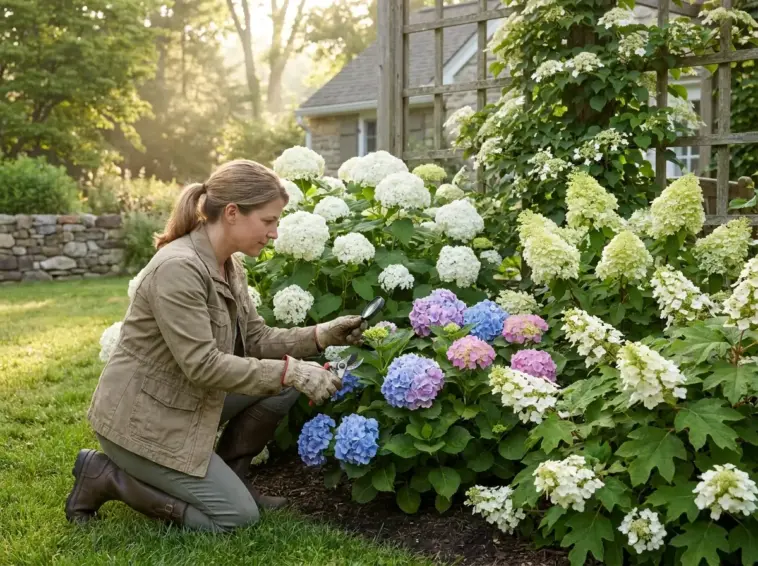
I’m gonna say the scary part out loud: hydrangea pruning feels weirdly high-stakes. One wrong snip, and you get a giant green shrub with zero blooms, which is honestly rude.
The good news is this is fixable. Once you know whether your plant blooms on old wood, new wood, or both, pruning gets a whole lot less mysterious.
Why Hydrangea Pruning Goes Wrong So Often
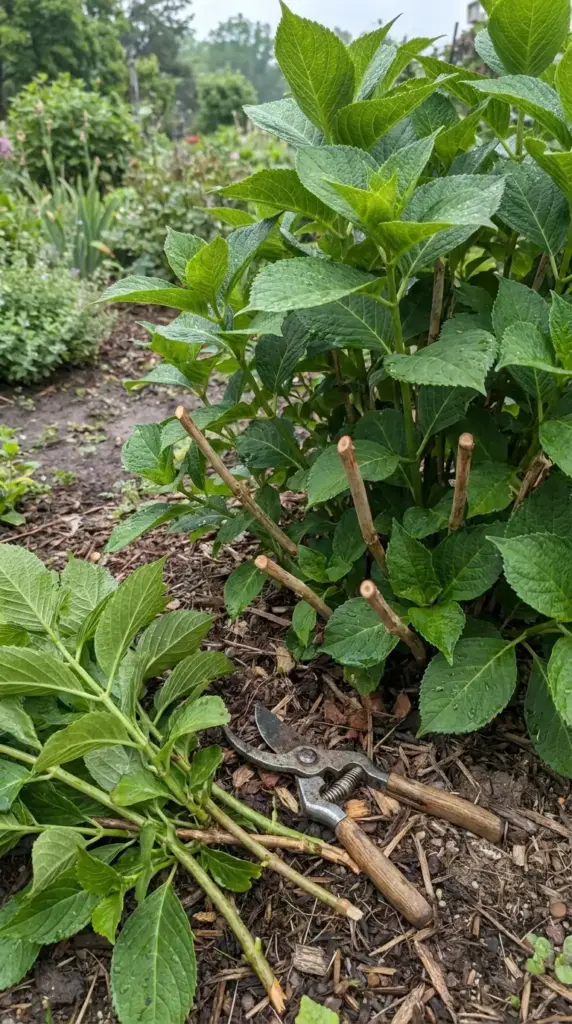
Hydrangeas Do Not All Follow the Same Rules
This is the mistake I see most. People hear “prune in spring” and apply it to every hydrangea in the yard.
But bigleaf hydrangea, oakleaf hydrangea, mountain hydrangea, smooth hydrangea, and panicle hydrangea do not bloom the same way. That one detail changes everything.
Healthy Leaves Can Trick You
A hydrangea can look full, leafy, and totally alive after a bad pruning job. It just won’t flower because the hydrangea flower buds were removed months earlier.
I’ve done this myself with a mophead years ago. I cleaned it up in fall, felt very productive, and then spent the next summer staring at leaves and regretting my choices.
Fall Pruning Is Usually the Sneaky Problem
For many old wood hydrangeas, next year’s blooms are already forming by late summer into fall. If you cut then, you’re cutting off next year’s blooms.
That’s why random “tidy up” pruning in autumn is such a bloom killer. It feels helpful, but for the wrong type, it’s basically sabotage.
The One Rule That Saves Most Blooms
Before you cut, ask one question: does this hydrangea bloom on old wood or new wood? If you answer that correctly, you avoid most pruning disasters.
And yep, the next section makes that easier, because first we need to figure out what hydrangea you actually own—so hit the next button below.

GIPHY App Key not set. Please check settings