

 The Home Growns
How to Keep Any Zinnia Bed Looking Gorgeous From June to Frost
Prep the soil and space correctly
Zinnias like well-drained soil, full sun, and decent spacing. I usually mix in compost before planting and leave enough room between plants so air can move.
Crowding seems smart in spring. By midsummer, it’s just a mildew invitation.
Deadhead often and plant in waves
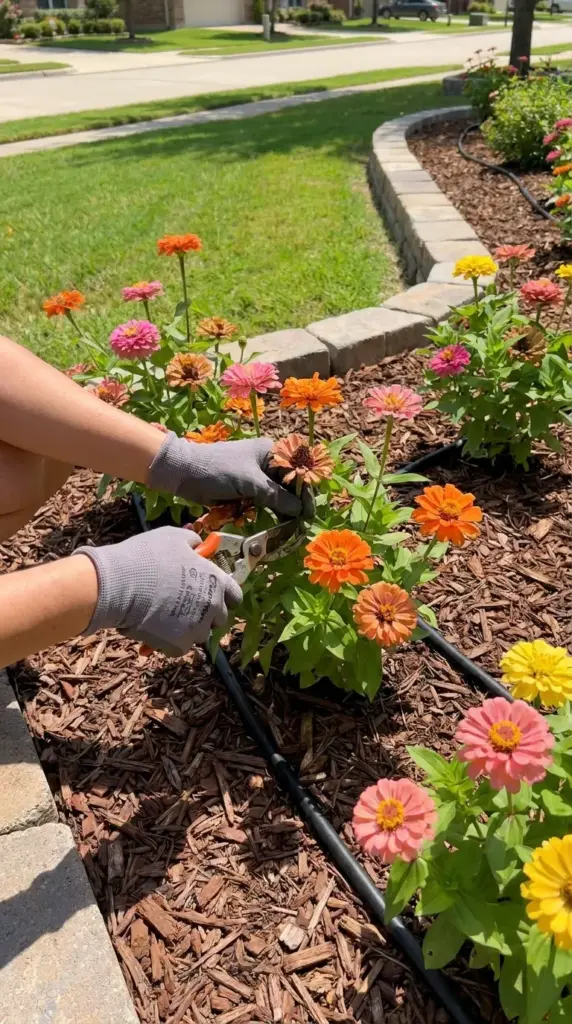
For cut-and-come-again blooms, snip spent flowers regularly or cut stems for bouquets. The more you cut, the more many zinnias keep producing.
I also love succession planting zinnias every few weeks in early summer. That trick keeps the bed from peaking too early.
Stay ahead of common problems
If you see powdery mildew, improve airflow and avoid overhead watering late in the day. If plants get leggy, they may need more light or a harder cutback.
Tall varieties may also need support, especially after storms. I ignore staking way too long every year and then regret it after one windy afternoon.
Refresh the bed when it starts looking tired
Pull weak plants, top up the mulch, feed lightly if needed, and replace any empty gaps with fresh annuals. A quick reset in midsummer can make the whole bed look newly planted.
That’s the thing I love most about zinnias. They give you huge color, tons of personality, and a very fair return on your effort. Pin this for later, share it with your gardening friends, and drop a comment below telling me which zinnia bed you’d plant first.



GIPHY App Key not set. Please check settings