

 The Home Growns
Design 11: The Pollinator Power Bed That’s Still Front-Yard Pretty
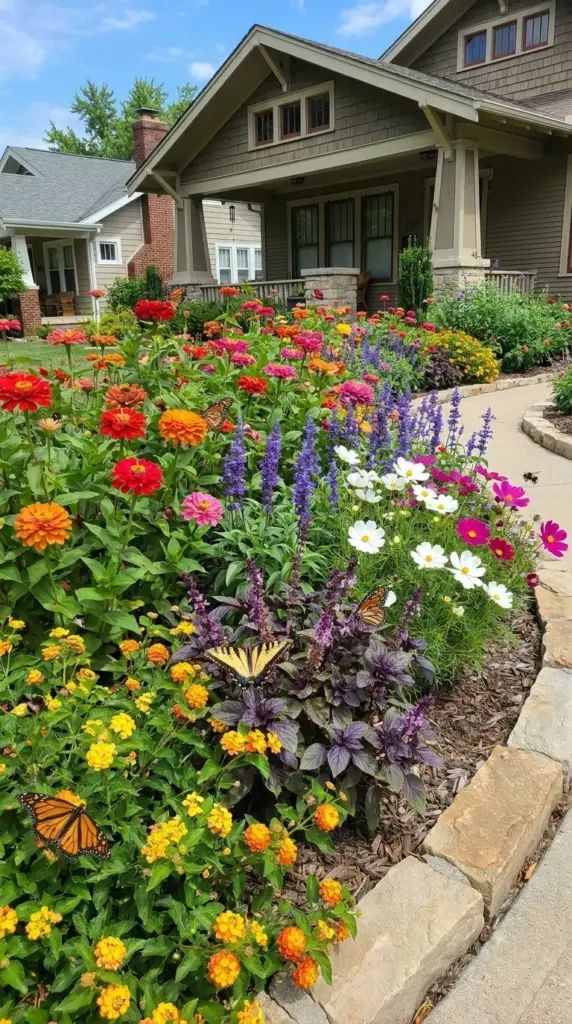
Start with zinnias, then build bloom layers around them
Zinnias are excellent bee-friendly annuals and great butterfly garden plants. Use them as your main color blocks, then add nectar-rich partners like salvia, ageratum, cosmos, lantana, and basil in bloom.
That layered approach extends flower power across the season. More bloom types usually means more pollinator action.
Keep the layout intentional
A pollinator bed doesn’t need to look messy. Repeat plant groupings, use defined edging, and stick to a clear color palette so the space still reads as designed.
That one step makes the difference between “wildlife garden” and “oops, forgot to weed.”
Support pollinators longer
Choose plants with staggered bloom timing so something is always open. Succession planting a few fresh zinnias can help keep color going if early summer plants fade.
I also like avoiding pesticides here whenever possible. A healthy bug population is the whole point.
Beauty plus purpose is a strong combo
This design is ideal if you want a front yard that feels alive, colorful, and useful. Kids love spotting butterflies, and adults always ask what the flowers are.
And once you’ve picked your favorite design, the real secret is keeping it fresh all season. Hit the next button below because the final section covers exactly how I keep zinnia beds blooming from June to frost.


GIPHY App Key not set. Please check settings