

 The Home Growns
The Visual Breakthrough: Framing Plants as Living Architecture
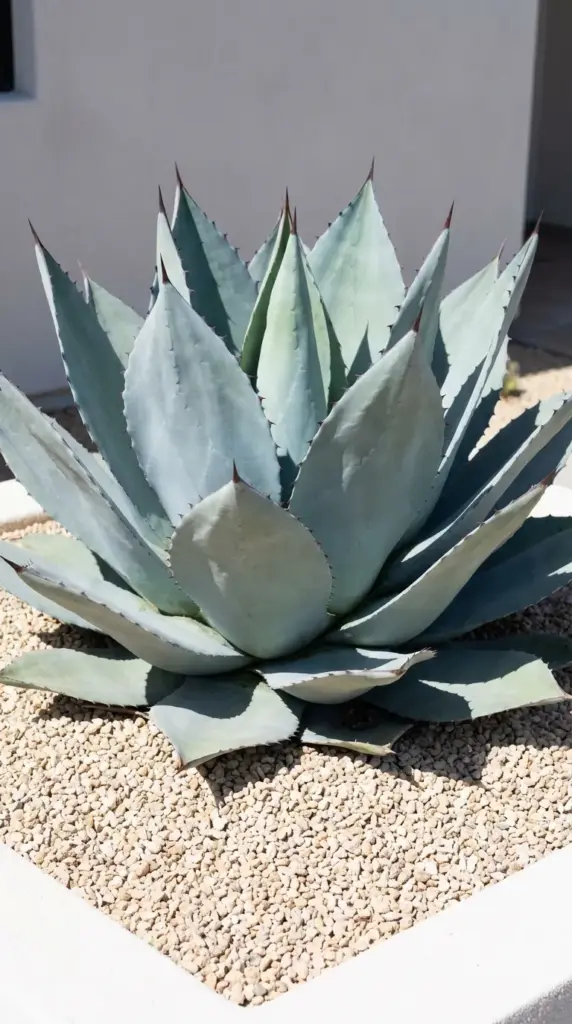
I used to be a total sucker for those tiny, two-inch succulent pots at the nursery checkout counter. My backyard ended up looking less like a designer garden and more like a messy salad bar because everything was the exact same miniature size.
The real game-changer happened when I finally splurged on a massive, structural centerpiece.
Selecting Your Hero Plants
To get that authentic desert modernist look, you need what I call a “hero plant” to anchor your entire space. These are high-impact, sculptural varieties that demand attention the second you walk into the yard.
My absolute favorites for this are the striking Whale’s Tongue Agave (Agave ovatifolia) and dramatic columnar cacti like the Mexican Fencepost. They act as living statues, giving your eyes a place to rest and admire.
The Magic of Negative Space and Height
The biggest mistake people make is packing plants too close together. Desert modernism relies heavily on negative space, which means leaving intentional gaps of bare gravel between your green masterpieces.
When you give a beautiful Agave Americana room to breathe, it instantly transforms from simple ground cover into a curated museum sculpture. Plus, mixing these tall giants with flat, repeating rosettes creates sharp lines that make even a tiny city patio feel expansive and high-end.
Once you have your living sculptures picked out, you need the right stage to set them on, so hit that next button below because we are diving straight into the industrial hardscaping secrets that will make your neighbors completely jealous.

GIPHY App Key not set. Please check settings