

 The Home Growns
8. Execute Deep Leaf-Axil Deadheading
The Headless Stem Mistake
For the longest time, I completely misunderstood how deadheading zinnias actually worked in practice. When a flower started looking brown and crispy, I would just casually walk by and snap off the ugly top right below the petals.
I really thought I was doing my garden a massive favor by cleaning up the mess so quickly. But all I ever ended up with was a bizarre, dense bush full of weird, headless green sticks poking up everywhere.
It turns out, simply popping the top off a fading flower does absolutely nothing to trigger new growth. The plant just assumes its reproductive job is done, and that empty stick just sits there while the rest of your flower bed design starts looking incredibly sad and tired.
The Deep Cut Technique
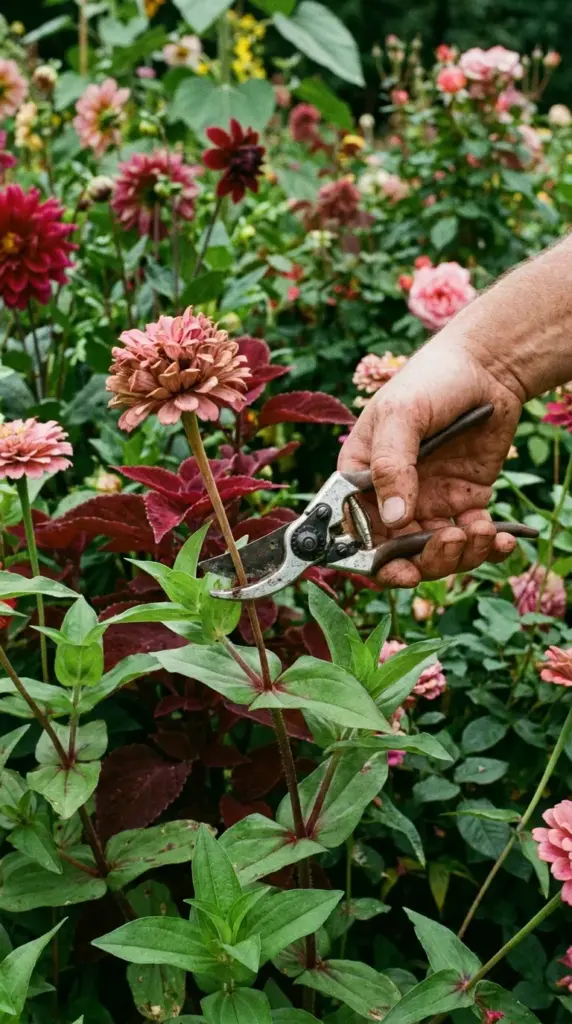
To actually force your plants to push out a massive, continuous wave of summer blooms, you have to be totally ruthless with your pruners. You cannot just snip the neck; you have to practice deep deadheading.
Follow that fading flower’s stem all the way down into the plant until you hit the very first set of healthy, strong leaves. This intersection is called a leaf axil, and it is absolutely packed with dormant growth hormones just waiting to be activated.
Take your sharpest snips and cut the main stem off right above those two leaves. By making the cut deep down into the canopy, you completely hide the ugly pruning scar while instantly forcing the plant to shoot out two brand new, long-stemmed flowers from that exact joint.
But getting those gorgeous, fresh blooms on the outside of the bush won’t matter at all if the inside is a dark, tangled mess just begging for mold to take over, so hit that next button below and I will show you exactly how to clear out the dangerous inner core!



GIPHY App Key not set. Please check settings