

 The Home Growns
5. Switch to a High-Phosphorus Bone Meal Amendment
The Big Green Monster Mistake
A few years ago, I thought I was being a totally brilliant gardener by giving my densely packed flower beds a massive dose of standard liquid lawn fertilizer. It had a ton of nitrogen, and I figured bigger was always better for my summer blooms.
Well, my plants definitely grew, but not in the way I wanted. They turned into these six-foot-tall green monsters with stems so weak they literally flopped over every time the wind blew.
Even worse, I didn’t get a single actual flower until the very end of August. Too much nitrogen forces the plant to spend all its energy creating leafy green growth instead of forming the gorgeous buds we actually planted them for.
The Power of Phosphorus
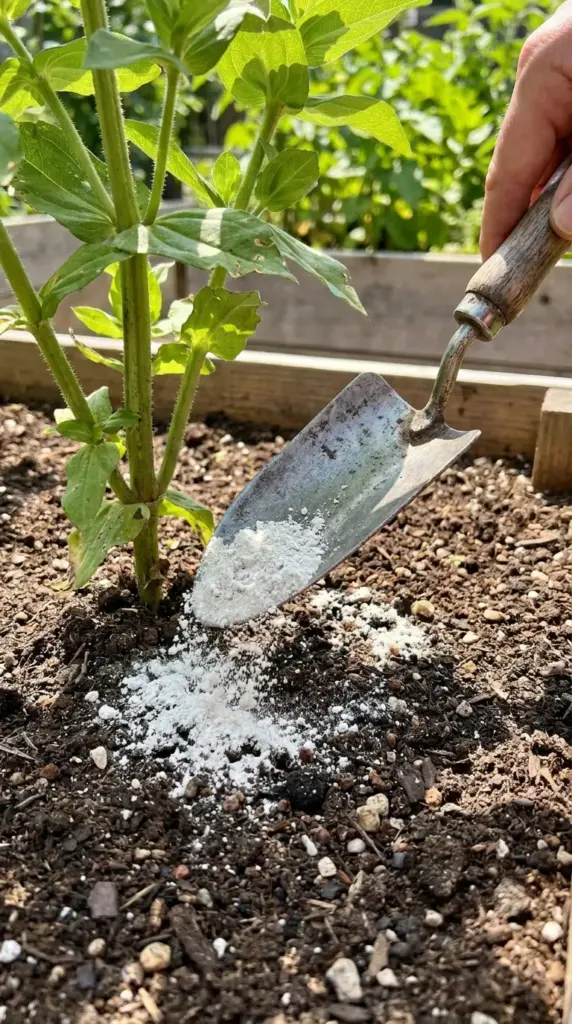
If you want a tightly packed bed full of massive, vibrant flowers, you have to completely shift their diet early on. Once my zinnia seeds sprout their first true leaves and get established, I strictly switch over to a high-phosphorus organic fertilizer, like a good quality bone meal.
Phosphorus is the absolute key to building thick, sturdy stalks that won’t snap when your plants are crowded together. It also completely rewires the plant’s biology, signaling it to focus heavily on explosive root development and massive flower production.
I just scratch a handful of bone meal directly into the organic compost around the base of the plants every few weeks. This simple, cheap nutrient shift keeps the foliage compact and pushes all the energy straight into those beautiful, fluffy flower heads.
But even the best fertilizer won’t work if your packed-together plants are constantly fighting each other for those nutrients in the dirt, so hit the next button below and I’ll show you how a weird little soil fungus actually forces them to share their food perfectly.


GIPHY App Key not set. Please check settings