

 The Home Growns
Pollinator Appeal: Which One Supports Bees Better?
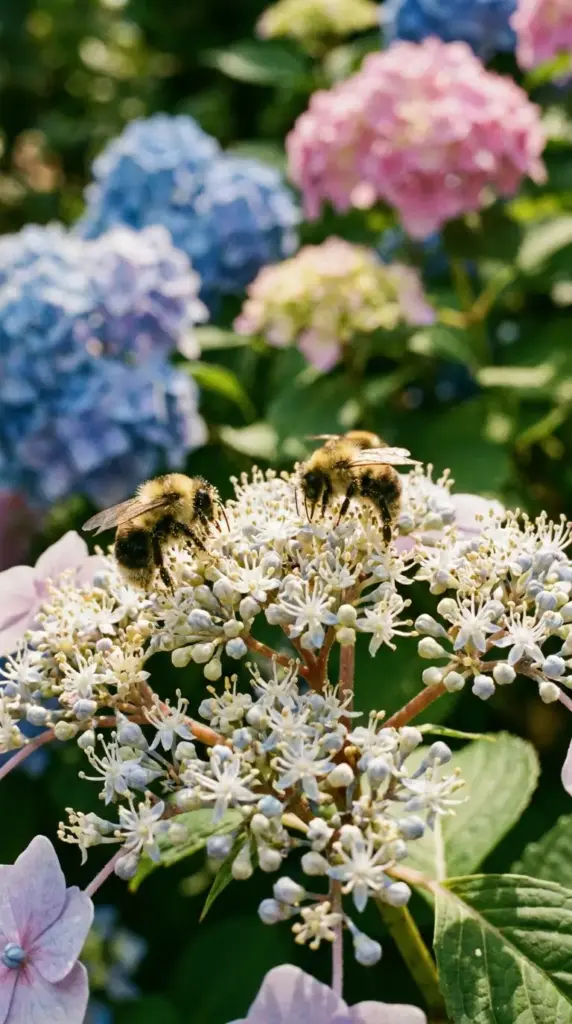
Lacecaps Usually Win for Pollinators
If supporting bees is high on your list, lacecap hydrangeas are usually the better choice. Their central fertile flowers are easier for pollinators to access than the dense, mostly ornamental florets on many mopheads.
That doesn’t mean lacecaps are the top nectar plant in the whole yard. It just means they’re often the better hydrangea for pollinators.
Mopheads Are More About Ornamental Impact
A mophead vs lacecap comparison gets really clear here. Mopheads are often grown for show, while lacecaps tend to offer more function in a wildlife-friendly space.
I always tell people this kindly, because some folks feel weirdly betrayed by pretty plants. Gorgeous doesn’t always equal useful, and that’s okay.
Beauty and Wildlife Can Still Mix
You don’t have to turn your whole yard into a pollinator project to make a difference. One lacecap mixed with coneflowers, salvia, or mountain mint can pull more weight than people expect.
That combo is especially popular now because so many gardeners want a yard that looks pretty and does something. Hit the next button below, because even the prettiest hydrangea can be a headache if it flops in rain or struggles in summer heat.

GIPHY App Key not set. Please check settings