

 The Home Growns
What You Need Before You Start
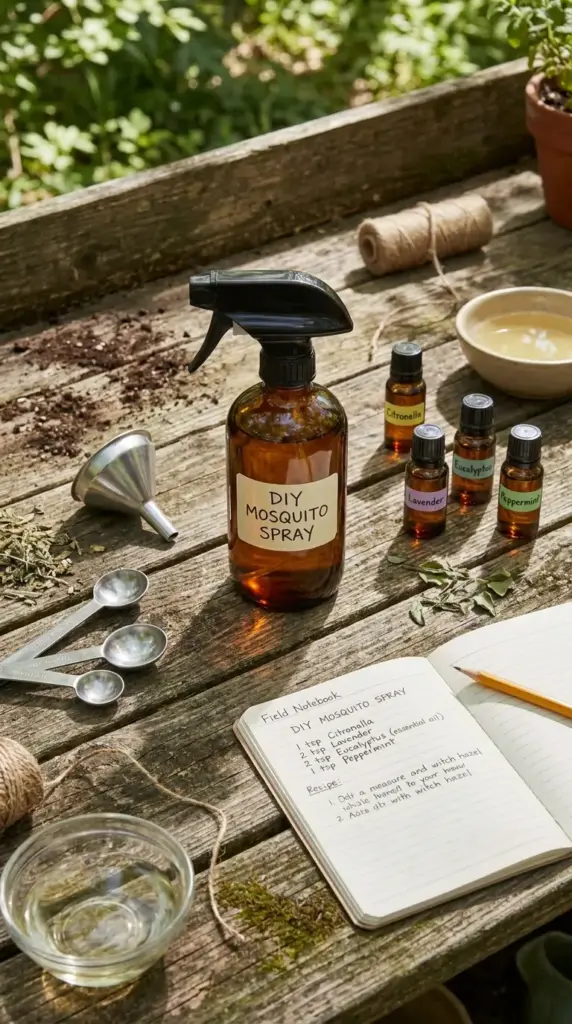
Ingredients for the recipe
Here’s my basic 4-ounce setup: alcohol-free witch hazel, distilled water, a little aloe vera juice, optional vegetable glycerin, a skin-safe solubilizer, and your chosen essential oils.
For oils, I use citronella, lavender, cedarwood, and geranium most often. It’s a good balance of fresh, floral, and woodsy.
Tools that make this easier
You’ll want a 4-ounce spray bottle, a tiny funnel, measuring spoons, and a label. I also keep a notebook nearby because once you make a blend you love, you will forget it by next month.
Ask me how I know. I once made the perfect patio spray and then wrote “bug stuff” on the bottle like that was somehow helpful.
Best bottle types
An amber spray bottle is ideal because essential oils can degrade with light. Glass is lovely, but good-quality PET plastic is less fragile if you’re tossing it into a gardening tote.
If you use oils often, avoid flimsy dollar-store sprayers. Some of them clog or warp, which is just irritating.
Clean mixing and storage habits
Wash and fully dry your tools before mixing. Water droplets, dirty funnels, and old residue can make a homemade bug spray spoil faster.
Tiny details matter here more than people think. Next, hit the next button below, because I’m giving you my go-to recipe with exact measurements.


GIPHY App Key not set. Please check settings