

 The Home Growns
Sweet Alyssum (Lobularia maritima)
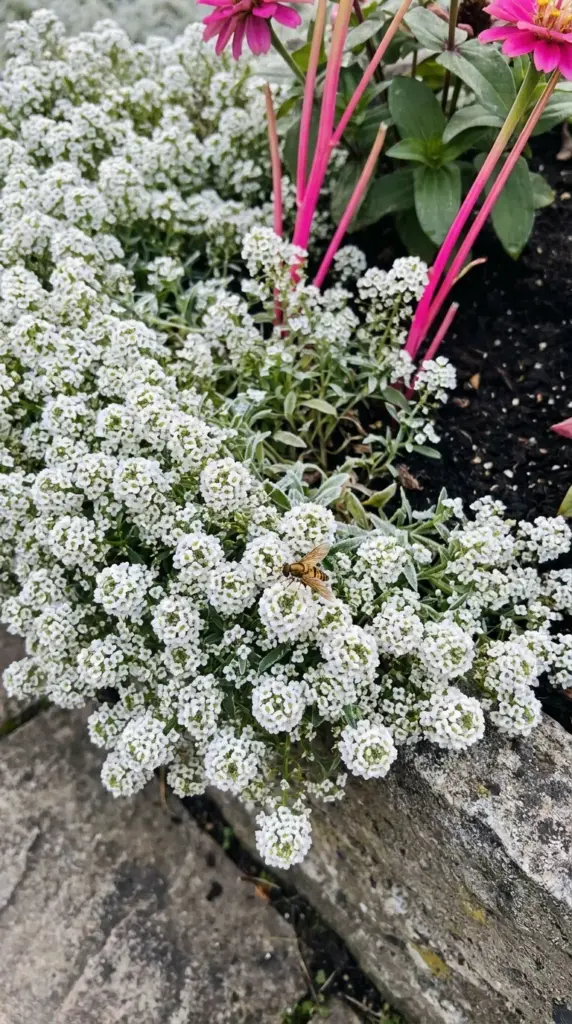
I’ll never forget the year I planted my zinnia patch next to a concrete patio that just radiated brutal, baking heat all day long. The poor soil looked like cracked desert mud, and my zinnias were looking pretty stressed out by mid-July.
On a whim, I grabbed a few cell packs of sweet alyssum and tucked them right along the dry edge of the bed. Within two weeks, those tiny white flowers completely blanketed the ground, and suddenly my struggling zinnias completely turned around.
A Carpet of Honey-Scented Protection
When you tuck sweet alyssum into your zinnia beds, you are creating a brilliant, living mulch that completely transforms your soil health. This low-growing annual spreads rapidly, creating a thick, lush carpet that keeps zinnia roots cool and moist during scorching summer heatwaves.
The intense, honey-like fragrance does more than just smell amazing while you are weeding your garden. It acts as a powerful beacon for tiny beneficial predatory insects, like hoverflies and micro-wasps, which naturally hunt down pests before they can damage your main blooms.
Softening the Bright Palette
Zinnias are famous for their loud, unapologetic, and sometimes aggressive neon colors that can look a little intense on their own. Dropping a sea of snow-white Lobularia maritima around their base provides a beautiful visual contrast that softens the whole landscape.
It grounds the entire flower bed, making your bold design choices look incredibly intentional and professionally curated. They require almost zero maintenance to keep blooming, meaning you can focus all your energy on deadheading your big flowers.
Honestly, seeing that fluffy white carpet trailing underneath those massive, colorful zinnia heads is one of my favorite sights in the entire yard, so let’s keep building this dream garden and look at a companion that brings the most magical, airy texture to the party. Hit that next button below because we are talking about a whimsical favorite next!



GIPHY App Key not set. Please check settings