

 The Home Growns
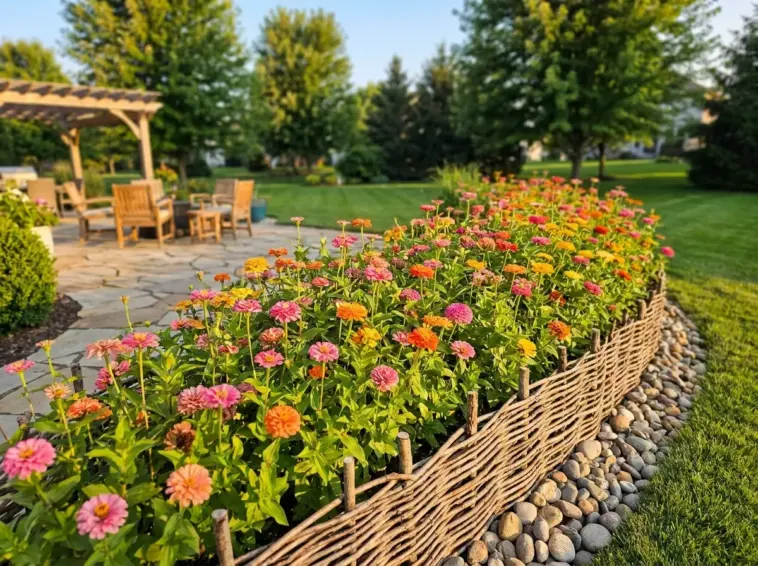
Let me tell you a little secret about zinnia flower beds that I learned the hard way.
A few summers ago, I planted a massive patch of vibrant Cut and Come Again zinnias right along my front walkway.
They bloomed beautifully, but the very first heavy rain completely washed all my rich topsoil right onto the pavement.
It was a total muddy nightmare to clean up, and honestly, a flower bed without a border is kind of like a beautiful painting missing its frame.
That’s when I realized I desperately needed a solid flower bed border to keep the dirt contained and make the whole space look intentional.
But as someone who loves a natural, eco-friendly garden, I absolutely refused to use that flimsy black plastic edging from the hardware store.
Instead, I went on a mission to find the best natural edging solutions that actually look stunning and hold up against heavy summer watering.
If you’re tired of soil spillover ruining your landscape design, you are in the right place.
I’ve put together a list of 7 DIY garden edging ideas using natural materials that will completely elevate your outdoor aesthetic.
These are budget-friendly, super stylish, and blend perfectly into that dreamy, relaxed backyard vibe we all crave.
1. Woven Wattle: The Rustic Charm
I vividly remember trying to force a stiff plastic border around a gracefully curved flower bed a few years ago.
It snapped right in half, completely ruining my weekend DIY mood and sending me back to square one.
That frustrating afternoon actually led me to discover the magic of woven wattle edging for my zinnia garden.
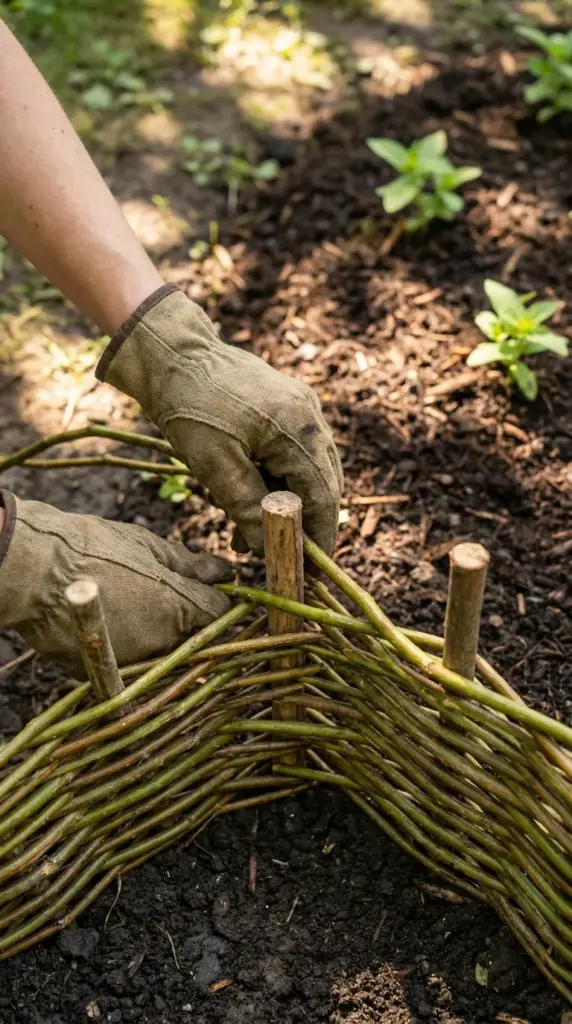
Wattle is an ancient landscaping technique that involves weaving flexible branches into a sturdy, organic fence.
The textured, earthy look perfectly balances the tall, loud, and vibrant blooms that zinnias are famous for.
Plus, it naturally flexes around those tricky, sweeping corners of your landscape design without breaking a sweat.
Sourcing the Right Materials
For a tight, beautiful weave, you absolutely need flexible, freshly cut branches.
I always recommend foraging for willow, hazel, or even dogwood if you happen to have them growing nearby.
If you let the branches dry out too much, they will snap, so you have to work with them while they are still green and bendy.
If you don’t have access to these in your own yard, many local garden centers sell bundles of willow specifically for garden crafts just like this.
The Simple Weaving Process
Start by pounding sturdy, thicker wooden stakes into the ground about a foot apart along the edge of your flower bed.
Then, you simply take your flexible branches and weave them horizontally in an alternating over-and-under pattern.
It honestly feels a bit like making a giant, outdoor basket, and it is incredibly therapeutic!
As you build up the layers, gently push the branches down to ensure a tight, soil-blocking seal for your eco-friendly garden.
I love how this method turns basic yard waste into stunning backyard landscaping, and the wattle slowly decomposes over a few years, naturally feeding your soil.
If you want a border that is a little more permanent but still entirely organic, you are going to be obsessed with the next idea, so hit the next button below because we are diving into heavy-duty river stones!

GIPHY App Key not set. Please check settings