

 The Home Growns
5. Layer Your Heights from Curb to Porch
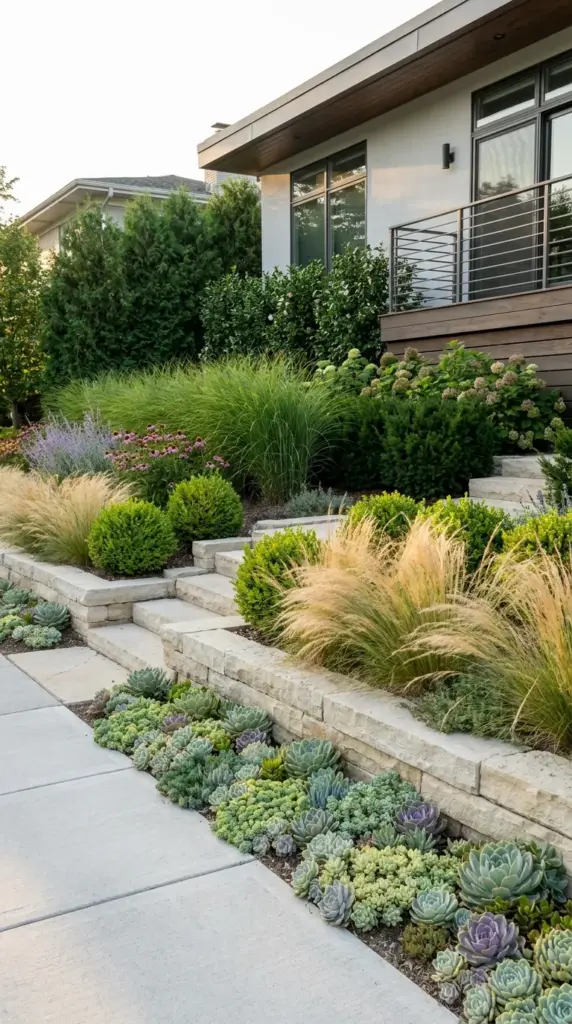
I once made the hilarious mistake of planting a row of super dense, fast-growing bushes right along my front sidewalk. Within a single summer, they completely blocked the view of my house and made the property look like a weird, top-secret government compound.
It was a total disaster for my curb appeal ideas, but it taught me everything about the magic of scale.
The Step-Up Principle for Plant Placement
To fix my walled-in mess, I learned that you always want to arrange your flora so the eye travels smoothly upward toward your front door. Think of it like a staircase where the shortest plants live by the street, and the tallest ones frame the house.
Start by putting low-growing groundcovers right at the property line, followed by mid-sized ornamental grasses or flowering salvia in the middle zone. Finally, place your larger low-water shrubs directly against the foundation to anchor the architecture.
Creating Depth in a Small Front Yard
This exact method of texture layering is a total lifesaver if you are working with a tight, small front yard. When you stagger plant heights properly, it tricks the human brain into seeing way more physical depth than actually exists.
Plus, keeping taller plants near the back helps hide those ugly, exposed concrete foundation lines that ruin a modern home exterior. It creates a beautifully balanced, lush look without needing a drop of extra irrigation water.
And honestly, mastering your plant heights is only half the battle because a genuinely luxury yard needs some heavy, solid materials to anchor all that airy foliage, so hit that next button below because we are about to look at swapping tired grass for gorgeous structural hardscape elements.

GIPHY App Key not set. Please check settings