

 The Home Growns
2. The Spiral Geometric Rock Tapestry
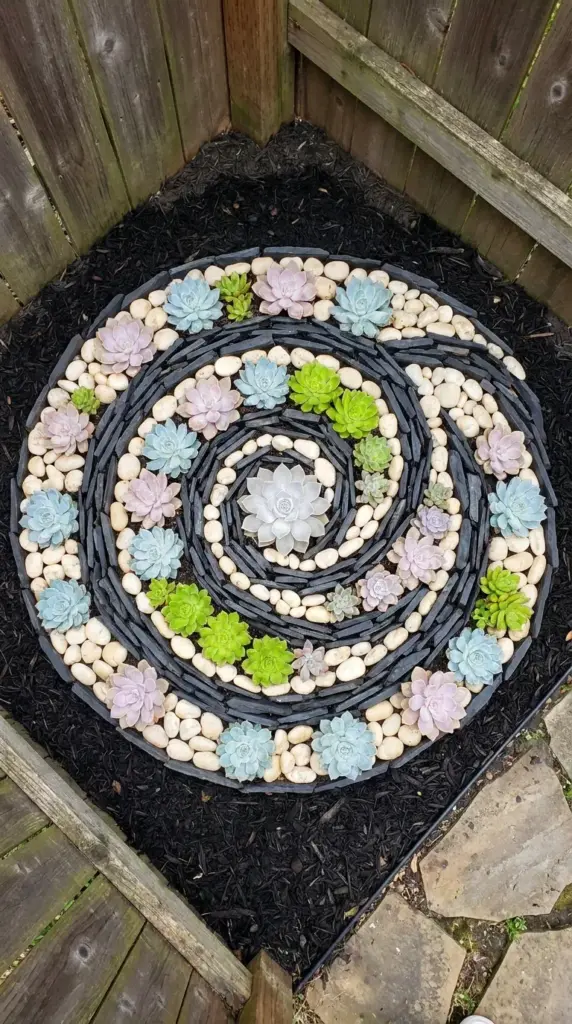
I used to think arranging landscape stones was completely foolproof until I tried doing it without a solid plan. My very first attempt looked less like a curated succulent garden design and more like a messy gravel spill from a random construction site.
That disaster taught me that tiny spaces need strict structure to look intentional instead of chaotic.
The Magic of the Fibonacci Spiral
Using a mathematical spiral layout is the absolute best way to trick the human eye into seeing more physical space. A tight spiral geometric rock tapestry creates a continuous, winding visual path that packs a massive amount of design power into a tiny footprint.
This flowing layout allows you to showcase dozens of tiny drought-tolerant plants without making your small backyard look cluttered or messy. It essentially acts like a mini living maze, making a simple three-foot plot of dirt feel incredibly deep and expansive.
Creating Contrast and Elevation
To make the spiral shape instantly snap into focus, you need to use contrasting river rocks and dark slate pieces to define the crisp edges. Those dark stone outlines act like a picture frame, making the soft blues, mint greens, and pale pinks of your succulents absolutely explode.
You also want to avoid keeping the layout completely flat. Make sure you are grading the soil elevation so the very center of the spiral sits a few inches higher than the outer rings. Placing a striking graptopetalum ghost plant right at that commanding center peak gives the entire layout a professional, architectural look.
If your backyard is mostly solid concrete and you don’t even have a patch of open dirt to build a rock spiral, please don’t panic. Stacking your plants vertically using classic clay pots is the ultimate design shortcut for tight urban spaces, so smash that next button below to check out how a tiered terracotta setup can instantly maximize your patio real estate.



GIPHY App Key not set. Please check settings