

 The Home Growns
Essential Gardening Supplies You’ll Need to Get Started
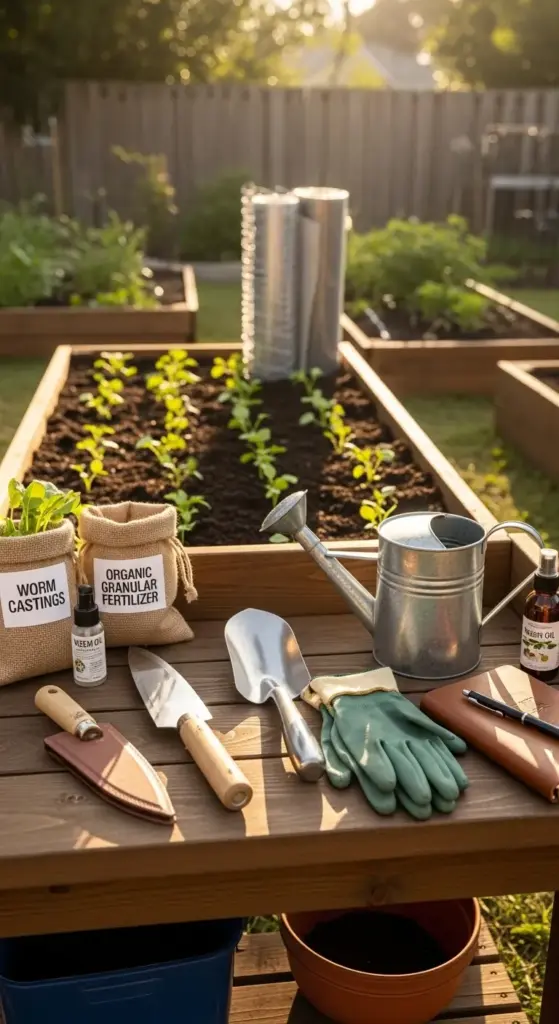
When I first got into raised bed gardening, I walked into my local garden center with zero plan and walked out having spent $200 on stuff I mostly didn’t need.
A decorative watering can that was too small to be useful. A “deluxe” seed starting kit that I never opened. Some kind of specialized pruning tool for plants I wasn’t even growing yet.
It was an expensive lesson in the difference between what looks useful and what actually is.
The truth is, you don’t need much to get started. But what you do need, you should buy right — because cheap tools that break mid-season are genuinely one of the most frustrating experiences in gardening.
Let me save you some money and some headaches.
The Must-Have Tools (And What to Look for in Each)
Let’s start with the non-negotiables — the tools you will reach for literally every single time you go out to your garden.
A Quality Trowel
A hand trowel is the workhorse of raised bed gardening. You’ll use it for transplanting seedlings, digging small holes, mixing amendments into soil, and about a dozen other tasks every single session.
The mistake most beginners make is buying a cheap one. A flimsy trowel bends the first time you hit a rock and it’s basically useless after that.
Look for a trowel with a stainless steel or carbon steel blade and a comfortable ergonomic handle — rubber or cushioned grip makes a real difference after 30 minutes of digging. The Fiskars Ergo Trowel (around $12 to $15) and the Radius Garden Hand Trowel (around $20) are both excellent options that will last for years.
Garden Gloves
I know, I know — gloves seem like the most boring purchase imaginable. But the right pair genuinely changes the gardening experience.
You want gloves that are form-fitting enough to feel things while still protecting your hands from thorns, rough soil, and the general grime of gardening. Thick, bulky gloves make it impossible to do delicate work like transplanting seedlings.
Nitrile-coated gloves are the sweet spot — they’re thin enough to maintain dexterity but protective enough for most gardening tasks. The Pine Tree Tools Bamboo Gloves (around $13) are a perennial favorite and come in sizes that actually fit women’s hands properly. Finally.
For thorny plants or heavy-duty work, keep a pair of leather gauntlet gloves on hand too.
Watering Can vs. Drip Irrigation — Which Do You Actually Need?
This depends entirely on the size of your setup and how much time you want to spend watering.
For a single 4×8 foot bed, a good watering can is perfectly adequate. Look for one with a capacity of at least 2 gallons and a detachable rose head (the sprinkler attachment) for gentle watering of seedlings. The Haws Slimcan (around $35 to $45) is beautiful and functional — it’s the kind of watering can that looks good sitting next to your bed even when you’re not using it.
For two or more beds, or if you travel frequently or have a busy schedule, a drip irrigation kit with a timer is genuinely one of the best investments you can make. Systems like the Rain Bird Drip Irrigation Kit (around $30 to $50) connect directly to your outdoor spigot and can be programmed to water automatically every day. Set it and forget it — your plants get consistent moisture without you having to think about it.
The Soil Knife (Hori Hori)
If you’ve never heard of a hori hori, prepare to become obsessed.
It’s a Japanese gardening knife with a thick, pointed blade that’s serrated on one side and smooth on the other. It digs, cuts, divides plants, opens seed packets, measures planting depth — it does basically everything a trowel does and then some.
Once I started using one, I genuinely couldn’t remember how I gardened without it.
The Nisaku Hori Hori (around $30 to $35) is the classic option and it’s excellent. The Barebones Hori Hori (around $55) is a premium version that’s beautifully made and honestly feels like a tool you’ll pass down someday.
Soil Amendments, Fertilizers, and Organic Pest Control
Okay, this is an area where the options are genuinely overwhelming — every garden center shelf is packed with products making big promises.
Let me cut through the noise.
For soil amendments, the two things worth buying every season are worm castings and granular compost. Worm castings are incredibly nutrient-dense — a 5-pound bag (around $10 to $15) goes a long way mixed into your planting holes at transplant time. Plants respond to them almost immediately. Dr. Earth and Wiggle Worm are both reliable brands.
For fertilizers, I’m a big advocate for organic slow-release granular fertilizers over liquid synthetic options — especially for beginners. They’re harder to over-apply, they feed plants gradually over weeks, and they improve soil biology rather than just dumping nutrients in. Espoma Garden-Tone (around $15 to $20 for a 4-pound bag) is one of the most trusted organic fertilizers on the market and works beautifully in raised beds.
If you want to add a liquid fertilizer for a mid-season boost, fish emulsion (yes, it smells terrible, yes it works incredibly well) or kelp meal liquid are both excellent organic options. Dilute according to package directions and apply every 2 to 3 weeks during peak growing season.


For pest control, please start with the least aggressive option and work up from there. Most raised bed pest problems can be managed without anything harsh.
- Neem oil is the Swiss Army knife of organic pest control. It handles aphids, whiteflies, spider mites, and fungal issues like powdery mildew. Mix 2 tablespoons per gallon of water with a few drops of dish soap and spray in the early morning or evening. Around $10 to $15 for a concentrate that lasts a full season.
- Diatomaceous earth sprinkled around the base of plants deters slugs, beetles, and crawling insects without any chemicals. Food-grade DE is safe around edible plants and children. Around $12 to $18 for a bag that lasts multiple seasons.
- Insecticidal soap spray handles soft-bodied insects like aphids and mites on contact. You can buy it premixed or make your own with a few drops of pure castile soap in a spray bottle of water.
The goal is to intervene early and gently — most pest problems are much easier to manage when you catch them in the first few days.
Raised Bed Liners, Weed Barriers, and Hardware Cloth
These are the unglamorous supplies that nobody talks about but everybody eventually wishes they’d used from the start.
Landscape fabric liner on the inside walls of a wooden raised bed slows moisture absorption into the wood, which significantly extends the life of your bed. It’s cheap — a roll costs $10 to $20 — and takes about 15 minutes to staple into place before you fill your bed with soil. Worth every penny.
Weed barrier fabric on the bottom of your raised bed (between the soil and the ground) prevents weeds from pushing up through the soil from below. Use a permeable landscape fabric rather than plastic sheeting — you want water to drain through freely. DeWitt Pro 5 landscape fabric is a reliable option around $15 to $25 for a roll.
Hardware cloth is the one I wish someone had told me about before my first season. It’s a rigid wire mesh that you staple to the bottom of your raised bed frame before filling it with soil, and it is the single most effective way to keep voles, moles, and gophers from tunneling up into your bed and destroying your root vegetables from below.
Use ½-inch galvanized hardware cloth — the small mesh size keeps even small rodents out. A roll costs around $20 to $30 and is absolutely worth it if you’ve ever had rodent problems in your garden. I learned this the hard way after losing an entire carrot crop to something tunneling up from underneath. Never again.
Helpful Apps and Planners for Tracking Your Garden
This is an area that’s genuinely improved a lot in recent years, and there are some really useful tools available now — most of them free or very affordable.
Gardenize is probably my favorite all-around garden tracking app. You can log your plants, track planting dates, add photos, set watering reminders, and keep notes on what worked and what didn’t. It’s available on both iOS and Android and the free version covers most of what you need. The premium version is around $20 per year.
Planta is excellent for plant care reminders — it sends you notifications when it’s time to water, fertilize, or repot. It’s more houseplant-focused but works well for raised bed herbs and edibles too. Free with a premium option around $30 per year.
The Old Farmer’s Almanac Garden Planner is a web-based tool (around $40 per year) that lets you design your raised bed layout digitally, get personalized planting calendars based on your zip code, and track succession planting schedules. It’s genuinely one of the most useful planning tools I’ve found for serious raised bed gardeners.
For low-tech planners, a simple garden journal notebook is hard to beat. The Leuchtturm1917 hardcover notebook (around $20) with a pen and some basic dividers works beautifully as a garden journal. There’s something satisfying about a physical record of your garden’s history that an app just doesn’t replicate.
Budget Shopping Tips — Quality Supplies Without Overspending
Let me share some of the ways I’ve learned to get great gardening supplies without paying full retail price.
Shop end-of-season sales aggressively. Garden centers discount tools, supplies, and even soil amendments heavily in late summer and fall — sometimes 50 to 70% off. Stock up on tools, gloves, and non-perishable supplies in September and October for next year.
Costco and Sam’s Club carry surprisingly good gardening supplies seasonally — bulk compost, raised bed soil, fertilizer, and basic tools at prices that are genuinely hard to beat. Check in late February and March when their garden sections restock.
Amazon Subscribe & Save on consumables like neem oil, diatomaceous earth, and fertilizer can save 5 to 15% on products you’ll buy repeatedly. Set up subscriptions for your most-used supplies and let them arrive automatically.
Facebook Marketplace and local Buy Nothing groups are goldmines for used gardening tools. People upgrade their tools constantly and sell or give away perfectly good trowels, watering cans, and garden carts for almost nothing. I’ve found excellent tools this way that I still use years later.
Dollar Tree and discount stores are actually solid sources for basic garden gloves, small hand tools, and seed starting supplies. The quality isn’t premium, but for backup gloves or a spare trowel, they’re perfectly adequate.
Stylish Gardening Accessories That Make Perfect Gifts
Okay, this is the fun part — because gardening accessories have gotten genuinely beautiful in recent years.
Gone are the days when garden tools all looked like they belonged in a utility shed. There are now some really stunning options that any design-conscious gardener would love.
The Haws Watering Can in copper or rose gold finish (around $60 to $80) is one of those objects that’s as beautiful as it is functional. It looks incredible sitting on a patio or potting bench and it’s built to last decades. Absolute dream gift for a gardener who cares about aesthetics.
Leather garden tool rolls — like the ones from Garrett Wade or Barebones Living — are gorgeous ways to store and carry hand tools. They roll up neatly, look beautiful, and make a set of basic tools feel like something special. Around $40 to $70.
Personalized garden markers in copper, slate, or ceramic are a lovely detail that makes a raised bed look curated and intentional. Etsy has hundreds of beautiful handmade options starting around $15 to $30 for a set.
A quality garden apron with deep pockets is something every serious gardener eventually realizes they need. The Hedley & Bennett Garden Apron (around $95) is the premium option — beautifully made, incredibly functional, and stylish enough to wear while hosting a backyard dinner. For a more affordable option, Tierra Garden makes a solid canvas apron around $30.
Seed storage tins and organization systems are both practical and giftable — beautiful tins or wooden boxes for organizing seed packets make a gardener’s life significantly easier and look lovely on a potting bench or shelf.
The best gardening gifts are the ones that make the experience more enjoyable and more beautiful — not just more productive.
Up Next: Garden Care Tips to Keep Your Raised Bed Thriving
You’ve got your tools. You’ve got your supplies. Now let’s talk about what happens after you plant — because keeping a raised bed healthy and productive through an entire season takes a little more than just watering and hoping for the best.
Tap Next below and I’ll walk you through the garden care routines, watering schedules, fertilizing timelines, and pest management strategies that keep raised beds thriving from the first warm day of spring all the way through the last harvest of fall. 🌿



GIPHY App Key not set. Please check settings