

 The Home Growns
How to Fill Your Raised Garden Bed with the Perfect Soil Mix
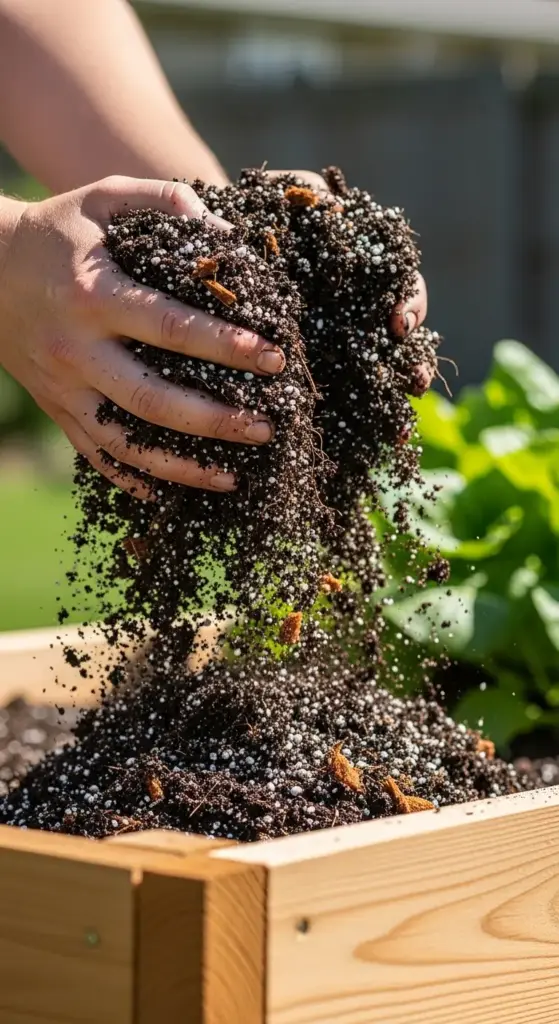
I want to tell you about the summer I filled my first raised bed with soil from my backyard and wondered why absolutely nothing grew right.
My tomatoes were stunted. My zucchini gave up after two weeks. My herbs looked like they were auditioning for a plant hospital.
I was doing everything else right — good location, plenty of sun, regular watering — and still getting terrible results. It took me an embarrassingly long time to figure out that the problem was literally the foundation of everything: my soil.
Don’t make that mistake. This section might honestly be the most important one in this entire guide.
Why Your Native Ground Soil Will Let You Down
Here’s the thing about backyard soil that nobody really warns you about upfront.
Native ground soil is almost never ideal for raised bed gardening. It’s usually too dense, too compacted, or too nutrient-poor to support the kind of productive growing you’re hoping for.
Clay-heavy soil — super common in cities like Atlanta and Dallas — drains so poorly that plant roots basically sit in water after every rain. That leads to root rot, fungal issues, and plants that look waterlogged and miserable even on sunny days.
Sandy soil, on the other hand, drains too fast. Nutrients wash right through it before your plants even get a chance to absorb them.
And compacted suburban soil? It physically resists root growth. Your plants can’t spread their roots, which means they can’t access water or nutrients efficiently — no matter how much you give them.
The whole point of a raised bed is to start fresh with a controlled growing environment. Filling it with native soil defeats that purpose almost entirely.
The Ideal Raised Bed Soil Recipe
Okay, here’s where things get really practical.
The most widely recommended raised bed soil mix follows a simple ratio that experienced gardeners have been using for years:
- 60% topsoil
- 30% compost
- 10% aeration material (perlite, coarse sand, or vermiculite)
That’s it. Three ingredients, mixed well, and you’ve got a growing medium that drains properly, holds nutrients, and gives roots the loose, fluffy environment they love.
Topsoil provides the base structure. Look for a quality screened topsoil — not the cheapest bag on the shelf, because low-quality topsoil can be full of debris, weed seeds, and inconsistent texture.
Compost is where the magic happens. It feeds your plants, improves soil structure, and introduces beneficial microorganisms that support healthy root development. The more quality compost you use, the better your harvests will be — full stop.
Perlite or vermiculite keeps the mix from compacting over time. Without it, even a great soil mix will slowly become dense and hard as the season progresses. A 10% ratio of perlite keeps things light and airy all season long.
For a standard 4×8 foot raised bed that’s 12 inches deep, you’ll need roughly 16 cubic feet of total soil mix. That’s about 8 to 10 bags of a quality premixed raised bed soil, or you can buy the components separately and blend them yourself.
Meet Mel’s Mix — The Method That Changed Everything for Me
If you spend any time in gardening communities online, you’re going to hear about Mel’s Mix constantly.
It comes from Mel Bartholomew, the author of Square Foot Gardening — one of the most influential gardening books ever written. His soil recipe is slightly different from the standard mix, and honestly, it’s brilliant in its simplicity.
Mel’s Mix is:
- ⅓ blended compost (from at least 5 different sources)
- ⅓ peat moss or coconut coir
- ⅓ coarse vermiculite
No topsoil at all. The whole idea is to create a completely soilless growing medium that’s perfectly balanced for raised bed conditions.
The multi-source compost is key — Mel specifically recommends mixing compost from different origins (mushroom compost, worm castings, chicken manure compost, leaf compost, etc.) because each type brings different nutrients and microorganisms to the mix.
Coconut coir is a great modern substitute for peat moss — it’s more sustainable, holds moisture beautifully, and has a neutral pH that most vegetables love.
The downside of Mel’s Mix is cost. Vermiculite especially can be pricey — a large bag runs $20 to $40 depending on your area. But the results are genuinely impressive, and the mix stays loose and productive for years with minimal amendment.
I’ve used both the standard recipe and Mel’s Mix, and honestly both work great — Mel’s Mix just tends to produce slightly better results in my experience.


How Soil Quality Directly Impacts Your Harvest
This is the part I really want you to internalize, because it reframes how you think about soil investment.
Soil is not just a place for your plants to stand up. It’s their entire life support system — their source of water, nutrients, oxygen, and structural support for their root systems.
Research from the Rodale Institute has shown that healthy, biologically active soil can increase crop yields by 20 to 50% compared to depleted or low-quality soil. That’s not a small margin — that’s the difference between a garden that feeds your family and one that just frustrates you.
Nitrogen, phosphorus, and potassium — the big three plant nutrients — need to be present in the right balance for plants to thrive. Quality compost delivers all three naturally, along with dozens of trace minerals that synthetic fertilizers often miss.
Poor soil also makes plants more vulnerable to pests and disease. A plant struggling to get nutrients is a stressed plant, and stressed plants attract problems the way a flickering porch light attracts moths.
Investing in great soil upfront is genuinely the highest-return decision you can make as a gardener. Everything else — watering, fertilizing, pest control — becomes easier when your soil foundation is solid.
Where to Source Quality Soil and Compost in Major Cities
This is something gardening guides almost never talk about, and it drives me a little crazy.
Knowing what to put in your bed is only half the battle. Knowing where to get it is the other half — especially if you’re in a city.
In Dallas and the DFW area, check out The Arbor Gate nursery or look into bulk soil delivery from Living Earth Technology — they sell quality compost and soil blends by the cubic yard, which is much more cost-effective for larger beds than buying bags.
In Atlanta, Pike Nurseries is a solid local option for bagged mixes. For bulk orders, Soil3 is a well-known organic compost supplier that delivers throughout the Southeast — their product is OMRI-listed, meaning it meets organic certification standards.
In Seattle, the city actually runs a composting program through Cedar Grove Composting, and their products are available at most local nurseries and garden centers. It’s high quality and reasonably priced.
In New York and Chicago, look for local garden centers over big box stores when possible — the soil quality is often noticeably better. Also check if your city has a community composting program — many urban areas now offer free or low-cost compost to residents.
For everyone: Costco and Sam’s Club actually carry surprisingly good bulk bags of garden soil and compost seasonally. It’s not glamorous advice, but it’s practical and the value is genuinely hard to beat.
Refreshing and Amending Your Soil Each Season
Here’s something a lot of first-year raised bed gardeners don’t realize: your soil doesn’t stay perfect forever.
Every growing season, your plants pull nutrients out of the soil. The organic matter breaks down. The mix compacts slightly. By the end of the season, your once-fluffy, nutrient-rich bed is a little more tired than it was in spring.
The good news is that refreshing it is simple and doesn’t require starting over from scratch.
At the start of each spring, add a 2 to 3 inch layer of fresh compost across the top of your bed and work it gently into the top few inches of existing soil. This replenishes nutrients and reintroduces organic matter without disrupting the soil structure you’ve built up.
A handful of worm castings mixed in at planting time is one of my favorite little tricks — they’re incredibly nutrient-dense and plants respond to them almost immediately. A small bag runs about $10 to $15 and goes a long way.
If your soil has become noticeably compacted, mix in a little extra perlite or vermiculite to loosen things back up.
At the end of the season, plant a cover crop like clover or winter rye if you’re leaving the bed empty. Cover crops protect the soil from erosion, add organic matter when turned under in spring, and keep beneficial soil microorganisms active through the colder months.
Think of soil amendment as seasonal maintenance — like changing the oil in your car. Skip it and things start to break down. Stay on top of it and everything runs better.
Up Next: What to Actually Plant in Your Raised Bed
Your bed is built. Your soil is dialed in. Now comes the part everyone’s been waiting for — actually deciding what to grow.
And there’s more strategy to this than most people think. From companion planting to succession sowing to choosing the right varieties for your specific climate, the next section is packed with practical planting advice.
Tap Next below and let’s talk about what to plant in your raised garden bed for the biggest, most satisfying harvest possible. 🌿




GIPHY App Key not set. Please check settings