

 The Home Growns
Choosing the Right Location for Your Raised Garden Bed
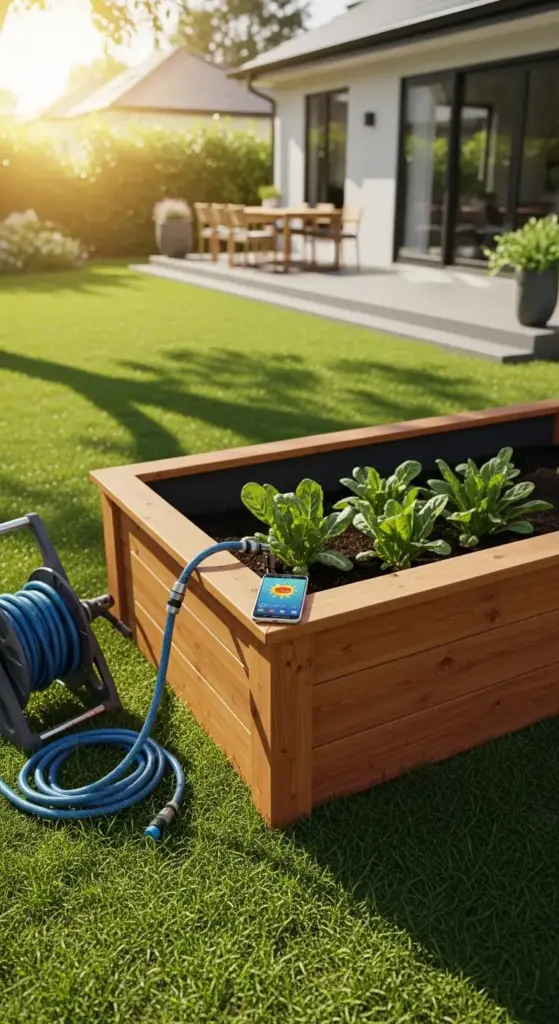
I made every location mistake in the book when I set up my first raised bed.
I picked a spot that looked perfect — tucked against a fence, nice and cozy. What I didn’t realize was that fence was blocking afternoon sun for about four hours a day. My plants were basically starving for light and I had no idea why.
Don’t be me. Let’s talk about how to get this right from the start.
The 6–8 Hour Sunlight Rule (And Why It’s Non-Negotiable)
Here’s the single most important thing to know about raised bed placement: most vegetables need a minimum of 6 to 8 hours of direct sunlight per day.
Not filtered light. Not partial shade. Direct sun.
Fruiting vegetables like tomatoes, peppers, cucumbers, and zucchini are the neediest — they want the full 8 hours if you can give it to them. Leafy greens like spinach, lettuce, and kale are a little more forgiving and can get by on 4 to 6 hours.
Here’s a simple trick I wish someone had told me earlier: spend one full day watching how sunlight moves across your yard before you commit to a spot.
Set a timer and check your potential location at 8am, 10am, 12pm, 2pm, and 4pm. Note whether it’s in full sun, partial shade, or full shade at each check. It takes one day and it can save you an entire wasted growing season.
There are also free apps like Sun Seeker and Sun Surveyor that use your phone’s camera to map sun paths in real time. Honestly kind of amazing for this exact problem.
Finding the Best Spot in Small Urban Yards, Patios, and Balconies
Living in a city doesn’t mean you’re out of luck — it just means you have to be a little more creative.
For small urban yards, look for the sunniest corner first, then work backwards from there. South-facing spots almost always get the most sun in the Northern Hemisphere, so that’s your starting point.
On a patio or balcony, a 4×2 foot raised bed or even a deep planter box can work beautifully. Just make sure your structure can handle the weight — a filled raised bed can weigh 400 to 600 pounds depending on size and soil mix.
Weight is something a lot of balcony gardeners completely overlook, and it’s a safety issue, not just a gardening one.
Rooftop gardeners in cities like Chicago or Washington D.C. should absolutely consult a structural engineer before going big. I know that sounds dramatic, but it’s real.
For tight spaces, also consider vertical gardening — adding a trellis to your raised bed and growing climbing plants like beans, cucumbers, or peas upward instead of outward. You can essentially double your growing space without adding a single square foot of ground area.
How Close Should You Be to a Water Source?
This one seems obvious, but people underestimate it all the time.
Raised beds dry out faster than in-ground gardens — sometimes significantly faster in hot weather. During peak summer, you might need to water every single day.
If your bed is 100 feet from your nearest outdoor spigot, that’s going to get old real fast.
Ideally, you want your raised bed within 25 feet of a water source so a standard garden hose can reach it comfortably. If that’s not possible, a drip irrigation system connected to a timer is honestly one of the best investments you can make — systems start around $30 to $50 and they basically water your garden for you.


I set up a drip timer on my beds a few years back and I genuinely cannot imagine going back to hand watering everything.
For balcony or patio setups without easy hose access, a large watering can or a portable hose connector that attaches to an indoor faucet can work in a pinch.
Yes, Aesthetics Matter Too
Okay, let’s talk about something that doesn’t get enough attention in gardening guides: how your raised bed looks matters.
Especially if your outdoor space is an extension of your home’s style.
A raised garden bed placed right at the center of your backyard becomes a focal point — so it should look intentional. Think about how it aligns with your landscape design, your fence line, your patio furniture, and even your home’s exterior color palette.
Cedar wood beds have a warm, natural look that fits farmhouse and cottage-style homes beautifully. Galvanized metal beds lean more modern and industrial — they look incredible in contemporary outdoor spaces.
If you’re someone who cares about home decor and garden design (and honestly, why wouldn’t you?), spend a few minutes sketching out your backyard layout before you commit to a placement. A little planning upfront saves a lot of regret later.
Even something as simple as centering your bed on a patio or aligning it parallel to a fence line makes the whole space feel more polished and put-together.
Mistakes to Avoid When Choosing Your Location
Let me save you some pain here, because I’ve made most of these myself.
Shade traps are sneaky. Fences, walls, large trees, and even your house can cast long shadows — especially in the morning and late afternoon. Always observe your space at multiple times of day before deciding.
Low-lying areas are a drainage disaster. If water pools in a spot after rain, that’s a sign the drainage is poor. Raised beds help with drainage, but if the ground underneath is waterlogged, you’ll still have problems — especially with root rot.
Too close to large trees is a problem. Tree roots are aggressive and will absolutely invade your raised bed from below if given the chance. Stay at least 10 feet away from large trees whenever possible. Also, trees mean shade — double trouble.
Ignoring wind exposure is another one. Strong winds dry out soil fast and can damage delicate seedlings. If your space is particularly windy — common on rooftops and open patios — consider a windbreak like a lattice panel or a row of tall potted plants.
And finally — don’t place your bed somewhere inconvenient to access. You need to be able to reach the center of your bed from all sides without stepping into it. The standard 4-foot width exists for exactly this reason — most people can reach about 2 feet comfortably from each side.
Up Next: Building Your Bed the Right Way
Now that you’ve got your perfect spot picked out, it’s time for the fun part — actually building the thing.
And trust me, the material you choose matters way more than most people think. From cedar vs. pine to galvanized metal to budget-friendly alternatives, the next section breaks down exactly what to use and what to avoid.
Tap Next below and let’s get into the best materials for building a raised garden bed that lasts for years — without breaking the bank. 🌱



GIPHY App Key not set. Please check settings