

 The Home Growns
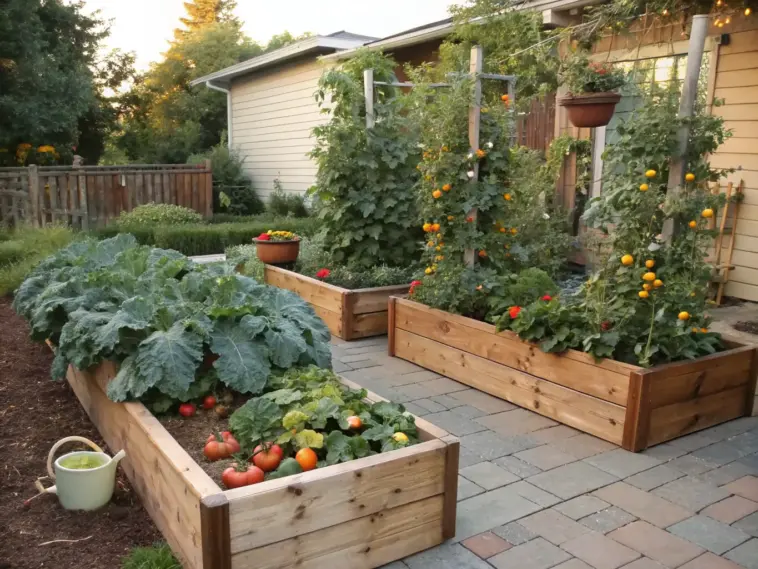
Did you know that raised garden beds can yield up to 4x more produce per square foot than traditional in-ground gardens? That’s not a typo!
As someone who’s spent countless hours digging, planting, and yes — failing — in the garden, I can tell you that switching to raised beds was an absolute game-changer for my harvests.
Whether you’re a busy mom in Chicago trying to sneak fresh veggies into your family’s meals, a design-savvy homeowner in Los Angeles who wants a garden that’s as beautiful as it is functional, or a total beginner in New York with nothing but a small patio and big dreams — raised garden beds are your answer.
They’re practical, gorgeous, and surprisingly easy to DIY.
Let’s dig in! 🌱
What Is a Raised Garden Bed and Why Every Gardener Needs One
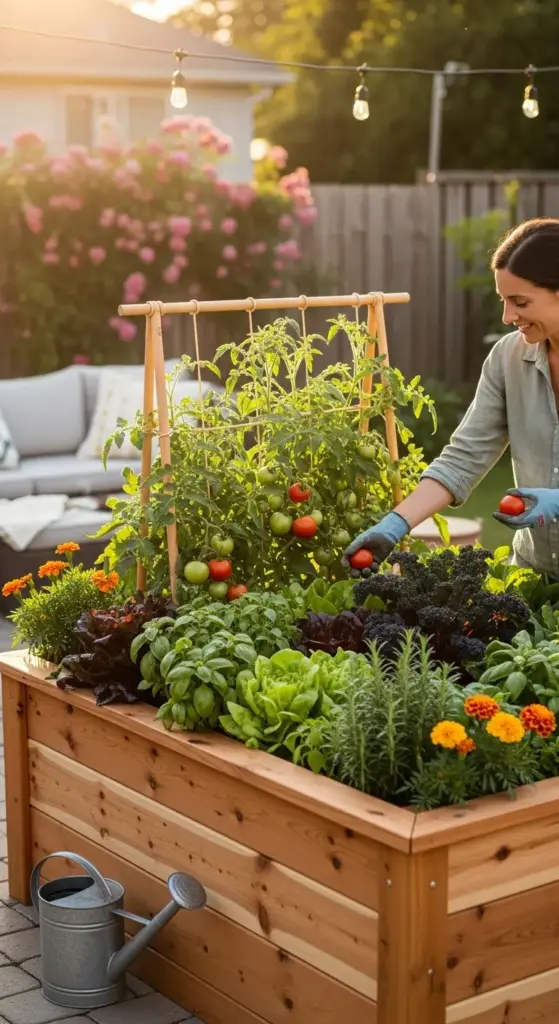
I’ll be honest — when I first heard the term “raised garden bed,” I thought it was just a fancy way of saying “a box of dirt in your backyard.”
I was so wrong. And once I figured that out, my whole gardening game changed.
So… What Exactly Is a Raised Garden Bed?
A raised garden bed is essentially a contained growing area where soil is built above the natural ground level — usually framed by wood, metal, or stone.
It’s not the same as planting directly in the ground, and it’s definitely not the same as a container or pot.
Think of it like this: in-ground gardening means you’re working with whatever soil your yard already has — clay, rocks, compacted dirt and all. Container gardening gives you more control, but you’re limited by the size of the pot and how fast it dries out.
A raised bed sits right in the sweet spot between the two. You get the space of a garden with the control of a container. It’s kind of the best of both worlds.
The Benefits Are Kind of a Big Deal
Here’s what nobody told me before I started: the soil in most backyards is terrible for growing food.
Seriously. I spent an entire summer wondering why my tomatoes looked sad and my lettuce kept dying. Turns out, my native soil was dense clay that drained about as well as a bathtub.
With a raised bed, you build your own soil from scratch. That means better drainage, better aeration, and way more nutrients for your plants.
Studies have shown that raised bed gardens can produce up to 4 times more yield per square foot compared to traditional row gardening. That’s not a small difference — that’s a game changer.
And the weed situation? Night and day. Because you’re filling your bed with fresh, clean soil mix, you’re not importing a bunch of weed seeds from the ground. I went from spending 45 minutes a week pulling weeds to maybe 10. That time adds up fast.
Oh — and my back? So much happier. Most raised beds sit between 6 and 12 inches off the ground, which means less bending, less kneeling, less of that “I can’t get up” moment after an hour in the garden.


Perfect for Small Spaces and Urban Gardens
One of the things I love most about raised beds is how incredibly well they work in tight spaces.
I’ve seen gorgeous urban vegetable gardens squeezed onto Brooklyn patios and Chicago rooftops. You don’t need a sprawling backyard to grow real food.
A standard 4×8 foot raised bed gives you 32 square feet of growing space — enough to grow lettuce, herbs, peppers, and even a couple of tomato plants. And because you can stack them, go vertical, or arrange them in creative layouts, they work beautifully in small suburban yards too.
For anyone living in cities like New York, Los Angeles, or Seattle, where outdoor space is limited and precious, a raised bed might honestly be the only practical way to have a real food garden.
They’re Also Just… Really Pretty
Okay, I know this sounds a little extra, but hear me out.
Garden design matters. Especially if your outdoor space is an extension of your home.
A well-built raised bed — especially in cedar wood or galvanized metal — looks intentional and polished. It’s the kind of thing that makes your backyard look like it belongs on a home decor blog.
I’ve seen raised beds styled with climbing trellises, fairy lights, and decorative edging that honestly looked better than some landscaping I’ve paid professionals for. Your garden can be functional AND beautiful. Don’t let anyone tell you otherwise.
Let’s Clear Up Some Common Misconceptions
A lot of beginners think raised beds are expensive, complicated, or only for “serious” gardeners.
Nope, nope, and nope.
You can build a basic DIY raised garden bed for as little as $30 to $50 using untreated pine boards from your local hardware store. It doesn’t have to be perfect — mine definitely wasn’t when I started.
Some people also worry that raised beds dry out too fast. And yeah, they can — but a simple drip irrigation system or a layer of mulch on top of your soil fixes that almost completely.
The learning curve is genuinely not that steep. If you can follow a recipe, you can build and plant a raised bed.
Ready to Keep Going?
Now that you know why raised garden beds are worth every bit of the hype, the next big question is: where do you actually put one?
Spoiler: it’s not as simple as just picking a random spot in your yard — and getting this wrong can seriously hurt your harvest before you even plant a single seed.
Hit that Next button below and let’s talk about how to choose the perfect location for your raised bed — including the sunlight rule most beginners completely ignore. 🌿



GIPHY App Key not set. Please check settings