

 The Home Growns
Why Hydrangeas Dry So Beautifully Compared to Other Flowers
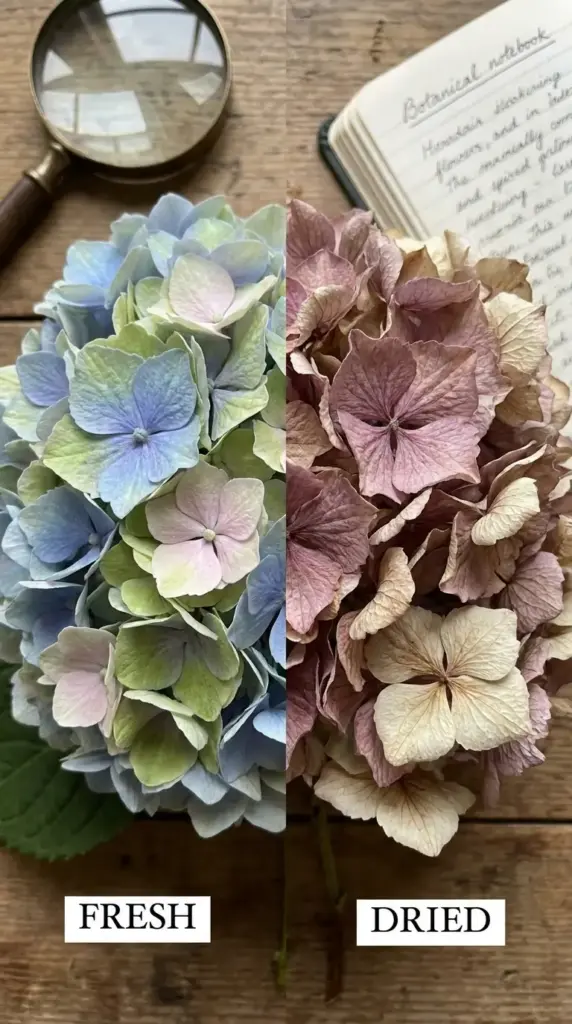
Their petal structure helps a lot
When people ask me how to dry hydrangeas, I always say they’ve got a built-in advantage. Their flower heads are made of many small florets that hold onto form better than soft, floppy blooms like tulips or lilies.
That clustered shape gives you volume even after moisture leaves. So instead of collapsing into a sad little tangle, hydrangeas often keep that rounded, fluffy silhouette.
Mature blooms dry better than fresh ones
This is the part almost everybody gets wrong. Super fresh hydrangeas often have too much moisture, which makes them wilt, brown, or shrivel before they dry properly.
A slightly mature bloom is better because the petals have already started becoming a bit firmer. That’s why hydrangea bloom maturity is one of the biggest factors in successful drying.
Why color changes during drying
Color retention depends on the variety, the bloom age, and your drying environment. Blue, pink, green, and antique tones often dry more gracefully than very bright white blooms.
Even with perfect care, expect some fading. That’s normal, and honestly, the muted vintage look is part of why vintage hydrangea decor has become so popular lately.
Which varieties tend to preserve best
In my experience, mophead hydrangeas are usually the easiest for beginners. Panicle types can also dry well, but the overall look is different and a bit airier.
Garden-grown blooms with a slightly papery feel often outperform grocery-store stems. And before you grab your scissors, hit the next button below because the exact moment you start drying matters more than the method itself.

GIPHY App Key not set. Please check settings