

 The Home Growns
7. Living Succulent Picture Frames as Organic Wall Art
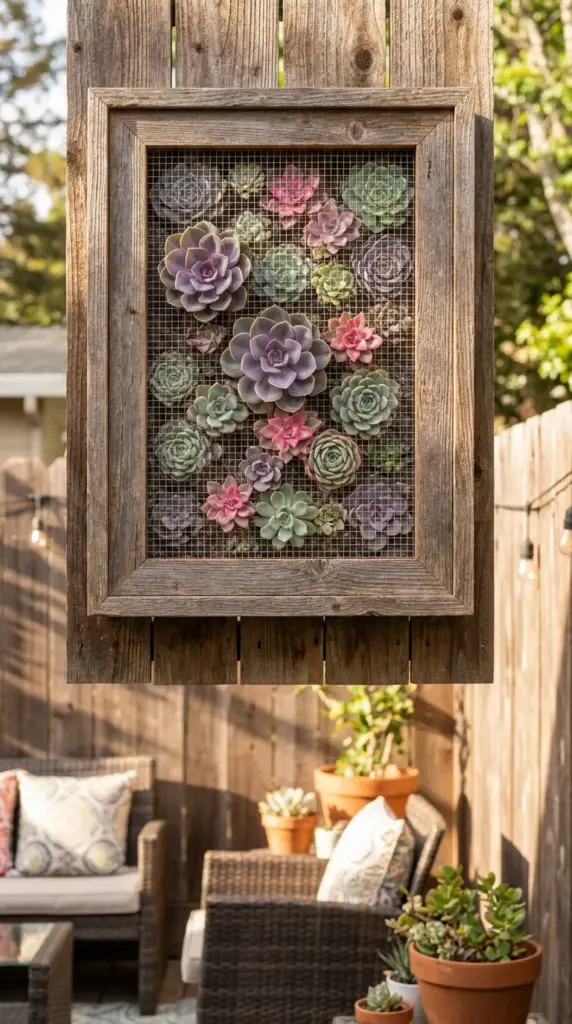
I once saw a gorgeous photo of a living botanical frame online and immediately tried to build my own using a cheap thrifted frame and wide chicken wire. The absolute second I tilted it upright, the loose soil mix completely collapsed out of the massive wire gaps, burying my bedroom carpet in a massive mountain of black dirt.
That incredibly messy failure taught me that creating living succulent picture frames requires a much tighter mesh backing and a lot of patience.
Crafting the Perfect Secure Frame Base
To build vertical art that actually stays put, you need a shallow wooden shadow box lined with a very fine wire mesh or hardware cloth.
First, secure the mesh firmly inside the frame, then pack the box tightly from behind using a damp mixture of peat moss and a fast-draining soil mix.
Seal the back of the shadow box with a sturdy piece of plywood to keep all the growing medium locked into place securely.
Arranging a Vibrant Tapestry of Echeveria
Now comes the absolute best part: poking your little plants directly through the wire mesh into the damp soil layer below.
I love packing a dense variety of colorful echeveria rosettes together tightly to create a gorgeous painted-canvas effect.
The absolute golden rule here is to leave the completed frame laying completely flat in a shaded spot for at least four to six weeks. This gives the delicate roots enough time to establish their root structure and grip the wire before you ever dare to hang it vertically on your wall.
Once you’ve mastered hanging these wooden frames indoors, you’ll want to explore even softer vertical options for your exterior spaces. Definitely click that next button below because I’m showing you how breathable felt pockets can instantly turn a boring apartment balcony into a lush, cascading green curtain!

GIPHY App Key not set. Please check settings