

 The Home Growns
4. Define Structural Paths with Localized Pea Gravel and Slate
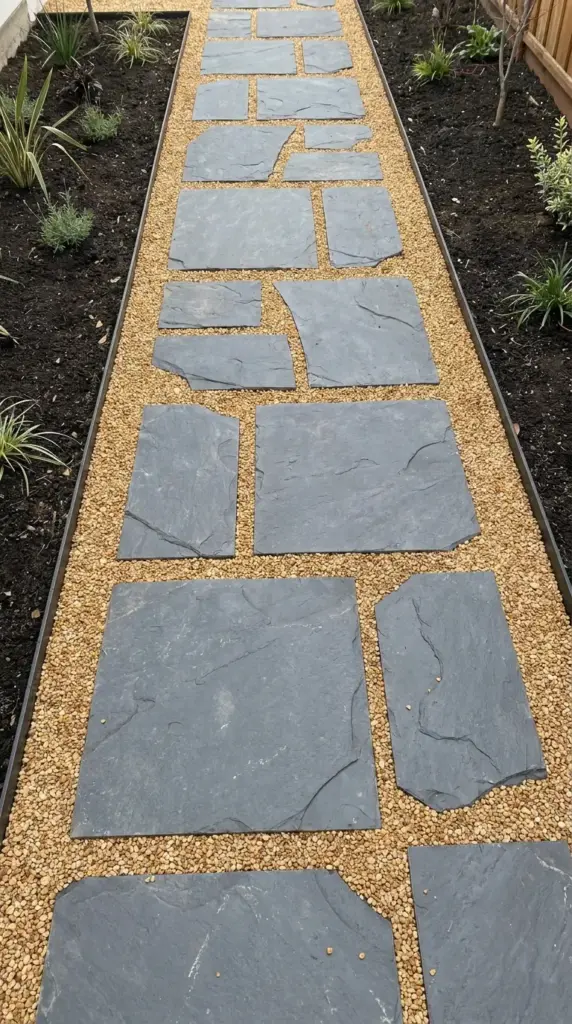
I once tried to save twenty bucks by using cheap, paper-thin mulch for my main front walkway. Within two weeks, aggressive weeds broke right through, turning my path into a messy, tripping hazard of a miniature jungle.
That weekend disaster taught me that if you want a truly low-maintenance front yard, you need tough, structural materials that stay put.
Laying an Indestructible Foundation
To build a path that requires zero weeding, you have to start by digging down about three inches and clearing out all the old roots. Always roll out a heavy layer of commercial-grade weed fabric right onto the bare dirt before you even think about ordering your stone.
Secure the fabric tightly with metal landscape staples so it cannot shift around over time. For the filler, I highly recommend using localized pea gravel because it naturally locks together and won’t wash away during a heavy summer rainstorm.
Stepping Stones and Slate Stability
Walking purely on loose gravel can feel a bit like trekking through a sandy beach, which is why you need a solid surface. Nestle large, flat slate stone pavers directly into the gravel, spacing them out to match your natural walking stride.
Wiggle each slate piece until it sits perfectly flush with the top of the gravel to prevent any stubbed toes. This combination creates a stunning modern hardscaping look that never needs a lawnmower or a weed whacker.
Now that our crisp, weed-free walkways are completely locked into place, we need to fill the surrounding garden beds with explosive, effortless color. Go ahead and hit that next button below because I am about to share my absolute favorite self-sustaining, sun-loving flowers that practically take care of themselves!


GIPHY App Key not set. Please check settings