

 The Home Growns
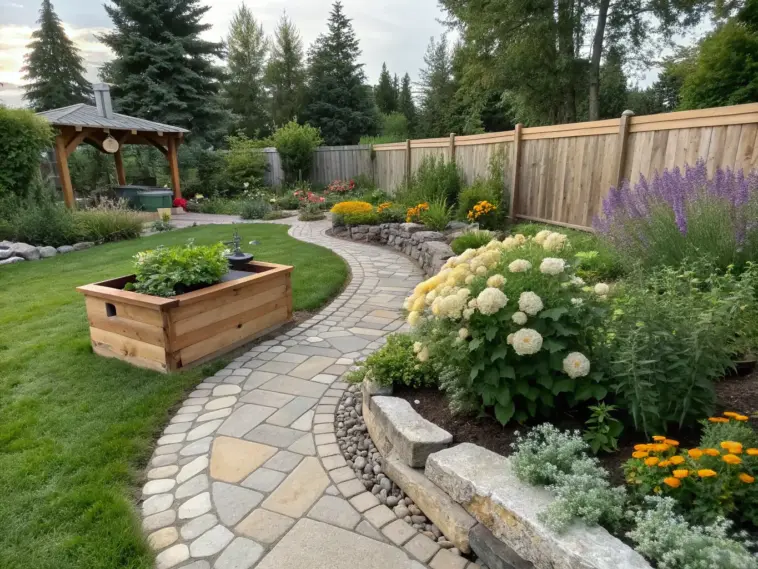
Did you know that homes with well-designed gardens sell for up to 20% more than those without?
Whether you’re a busy mom in Chicago squeezing weekend projects in, or a design-savvy millennial in Los Angeles dreaming of her perfect outdoor sanctuary — your backyard has so much untapped potential.
I’ve seen the most ordinary spaces transform into breathtaking retreats with just a little planning and the right layout strategy.
And the best part? You don’t need to hire a landscaper or break the bank to make it happen.
This guide walks you through everything — from mapping your space to choosing the right plants — plus 3 ridiculously easy hacks that’ll save you time, money, and a whole lot of guesswork.
Let’s dig in! 🌸
Why Your Backyard Layout Is the Secret to a Beautiful Garden Design
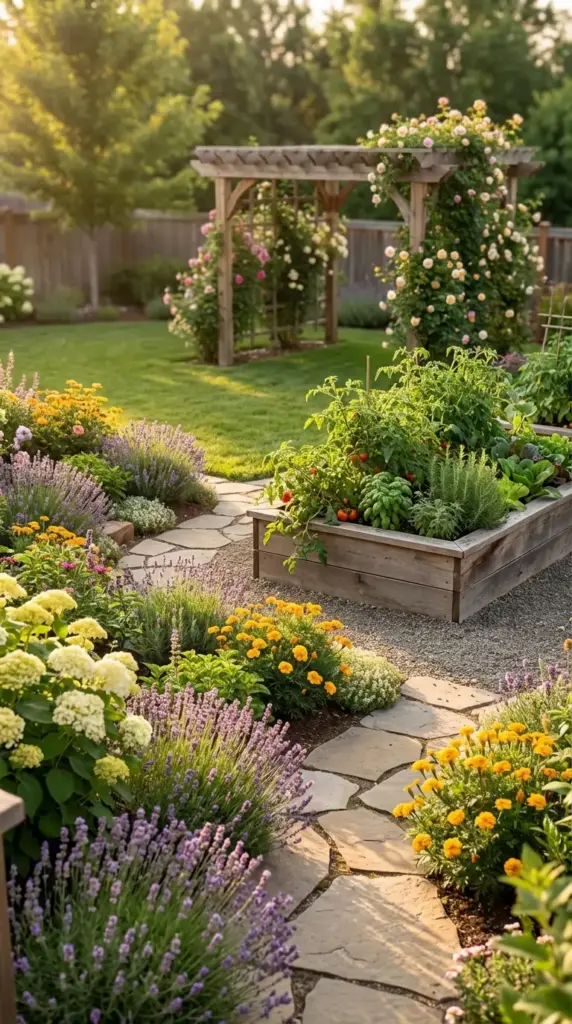
I’ll be honest — the first time I tried to design my backyard, it was a total disaster.
I bought plants on impulse, threw down some mulch, and called it a day. Six months later? It looked like a yard sale that never got cleaned up.
That’s when I realized something that changed everything: the layout comes first. Always.
The Foundation Nobody Talks About
Here’s the thing most gardening blogs skip right over. Before you buy a single plant or bag of soil, your backyard layout is making decisions for you — whether you planned it or not.
Think of your layout like the floor plan of a house. You wouldn’t build walls before drawing the blueprint, right?
Every garden decision — where your flower beds go, how wide your pathways are, where you put that cute little seating area — flows from the layout. Get it wrong, and everything else feels off. Get it right, and the whole space just clicks.
Cluttered Yard vs. Cohesive Outdoor Living Space
I used to think more plants meant a better garden. Spoiler: it doesn’t.
What separates a stunning outdoor living space from a chaotic mess is intentional design. It’s about creating zones — a dining area here, a garden bed there, a little reading nook tucked in the corner.
When your yard has a clear layout, your eye knows where to go. It feels calm. Organized. Like someone actually thought about it.
How Planning Your Layout Saves You Real Money
This is the part I wish someone had told me sooner.
Bad layout planning is expensive. I once bought 14 hostas for a spot that turned out to be full sun — hostas hate full sun, by the way. That was a $90 mistake I made in about 15 minutes.
A proper garden layout plan helps you map out sun exposure, soil conditions, and spacing before you spend a dime on gardening supplies. Studies show that homeowners who plan their landscaping upfront spend up to 30% less on plants and materials overall.
That’s not nothing. That’s a really nice patio set.
The Curb Appeal and Home Value Bonus
Here’s a fun fact that’ll make you want to grab a pencil and start sketching right now.
According to the American Society of Landscape Architects, well-designed landscaping can increase your home’s value by 15 to 20%. That’s not just curb appeal — that’s equity.
And beyond the dollars? A beautiful garden design genuinely makes you feel better. There’s actual research showing that spending time in a well-kept garden reduces cortisol levels and improves mood. Your backyard isn’t just pretty — it’s good for your health.
Real Before-and-After Transformations That Prove It Works
One of my favorite examples is a friend who had a completely flat, featureless backyard in the suburbs.
No zones. No focal point. Just… grass and a sad little fence. After spending one weekend mapping out a DIY landscape layout — adding a curved garden bed along the fence, a gravel pathway through the middle, and a small herb garden near the back door — the whole yard felt like a different property.
She didn’t buy anything crazy expensive. It was the layout that did the heavy lifting.
That’s the magic of thoughtful garden planning. It’s not about how much you spend. It’s about how intentionally you design.
The Takeaway Before We Move On
If you’re starting from scratch or redesigning an existing space, resist the urge to just start buying stuff.
Sketch your layout first. Even a rough drawing on a piece of paper counts. Map your sun and shade zones, decide on your garden zones, and think about flow — how you’ll actually move through the space.
That one step will save you time, money, and a whole lot of frustration.
🌿 Ready to take the next step? In the next section, we’re getting into exactly how to assess your backyard space before you design — including a super simple way to figure out your sun zones, soil situation, and what’s secretly working against your garden dreams. Hit that Next button below — you don’t want to skip this one!


GIPHY App Key not set. Please check settings