

 The Home Growns
3. Training Lush, Perennial Climbing Vines
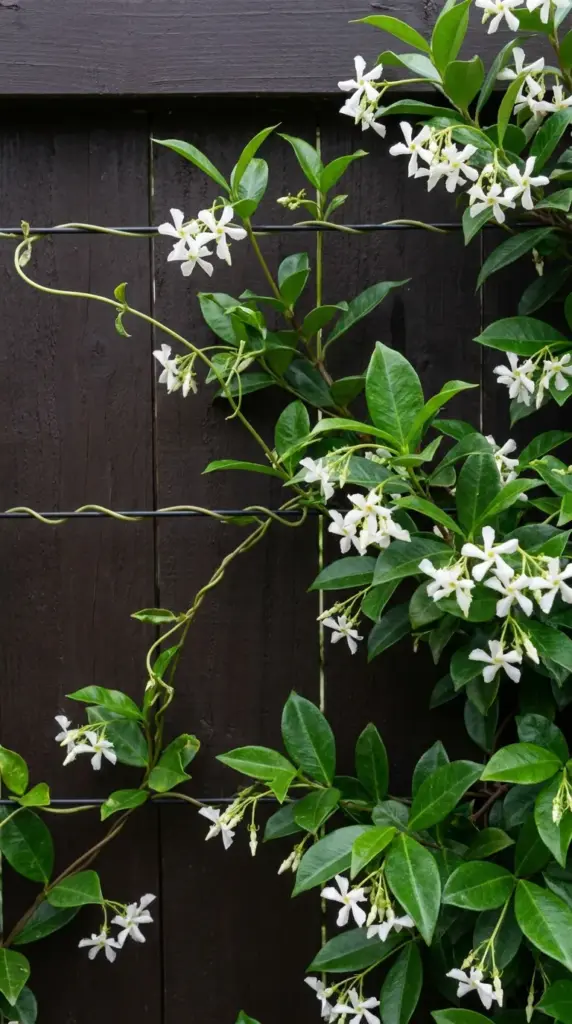
I once planted English ivy directly against a brand-new cedar fence because I wanted that romantic, fairy-tale look. Big mistake, friends, because that aggressive little monster literally started splitting my wood fence panels apart within two seasons.
That expensive nightmare taught me that you need the right climbing vines and a smart support system to build a beautiful living wall safely.
Selecting Greenery That Won’t Destroy Your Wood
Instead of destructive ivy, I always recommend Star Jasmine or Clematis to my students. Star Jasmine gives you thick, glossy green leaves all year and smells absolutely divine when it blooms in late spring.
If you want a massive burst of color, Clematis weaves through open spaces beautifully without secreting that sticky, wood-rotting glue. These varieties give you incredible backyard privacy without ruining your property value.
Building a Simple Wire Support Matrix
Don’t let the vines touch the actual wood directly if you can avoid it. Instead, screw small eye hooks into your fence posts and run heavy-duty galvanized wire horizontally between them.
Space the wires about twelve inches apart from the bottom to the top. This keeps a crucial pocket of airflow behind the leaves, which prevents rot and keeps your fence completely dry.
Watching those green tendrils wrap around the wires is deeply satisfying, but sometimes you need a privacy solution that works in minutes rather than months. So go ahead and click that next button right below, because we are diving into how elevated planters and a specific type of super-fast bamboo can fix your exposed yard today.


GIPHY App Key not set. Please check settings