

 The Home Growns
Fix 4: Hardscape Zoning with Wood Chip Mulch Berms
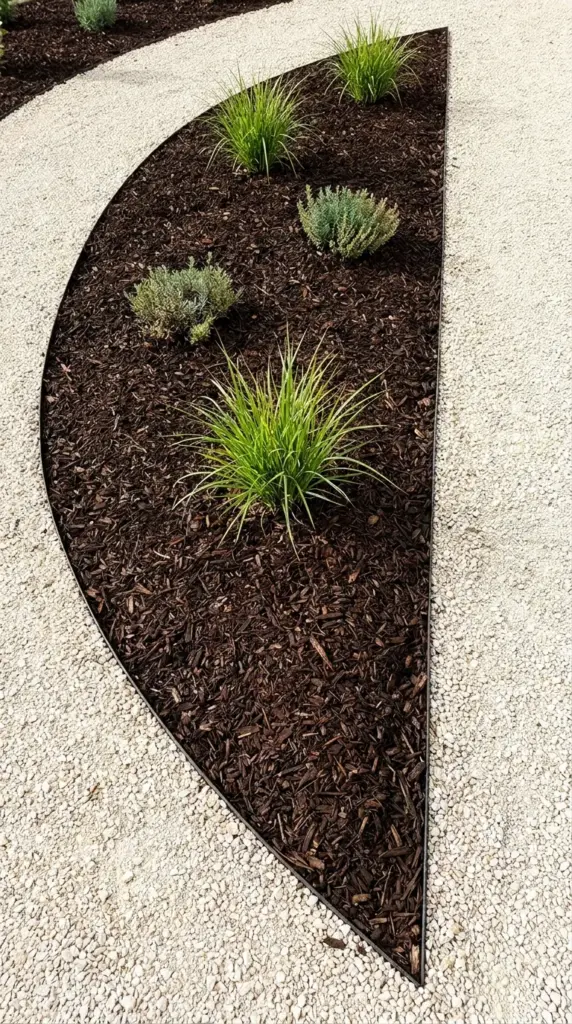
My first attempt at building a raised soil mound—what designers call a berm—was an absolute disaster. I didn’t pack the soil or create clean borders, so the very first heavy rain turned my front yard into a muddy landslide that coated the sidewalk.
It was incredibly embarrassing, but it taught me a valuable lesson about how to properly anchor structural elements in a low water landscaping plan.
Sculpting the Earth for Instant Drama
If your front yard looks totally flat and uninspiring, you need to introduce some artificial elevation changes to break up the monotony. Building low, rolling mounds of soil is the ultimate secret to killing off a boring, one-dimensional yard layout.
When you create these gentle slopes, you instantly give your front yard landscaping a sense of movement and scale. It forces the eye to move up and down, creating a beautiful natural stage that makes your diy garden projects look incredibly intentional.
The Power of Deep Bark Mulch and Clean Edges
Once your mounds are shaped, you want to blanket them in a thick layer of high-quality bark mulch or shredded wood chips. Don’t skimp here; a deep four-inch layer is critical for maximum soil moisture retention and stopping brutal weeds from taking over your hard work.
To make this look like a professional installed it, take a sharp spade and cut a deep, crisp boundary line between your mulch zones and gravel paths. This type of clean landscape edging gives you instant hardscape zoning that defines the space and keeps your yard looking tight and tailored.
Now that we have our stunning shapes and rich mulch beds locked in, we need to talk about replacing that struggling, thirsty grass with something way more vibrant, so hit that next button below because we are covering the absolute best evergreen groundcovers to finish off your masterpiece!



GIPHY App Key not set. Please check settings