

 The Home Growns
3. The Single Statement-Tree Anchor Corner
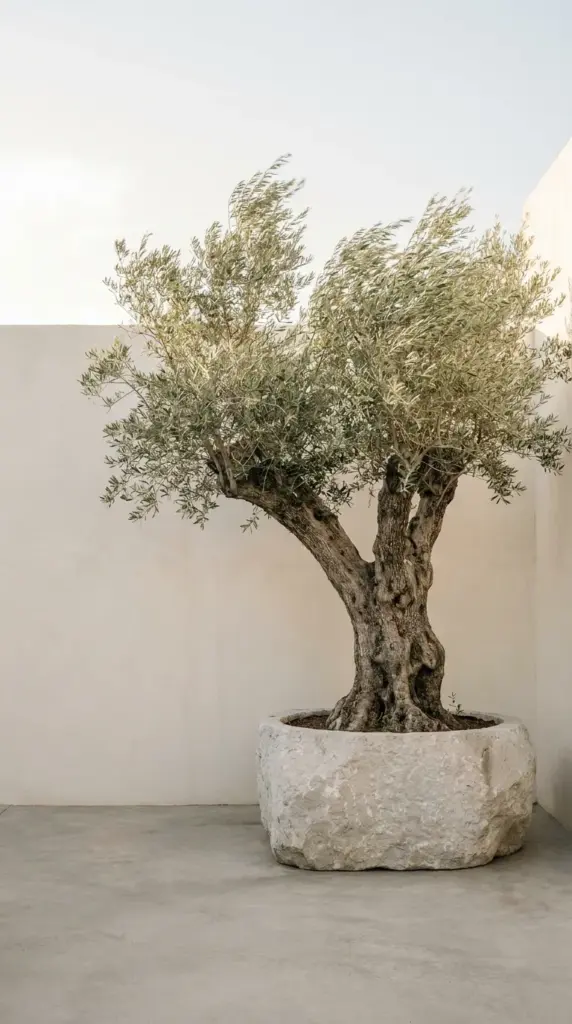
I used to think the only way to decorate my tiny concrete patio was to buy fifteen cheap, little plastic pots from the local hardware store. I carefully lined them all up against the railing, but honestly, it just looked like a messy, chaotic plant graveyard.
I finally got completely fed up, gave away the tiny pots, and invested in one massive olive tree set in a gorgeous, heavy stone planter. That single oversized statement completely transformed my patio from a cramped box into a deliberate architectural courtyard.
The Magic of Oversized Scale
It feels incredibly counterintuitive, but using one giant element actually makes a small space feel much grander and highly intentional. When you rely on a single, massive statement planter, it creates a powerful focal point that instantly anchors the entire design.
Instead of your eyes darting around at a dozen tiny distractions, they rest easily on one deliberate, high-end feature. This brilliant small yard landscaping trick uses bold scale to its absolute advantage, faking the luxurious look of a professionally designed, permanent garden.
Choosing the Right Low-Water Anchor
If you are ready to try this setup, skip the fussy seasonal flowers and look for a resilient, structural tree that naturally thrives in containers. A beautiful fruitless olive tree, a dwarf Meyer lemon, or a sculptural Japanese maple are absolute perfection for this specific minimalist patio setup.
Just make sure you plant your new anchor tree in a high-quality, weather-resistant pot that is at least 24 inches wide to give those roots ample room to breathe. The planter itself acts as luxury outdoor decor, so definitely don’t skimp on a beautiful texture or a modern finish.
And honestly, once you have that gorgeous, oversized tree set up, you’ll naturally want to admire it right from your indoor sofa, so hit the next button below because I’m going to show you exactly how to seamlessly drag your cozy living room straight outdoors.



GIPHY App Key not set. Please check settings