

 The Home Growns
3. Choosing Seeds That Actually Thrive for Beginners
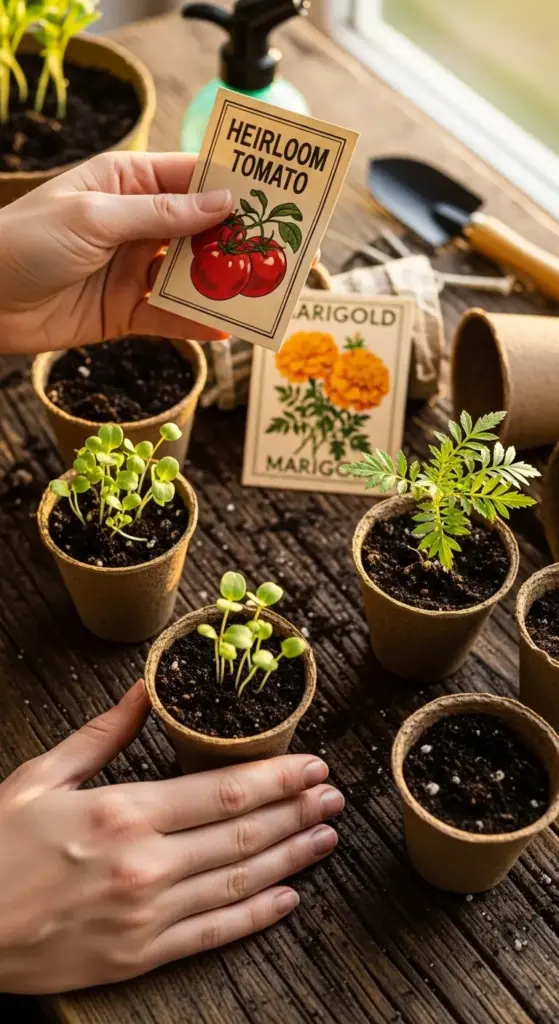
I once bought a seed packet labeled “exotic moonflower” because the illustration looked magical.
Six weeks later? Crickets. Not a single sprout.
Turns out those seeds needed scarification—fancy word for scratching the seed coat—before planting. Who knew?
Start with plants that actually want to grow. Your confidence will thank you.
The “Just Say Yes” Starter Seeds
Lettuce seeds are basically foolproof.
Sprinkle them on damp soil, give them light (they need light to germinate!), and tiny green leaves appear in 3–5 days. It’s instant gratification when you’re new to this.
I also swear by marigolds for first-timers. They sprout fast, tolerate beginner mistakes, and their cheerful orange blooms attract pollinators while repelling pests. Double win.
Basil seeds? Tiny but mighty. Just don’t bury them deep—barely cover with soil or they’ll struggle to push through.
Avoid starting fussy plants like celery or rosemary your first year. They’re slow to germinate and easily discouraged. Save those for when you’re feeling cocky.
Decoding Those Tiny Seed Packets
Seed packets look simple until you actually read them.
That “days to maturity” number? It starts counting after transplanting outdoors—not from your indoor planting date. I learned this the hard way when my tomatoes weren’t ready by July like I expected.
Look for the “indoor start” recommendation. Most tomatoes need 6–8 weeks indoors before your last frost date. Peppers often need 8–10 weeks because they’re slower growers.
Check your hardiness zone too. If you’re in Chicago (zone 5b), don’t bother with super-long-season varieties that need 100+ days to mature. You’ll get frost before harvest.


Heirloom vs. Hybrid—No Judgment Here
Heirloom seeds come from plants pollinated naturally over generations. You can save their seeds next year and grow identical plants.
Hybrids are cross-bred for specific traits like disease resistance or uniform fruit size. But their seeds won’t grow true-to-type next season.
Both are great! I grow hybrid zucchini for reliability but heirloom ‘Brandywine’ tomatoes for that incredible old-fashioned flavor. No need to pick sides.
Just know: if a packet says “F1 hybrid,” don’t bother saving seeds from those plants. It’s not worth the disappointment.
Match Plants to Your Actual Space
Living in a Manhattan apartment with a fire escape “garden”? Skip sprawling zucchini vines.
Instead, try ‘Patio Princess’ tomatoes or bush beans bred for containers. I grew cherry tomatoes in a 5-gallon bucket on my Seattle balcony last summer—harvested enough for fresh salads all season.
Got a sunny Dallas backyard? Go wild with vining cucumbers and pumpkins. But for small spaces, always check the mature plant size on the packet.
Pro tip: look for words like “compact,” “bush,” or “patio” in variety names. Those were literally bred for folks without acreage.
Honestly? Starting with easy seeds builds momentum. When you see those first green sprouts pushing through soil, you’ll feel like a wizard.
And that confidence carries you through the inevitable hiccups—like the time I accidentally planted carrot seeds in February (they hate cold soil—duh).
Ready to get your hands dirty? Next up I’ll walk you through the actual planting process step-by-step—including the exact depth for tiny seeds versus big ones, and why your watering technique makes or breaks germination. Click next to plant your first seeds like a pro 👇

GIPHY App Key not set. Please check settings