

 The Home Growns
2. Gathering Your Seed Starting Toolkit (No Fancy Gear Needed!)
I’ll never forget my first seed starting “kit.”
It was basically a shoebox, some paper towels, and a prayer.
Spoiler: the seeds molded into sad green fuzz within 48 hours.
Turns out garden soil from your backyard is not the same as proper seed starting mix. Who knew?
The Container Conundrum
You absolutely do not need to buy fancy plastic trays.
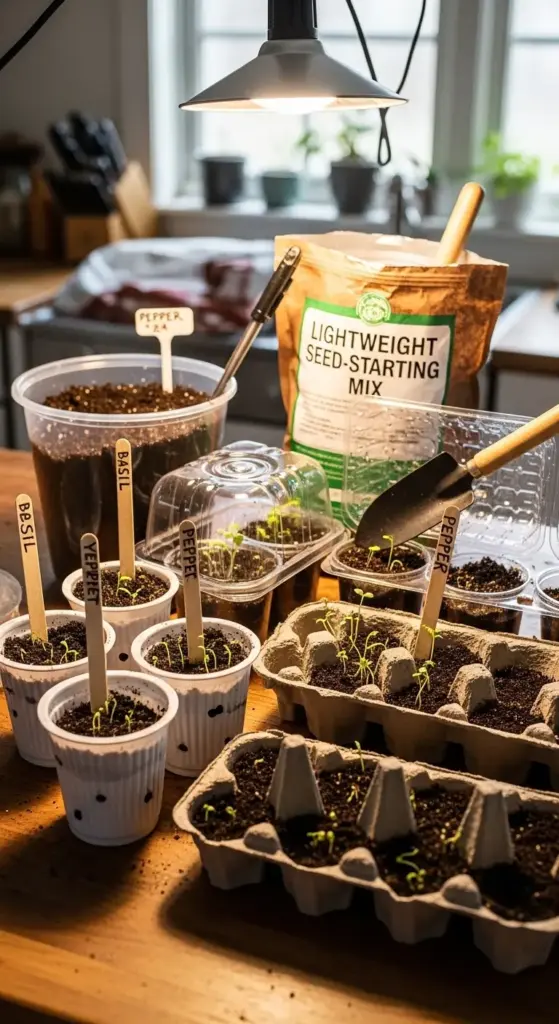
My favorite starter containers? Empty yogurt cups with holes poked in the bottom. Works like a charm.
I’ve also used egg cartons, toilet paper rolls, and even those clear plastic clamshells from store-bought berries—they make perfect DIY humidity domes when flipped upside down.
Just make sure whatever you use has drainage. Standing water is basically a death sentence for tiny seeds.
Last winter I tried starting cilantro in a beautiful ceramic pot with no holes. Total disaster. Seeds drowned before they even thought about sprouting.
Soil Matters More Than You Think
Garden soil is way too heavy for delicate seedlings.
It compacts easily and can harbor fungi that cause damping off—that heartbreaking moment when your sprouts just keel over overnight.
Invest in a lightweight seed starting mix. It’s fluffy, sterile, and designed to hold just the right amount of moisture.
I learned this the hard way after losing an entire tray of pepper seedlings to mold. Switched to proper mix and never looked back.
Pro tip: pre-moisten your mix before planting. Dry mix repels water and creates frustrating dry pockets around your seeds.
Lighting Without Breaking the Bank
A sunny south-facing window sounds great—until you live in Seattle during February.
My seedlings stretched toward that weak light like zombies, growing tall and spindly with almost no leaves. Those leggy seedlings never recovered.


For under $25 I grabbed a basic LED shop light from the hardware store. Hung it just a few inches above my trays on a shelf.
Game. Changer.
Your seedlings need 14–16 hours of light daily. A simple timer keeps things consistent without you having to remember.
Warmth Hacks That Actually Work
Seeds are picky about temperature. Most veggies won’t even think about germinating below 65°F.
I used to place trays near a radiator—bad idea. Heat dried out the soil unevenly and some seeds cooked while others stayed cold.
Then I discovered the magic of my refrigerator’s top surface. That gentle warmth from the motor underneath? Perfect for consistent bottom heat.
No fridge space? A $20 seedling heat mat works wonders for finicky peppers and tomatoes. But honestly—your appliance’s warmth might be free and already in your kitchen.
Labels You Won’t Regret Later
You will forget which tray holds basil versus oregano.
I learned this after carefully tending six trays for weeks… then having zero clue what was what at transplant time.
Waterproof labels are non-negotiable. I use painted wooden craft sticks with a Sharpie—charming and functional.
Or just write directly on containers with a grease pencil. Whatever works—just label immediately after planting. Not “in a minute.” Immediately.
Honestly? The fanciest seed starting setup means nothing if your seeds drown, stretch for light, or rot from cold soil.
Keep it simple. Start small. And for goodness sake—skip that $75 “premium starter kit” on Amazon. Your recycling bin probably has everything you need.
Curious which seeds are actually worth starting indoors versus direct sowing outside? I’ve got the lowdown on beginner-friendly varieties (plus which ones to avoid your first year). Click next to keep going 👇

GIPHY App Key not set. Please check settings