

 The Home Growns
Gardening With Kids, Pets, and a Packed Schedule
Can I be real with you for a second?
When I first started gardening as a busy mom, I genuinely thought it was going to be one more thing on an already impossible to-do list. Another responsibility. Another thing to feel guilty about when I inevitably forgot to do it.
I was so wrong.
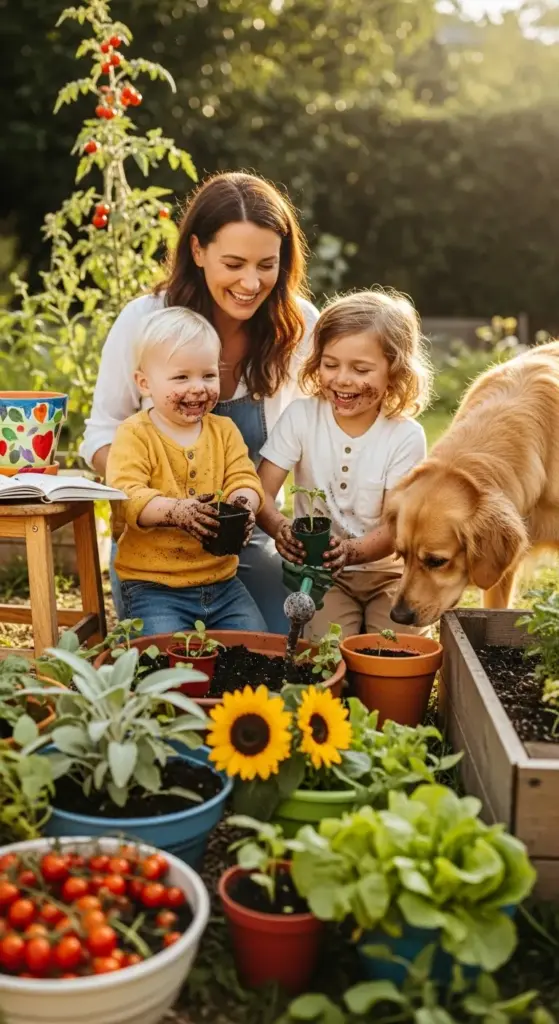
What I didn’t expect was that gardening would become the thing that actually made everything else feel more manageable. The ten minutes I spend watering my plants in the morning before the chaos of the day begins? That’s mine. The Saturday afternoon my kids and I spend digging in the soil together, getting absolutely filthy and laughing the whole time? Priceless.
A 2022 study published in the Journal of Environmental Psychology found that just 20 minutes of gardening activity significantly reduced cortisol levels and improved mood in participants — more effectively than other leisure activities studied. And for moms specifically, the combination of physical activity, nurturing, and connection with nature makes gardening uniquely restorative.
This section is for every woman who has ever thought “I’d love to garden but I just don’t have the time.” You have more time than you think. And your kids, your pets, and your schedule don’t have to be obstacles — they can actually be part of the whole beautiful thing. 🌿
How to Involve Children in the Garden
Here’s the secret to gardening with kids that nobody tells you upfront.
Lower your expectations for perfection and raise your expectations for joy. The garden will be messier. Plants will get accidentally overwatered. Seeds will be planted upside down. And it will be absolutely wonderful.
Start With Fast-Growing Plants That Keep Kids Engaged
The number one mistake parents make when gardening with kids is choosing plants that take too long to show results.
Kids need quick wins to stay interested — and fortunately, there are plenty of plants that deliver results fast enough to hold a child’s attention.
Radishes are the ultimate kid-friendly crop. They germinate in 3-5 days and are ready to harvest in just 25-30 days. Kids are absolutely amazed that something they planted with their own hands is ready to eat in less than a month.
Sunflowers are magical for children — they grow visibly fast (you can almost watch them grow in summer), they get impressively tall, and the giant seed heads are endlessly fascinating. Plant a dwarf variety like Sunspot in a container, or a giant variety like Mammoth in a raised bed for maximum wow factor.
Cherry tomatoes are perfect for kids because they can harvest and eat them directly from the plant — no preparation needed. There is genuinely nothing more satisfying for a child than eating a warm, sun-ripened tomato they grew themselves. It’s a food memory that lasts a lifetime.
Lettuce and salad greens show visible growth within days of germination and can be harvested with scissors — a task kids absolutely love. The cut-and-come-again method means the plant keeps producing, which keeps kids engaged over a longer period.
Age-Appropriate Garden Tasks for Kids
Toddlers (2-4 years): Digging in soil with a small trowel, watering with a small can, dropping seeds into pre-made holes, and harvesting ripe vegetables. Keep it sensory and simple — at this age, it’s all about the experience of touching, smelling, and exploring.
Young children (5-8 years): Planting seeds independently, learning to identify different plants, helping mix soil, painting and decorating pots, and keeping a simple garden journal with drawings of their plants.
Older children (9-12 years): Taking ownership of their own container or raised bed, learning to read seed packets and follow planting instructions, understanding basic plant care concepts like sunlight and watering needs, and starting to learn about composting and soil health.
Teenagers: Planning and designing their own garden space, researching plants independently, learning about companion planting and pest management, and potentially starting a small herb or vegetable business selling produce to neighbors. Entrepreneurship and gardening make a surprisingly great combination.
Make It a Ritual, Not a Chore
The framing matters enormously with kids — and honestly, with ourselves too.
Don’t present gardening as a task to be completed. Present it as an adventure, an experiment, a creative project.
Give each child their own dedicated space — even if it’s just one container that’s completely theirs to plant, care for, and harvest. Ownership creates investment. When it’s their plant, they care about it differently.
Create a garden journal together — a simple notebook where kids can draw their plants, record what they planted and when, note observations, and track growth over time. It combines gardening with literacy, science, and art in the most natural way.
Celebrate every milestone. First sprout, first flower, first harvest — make a big deal of it. Take photos, do a little happy dance, let them call grandma to share the news. These celebrations build the kind of positive associations with growing food that last a lifetime.
Child-Safe and Pet-Friendly Plants
This section could genuinely save a life — so please read it carefully.
Many of the most popular and beautiful garden plants are toxic to children and pets if ingested. And in a garden environment where curious little hands and noses are constantly exploring, this matters a lot.
Completely Safe for Kids AND Pets ✅
Basil — non-toxic to cats, dogs, and children. Smells amazing, grows easily, and kids love snipping it for pizza night.
Mint — safe for everyone in the family. Cats actually love rolling in it, which is adorable and harmless.
Rosemary — non-toxic to dogs, cats, and children. The woody stems are actually interesting for kids to explore.
Thyme — completely safe for pets and children. A great low-growing herb for container edges.
Marigolds — non-toxic and actually beneficial — they repel mosquitoes and garden pests naturally.
Sunflowers — completely safe for dogs, cats, and children. One of the most family-friendly plants you can grow.
Lettuce and most salad greens — totally safe and nutritious for the whole family, including pets. Cats and dogs sometimes enjoy nibbling lettuce leaves.
Nasturtiums — both the flowers and leaves are edible and completely safe. Kids love eating the peppery flowers — it feels like a magical, fairy-tale thing to eat a flower.
Strawberries — safe for kids and pets, and incredibly rewarding to grow in containers. Few things make a child happier than picking their own strawberries.
Plants to Avoid in Family Gardens ❌
Tomato plants — while the fruit is safe, the leaves and stems of tomato plants are toxic to dogs and cats. Keep pets away from tomato foliage.
Pothos — one of the most popular houseplants, but toxic to cats and dogs if ingested. Keep out of reach or avoid entirely in pet-heavy households.
Aloe vera — toxic to cats and dogs despite its many human health benefits.
Lavender — while generally considered safe in small amounts, concentrated lavender essential oil is toxic to cats. The plant itself poses minimal risk, but it’s worth being aware of.
Foxglove, oleander, and lily of the valley — highly toxic to both pets and children. Beautiful plants, but absolutely not appropriate for family gardens.
Always verify any new plant on the ASPCA Animal Poison Control database (aspca.org/pet-care/animal-poison-control) and the American Academy of Pediatrics plant safety resources before adding it to a family garden. Two minutes of research can prevent a serious emergency.
Quick-Care Plant Options for Busy Women
Let’s be honest about something.
Not every day is a gardening day. Some days you’re running on three hours of sleep, back-to-back meetings, school pickups, and a dinner that somehow needs to materialize from an almost-empty fridge. Those days are real, and your garden needs to survive them.
The solution isn’t to feel guilty about neglecting your garden on hard days. The solution is to choose plants that are genuinely forgiving of irregular attention — and to set up systems that reduce the daily care burden.
The Most Low-Maintenance Plants for Busy Schedules
Succulents and cacti — water every 10-14 days in summer, even less in winter. Practically indestructible with minimal attention. Beautiful in clusters on a windowsill or shelf.
Snake plants (Sansevieria) — one of the most tolerant houseplants in existence. Survives low light, irregular watering, and general neglect with remarkable grace. Water every 2-3 weeks. Perfect for busy women.
Rosemary — drought-tolerant, pest-resistant, and actually prefers to be slightly neglected. Water once a week or less and it’s happy.
Lavender — same as rosemary. Mediterranean plants evolved to survive dry, harsh conditions. They don’t need you hovering over them.


Pothos (if you don’t have pets) — tolerates low light, irregular watering, and almost any indoor condition. Practically tells you when it needs water by slightly drooping its leaves. Water, it perks back up within hours.
Mint — almost aggressively easy to grow. It wants to survive. It will survive. Water when the soil feels dry and it will keep producing indefinitely.
Systems That Reduce Daily Garden Work
Self-watering containers are the single biggest time-saver for busy gardeners. Fill the reservoir every 3-5 days instead of watering daily. Game changer for tomatoes, herbs, and any plant that needs consistent moisture.
Drip irrigation systems for balcony and patio gardens can be set up for about $25-$40 and connected to a simple timer that waters your plants automatically. You literally don’t have to think about it.
Mulching the top of your containers with a thin layer of straw, wood chips, or even decorative pebbles reduces moisture evaporation significantly — meaning you water less frequently without any negative impact on your plants.
Grouping plants together creates a microclimate of slightly higher humidity around the plants, which reduces how quickly the soil dries out. It also looks beautiful — a cluster of plants always looks more intentional than individual pots scattered around.
The 10-Minute Garden Routine
You don’t need an hour to maintain a small space garden. You need about 10 minutes a day — and even that can be broken into smaller chunks.
Morning (5 minutes): Check soil moisture on your containers. Water anything that needs it. Do a quick visual scan for any signs of pests or problems. Harvest any herbs or vegetables that are ready.
Evening (5 minutes): Deadhead any spent flowers. Remove any yellowing or damaged leaves. Check that drainage trays aren’t holding standing water. That’s it.
Ten minutes. Less time than scrolling Instagram. And infinitely more satisfying. 😄
Turning Gardening Into a Self-Care Ritual
This is the part I feel most passionate about — and the part that I think gets overlooked most often in gardening content.
Gardening is not just a hobby. It’s a practice. And like any practice — yoga, meditation, journaling — it gives back in proportion to the intention you bring to it.
The Morning Garden Ritual
Starting your day in the garden — even for just 10 minutes — sets a completely different tone for the day.
There’s something about the combination of fresh air, natural light, physical touch with soil, and the quiet observation of living things that activates a kind of calm focus that’s hard to achieve any other way.
Before you check your phone in the morning, go water your plants. Stand outside with your coffee. Notice what’s changed overnight — a new bud, a new leaf, a flower that opened while you were sleeping.
This is mindfulness in its most accessible form. No app required. No special equipment. Just you, your plants, and five minutes of genuine presence.
Gardening as Sensory Therapy
Horticultural therapy — the use of gardening activities for therapeutic purposes — is a recognized clinical practice used in hospitals, rehabilitation centers, and mental health facilities worldwide.
And you don’t need a clinical setting to access its benefits.
The sensory experience of gardening — the smell of soil, the texture of leaves, the sound of water, the warmth of sun on your skin — engages your nervous system in a way that actively counteracts the effects of chronic stress.
Specifically: The act of touching soil exposes you to Mycobacterium vaccae, a naturally occurring soil bacteria that research suggests may increase serotonin production in the brain. You literally get happier from touching dirt. How amazing is that?
Creating a Garden Space That Supports Your Mental Health
Your garden should feel like a sanctuary — a space you want to be in, not just a place where plants live.
Add a comfortable chair or cushion near your garden space. String warm fairy lights for evening garden time. Keep a journal and pen nearby for thoughts that come up while you’re gardening. Play music or a podcast while you tend your plants.
Make the space yours in every sense. Because the more inviting it feels, the more time you’ll spend there — and the more time you spend there, the better you’ll feel. It’s a beautiful cycle.
How Gardening Connects to Healthy Eating and Food Education
This might be my favorite benefit of all — and it’s especially powerful for families with children.
Research consistently shows that children who grow their own food are significantly more likely to eat it. A study from the Journal of the American Dietetic Association found that children who participated in school gardening programs were 3.5 times more likely to eat fruits and vegetables than children who didn’t.
Three and a half times. For any parent who has ever battled a picky eater, that statistic is everything.
The Farm-to-Table Experience at Home
There is a profound difference between food that comes from a grocery store and food that comes from your own garden — and children feel that difference instinctively.
When a child grows a tomato from seed, waters it every day, watches it flower, and finally picks it warm from the vine — that tomato means something. It has a story. It has their effort in it. And they will eat it with a pride and enthusiasm that no amount of parental persuasion could ever manufacture.
Start with crops that connect directly to foods kids already love:
Pizza lovers: Grow basil and cherry tomatoes for homemade pizza sauce. Let them harvest the ingredients and help make the sauce. They will eat that pizza like it’s the best thing they’ve ever tasted.
Salad skeptics: Grow lettuce, cherry tomatoes, and cucumbers in a dedicated “salad garden” container. Let kids harvest and assemble their own salads. Ownership changes everything.
Snack lovers: Grow strawberries, cherry tomatoes, and snap peas — all of which can be eaten directly from the plant as a snack. Kids love grazing from the garden.
Teaching Food Literacy Through Gardening
Gardening teaches children things that no classroom lesson can replicate — and it does it in the most natural, experiential way possible.
Where food comes from. In an age where many children genuinely don’t know that french fries come from potatoes, growing food creates a fundamental understanding of the connection between soil, plants, and the food on their plate.
Patience and delayed gratification. Planting a seed and waiting weeks for it to produce is one of the most powerful lessons in patience a child can experience. In a world of instant everything, that lesson is genuinely valuable.
Responsibility and consequences. If you forget to water your plant, it wilts. If you water it too much, it dies. The garden gives immediate, honest feedback — and children learn to take their responsibilities seriously because the consequences are real and visible.
Science in action. Photosynthesis, germination, pollination, decomposition — every fundamental biology concept comes to life in a garden. It’s the best science classroom in the world, and it fits on a windowsill.
Simple Garden-to-Table Recipes to Try With Kids
Fresh Herb Butter: Soften butter, mix in finely chopped fresh herbs from your garden (chives, basil, thyme, parsley), roll in plastic wrap, and refrigerate. Incredible on bread, pasta, or grilled vegetables. Kids love making it and feel like real chefs.
Garden Salsa: Cherry tomatoes, fresh basil, a little garlic, olive oil, salt. That’s it. Blend or chop roughly and serve with chips. When kids make salsa from tomatoes they grew themselves, they will eat it by the bowlful.
Mint Lemonade: Fresh mint from the garden, lemon juice, water, and a little honey. Refreshing, beautiful, and something kids can make almost entirely independently. It makes them feel incredibly capable and proud.
Lettuce Wraps: Large lettuce leaves from the garden used as wraps for whatever fillings your family loves — chicken, rice, vegetables, cheese. Kids love the novelty of eating from a leaf they grew themselves.
Conclusion
Starting a garden — even a tiny one — is one of the most rewarding things you can do for your home, your health, and your happiness.
From choosing the right plants to designing a space that feels totally you, every step of this journey is worth it.
Whether you’re growing herbs on a Seattle windowsill or building a vertical garden on your Dallas patio, remember: every expert gardener started exactly where you are right now.
So grab your gloves, pick your first plant, and let’s make your small space bloom! 🌸
Drop a comment below and tell me — what’s the first thing you want to grow?



GIPHY App Key not set. Please check settings