

 The Home Growns
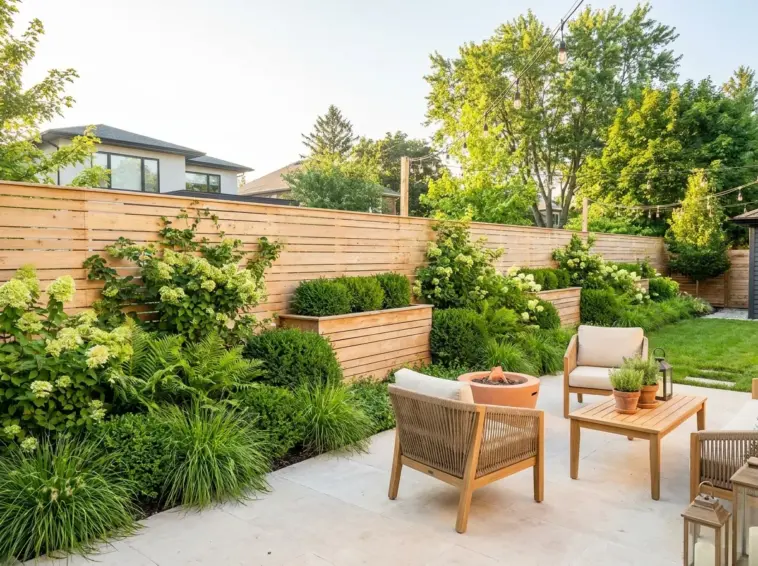
Did you know your backyard fence might actually be making your entire property look smaller and completely boxed-in without you even realizing it?
Today, I am breaking down ten brilliant, architect-approved garden design ideas that completely flip the script on boring wooden boundaries.
We will explore everything from deep layered planting templates to moody dark paint tricks, smart low-voltage lighting setups, and even secret vertical trellises.
Most homeowners completely panic and just throw a bunch of random, mismatched bushes against the wood, which usually ends up looking messy and crowded.
But the ultimate trick to fixing a flat backyard privacy view actually involves an illusion that sounds completely backward until you see it in action.
Don’t worry, this guide gives you the exact blueprint to transform your yard fast, easily, and without any expensive fluff.
Blur Rigid Property Lines with Layered “Three-Tier” Planting
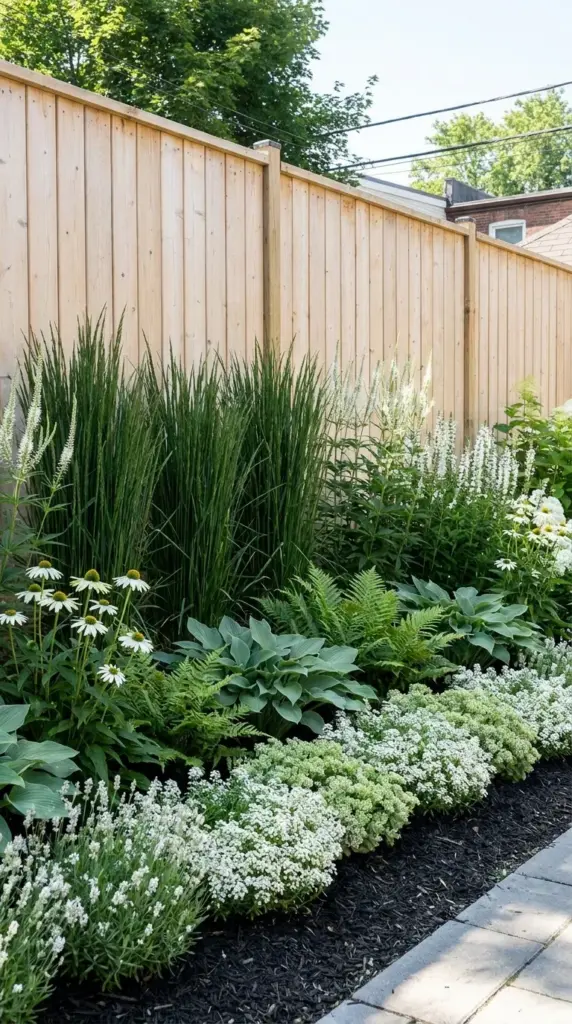
When I first bought my house, I planted a single, perfectly straight line of identical arborvitae right against the wood. Honestly, it looked less like a cozy backyard garden and more like a high-security prison yard, totally boxing us in.
The Magic of Background, Midground, and Foreground Heights
To fix this flat look, pro designers rely on the classic three-tier planting rule to fake massive depth.
Your background layer needs the tallest plants, usually sitting right around 6 to 8 feet high to mask the actual top of the fence structure.
Next, your midground layer should feature medium-sized shrubs or blooming perennials that hover around 3 to 5 feet.
Finally, finish off with low-growing foreground plants or groundcovers at 1 to 2 feet to pull the eye forward.
This staggered arrangement breaks up that harsh, flat boundary line and blurs the edges of your property completely.
Year-Round Cover: Selecting the Ultimate Evergreen Shrubs
You don’t want your beautiful design disappearing the second winter hits, which is why choosing the right evergreen shrubs is non-negotiable.
I highly recommend using dense options like Cherry Laurel or Japanese Yew because they stay lush and full even in freezing weather.
Just make sure to leave about two to three feet of breathing room between the fence panels and your background rows.
This prevents trapped moisture from rotting out your wood while giving your plant roots plenty of room to expand.
Once you get those plant layers sorted out, you will want an even bigger optical illusion to make all that new greenery stand out, so definitely hit that next button below because I am sharing a wild paint color secret that completely tricks the human eye.

GIPHY App Key not set. Please check settings