

 The Home Growns
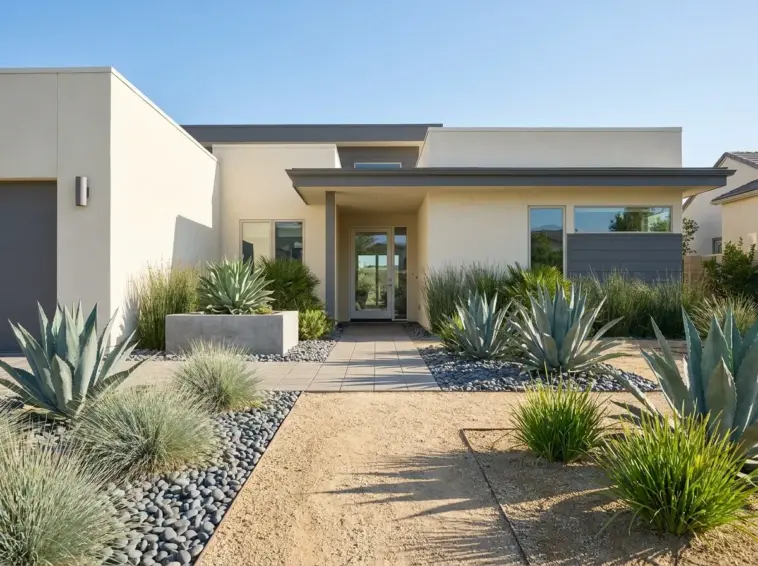
I remember helping my neighbor Sarah put the finishing touches on her gorgeous new desert-style yard, feeling like absolute geniuses. We literally toasted our coffee mugs to never dealing with soggy lawn mowers or sky-high water bills again.
Then, the first heavy August storm hit, and my phone started buzzing off the hook.
Sarah’s beautiful new rocks didn’t absorb the sudden cloudburst; they turned her entire front yard into a high-speed waterslide pointing straight at her stucco.
Many folks assume that switching to low water landscaping means you can completely forget about runoff.
It’s a massive misconception that can quietly ruin your slab and stick you with foundation repair costs averaging anywhere from $5,000 to $10,000.
When heavy downpours hit packed decorative stone, it triggers unexpected standing water front yard nightmares.
The culprit is often a hidden layer of material causing sneaky landscape fabric water pooling right against your home.
The good news is that you don’t need a massive construction crew or a tractor to save your home.
I’ve got a dead-simple, 5-minute diagnostic trick that will pinpoint the exact structural flaw hiding right under your gravel.
Let’s save your wallet some serious heartache and get this sorted before the next big storm clouds roll in.
The Illusion of No-Water Landscaping (Why Xeriscapes Still Need a Drainage Plan)
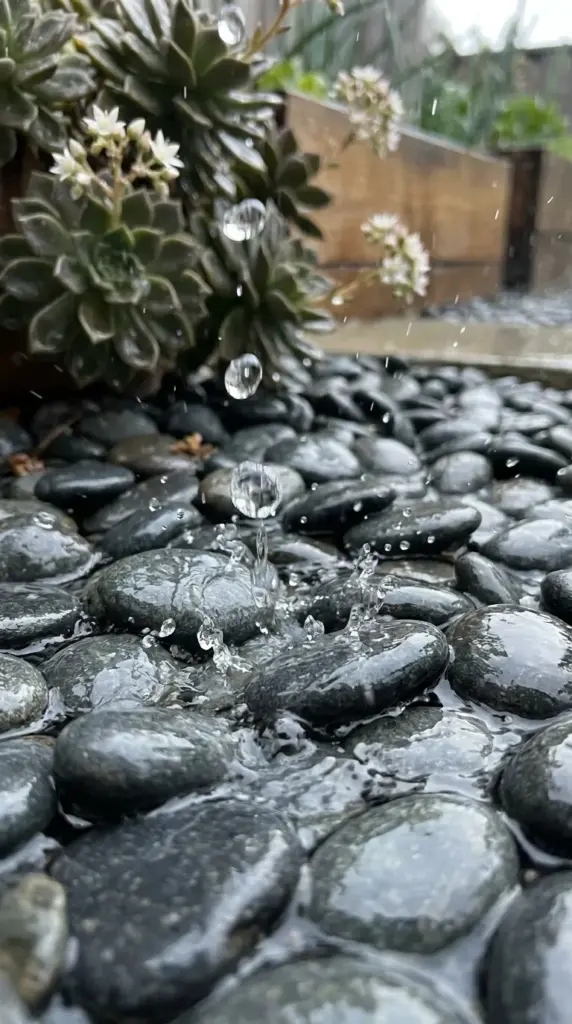
I’ll never forget my first year teaching home horticulture when a sweet student brought in a picture of her completely rotted, drowned agave plant. She was totally baffled because she’d just spent a fortune switching to desert rocks, genuinely believing that less watering meant her drainage worries were magically over.
The Myth of the Self-Draining Rock Bed
It’s the classic trap we all fall into when designing a low-maintenance front yard landscaping project. We look at a gorgeous bed of river rocks and assume water will just slip right through them into the earth like magic.
In reality, unplanted decorative stone actually accelerates surface water velocity during sudden cloudbursts. Because there are no thirsty plant roots to slow things down, that rushing water behaves less like a garden and more like a paved parking lot.
Lawn vs. Gravel: The Hard Truth About Soil Absorption
A traditional grass lawn acts like a giant green sponge, using deep root systems to pull moisture down and keep the soil relatively loose. When you swap that grass for a heavy, gravel-filled layout, you lose that natural brake system entirely.
Over time, the sheer weight of the stones combined with lack of root activity causes severe soil compaction. When a heavy downpour hits that compacted ground, the water has nowhere to go, creating terrible standing water front yard pools that eventually creep toward your slab.
It’s a wild illusion that catches so many smart homeowners off guard, but don’t worry because we are about to pull back the curtain on the actual hidden instigator. Go ahead and tap that next button below so I can show you the exact fabric mistake that turns a harmless rain shower into a total foundation nightmare.

GIPHY App Key not set. Please check settings