

 The Home Growns
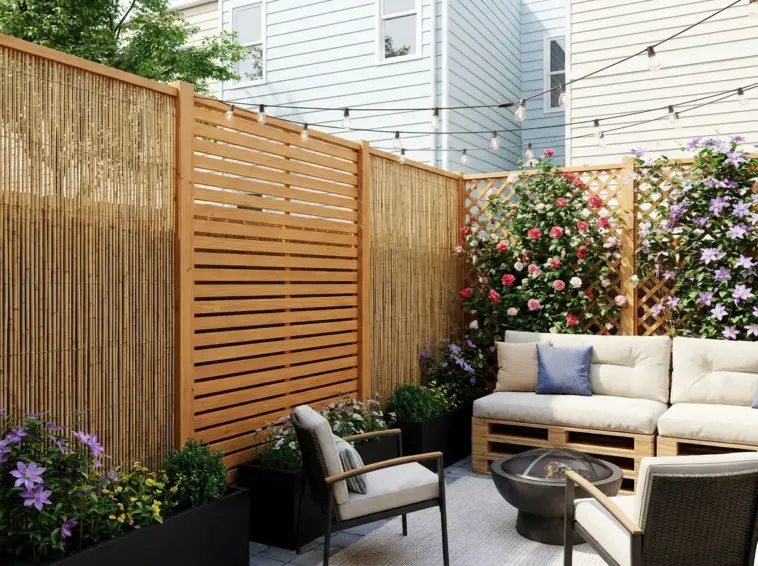
If you want more backyard privacy but your budget says absolutely not to a full custom fence, you are very much my kind of person. I love a smart, scrappy DIY that fixes a real problem without turning into a four-figure project.
The good news is you do not need a massive renovation to block an ugly view, hide your trash cans, create a cozy patio corner, or stop making awkward eye contact with the neighbors. In 2026, some of the most popular budget privacy fence trends are actually smaller, more flexible builds like screens, toppers, slat panels, and plant-friendly frames.
Every idea in this post is designed to keep materials under $200, though prices can vary a bit depending on where you live and whether you’re shopping in places like New York, Seattle, or Los Angeles. I’m also talking materials only, not tools or labor, because that’s the only honest way to keep this list useful.
A few of these are polished and modern. A few are gloriously practical. And one or two are the kind of project you build in a mild rage after hearing the neighbor’s leaf blower for the third weekend in a row.
Let’s get into it.
Before You Spend a Dollar: How to Keep a Privacy Fence Project Under $200
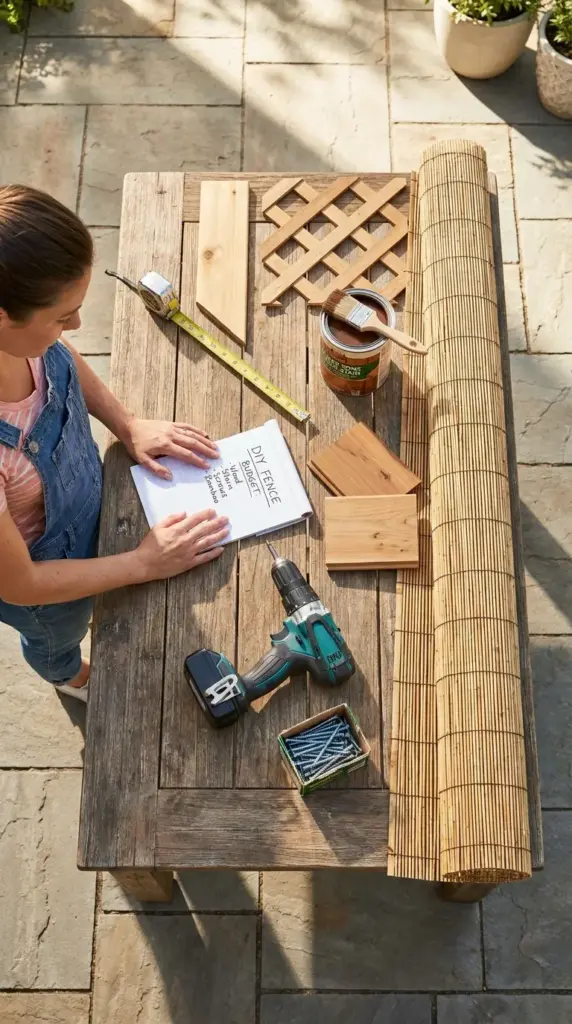
Know What You’re Actually Building
A true fence usually means posts set in the ground and a more permanent structure. A privacy screen is smaller, faster, and way more realistic if you’re trying to stay under a $200 materials budget.
A fence extension is the sneaky-smart middle ground. If you already have a short fence, adding height is often cheaper than starting from scratch, and honestly, I wish more people realized that before hauling home a truckload of lumber.
Understand Where the Money Goes
Most budget blowups happen with posts, hardware, and fasteners, not the panels. A few 4x4s, exterior deck screws, post bases, stain, and brackets can eat your wallet alive if you don’t price them first.
I always tell my students to build the budget backward. Start with your max spend, then assign rough numbers for panels or screening, supports, hardware, and finish before you buy one cute extra.
Do the Boring Prep First
Measure your linear feet and height carefully. Then check your local fence rules, because cities and HOAs love to ruin a Saturday project with one annoying paragraph in a handbook.
Also, mark utilities before driving anything into the ground. I’ve seen people get weirdly confident with a post pounder, and let me tell you, confidence is not the same thing as a plan.
Pick the Right Spot for a Budget Build
These low-cost ideas work best in small yard privacy zones. Think patio corners, hot tub areas, side yards, trash can zones, balcony rails, deck edges, and direct sightlines from next door.
If you’re trying to fence a whole suburban yard for under $200, I love the optimism, but no. Hit the next button below, because the first idea is one of the cheapest real builds on this list.


GIPHY App Key not set. Please check settings