

 The Home Growns
4. Expanding with Pea Gravel Spacing
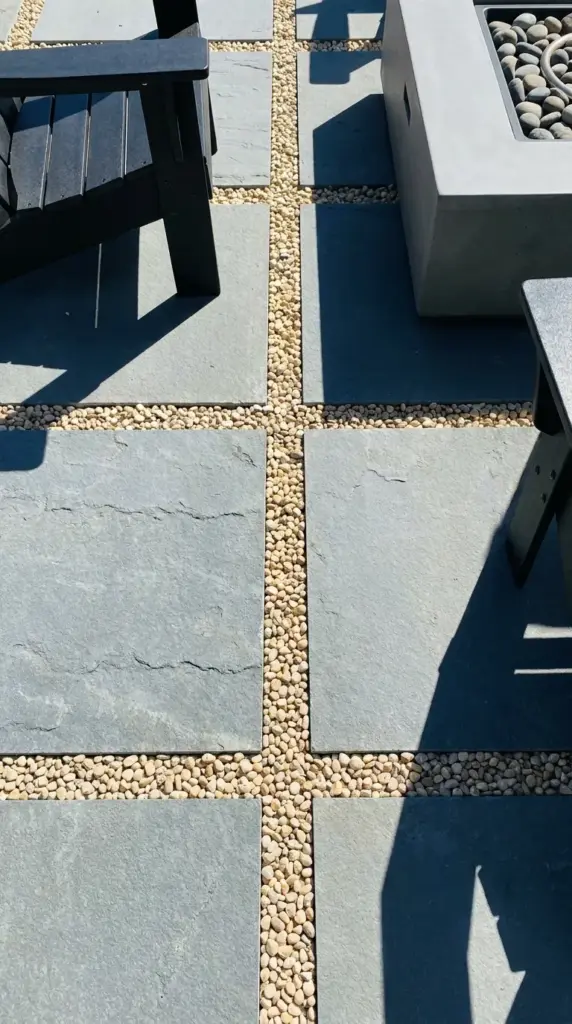
I was building a cozy little fire pit patio for my sister three summers ago, and we completely miscalculated our materials. We ran out of stones with a quarter of the space left to cover, and driving two hours back to the stone yard just wasn’t going to happen.
Out of pure desperation, I pulled up the stones, spaced them all out, and filled the empty gaps with some cheap rock I had left over from a walkway. It ended up looking twice as expensive as the solid layout we originally planned.
The Magic of 3-Inch Gaps
Leaving intentional gaps between your stones is an incredibly smart way to stretch your outdoor budget. You can actually cut your hardscaping material costs by a whole third just by spreading things out.
The absolute sweet spot for this modern, high-end architectural aesthetic is exactly two to three inches of space between large, square slabs. If you go any wider than that, it instantly becomes an annoying tripping hazard for patio furniture or sandals.
Just make sure you keep the spacing perfectly consistent across the whole area. You also need to lay down heavy-duty landscaping fabric underneath to stop aggressive weeds from completely taking over your beautiful pea gravel and pavers.
Choosing the Right Gravel
You definitely can’t just dump any random, jagged driveway rock into these carefully planned design gaps. You want to buy small, smooth pea gravel because it’s comfortable to walk on and won’t scratch the sides of your patio stones.
To get that true luxury look, try to match the gravel tone to the tiny flecks of color naturally found inside your main patio layout. If you want a really crisp, ultra-modern garden vibe, heavily contrast dark charcoal pavers with bright white river rock.
I honestly love how this simple trick saves so much money while looking like a million bucks, so hit the next button below because we are about to look at a classic pattern that locks everything together like a structural puzzle.



GIPHY App Key not set. Please check settings