

 The Home Growns
How to Make Your Vegetable Garden Look Gorgeous (Garden Decor Ideas)
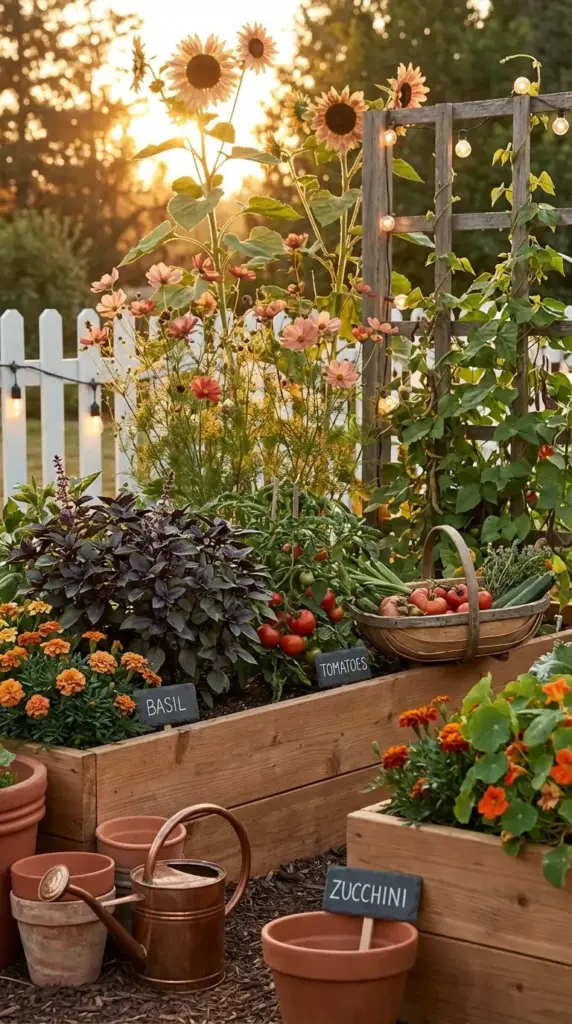
Here’s something I never expected to say out loud:
My vegetable garden is one of my favorite rooms in my house.
Not my kitchen. Not my living room. My garden. 😄
And I say “room” intentionally — because that’s exactly how I started thinking about it once everything clicked. Your outdoor space deserves the same intentional design energy you bring to every room inside your home. Maybe even more, because it’s the first thing people see.
The moment I stopped treating my vegetable garden like a purely utilitarian space and started treating it like a designed environment, everything changed. The plants grew the same. But the experience of being out there? Completely transformed.
Let me show you exactly how to get there.
Blending Vegetable Gardening With Home Decor and Outdoor Design Trends
The biggest mindset shift for most gardeners is realizing that beautiful and productive are not competing goals.
They never were.
In fact, some of the most stunning gardens in the world — the kitchen gardens of French châteaux, the potager gardens of English country estates — are vegetable gardens. Designed with the same care and intention as any interior space.
You don’t need a château. You need a perspective shift.
Current outdoor design trends that translate beautifully to vegetable gardens:
Cottagecore and Romantic Garden Aesthetics This trend is everywhere right now — and vegetable gardens are a natural fit. Think overflowing raised beds, climbing vines on weathered trellises, wildflowers tucked between tomato plants, and vintage-inspired accessories. It’s organized chaos in the most beautiful way.
Key elements: aged terracotta pots, wrought iron plant supports, climbing roses or sweet peas alongside vegetables, soft color palettes of dusty rose, sage green, and cream.
Modern Farmhouse Garden Style Clean lines, natural materials, and a restrained color palette. Black metal raised beds, cedar wood accents, white plant markers, and gravel pathways create a look that feels both contemporary and grounded.
This style photographs incredibly well — which matters if you’re sharing your garden journey on Instagram or Pinterest.
Maximalist Cottage Garden More is more. Layers upon layers of plants, textures, and colors. Vegetables growing alongside dahlias, sunflowers, and zinnias. Mismatched but coordinated pots. Handmade signs and personal touches everywhere.
If your home interior leans eclectic and collected, this garden style will feel like a natural extension of your personality.
Minimalist Zen Garden Restrained, intentional, and deeply calming. A few perfectly placed raised beds, clean gravel paths, architectural plants like kale and chard used as design elements, and almost no decorative clutter.
Less is genuinely more here — and the result is a garden that feels like a sanctuary.
How to identify your garden style:
Ask yourself three questions:
- What does my home’s interior look like? Your garden should feel like a continuation of that aesthetic, not a departure from it.
- How do I want to feel when I’m in my garden? Energized and inspired? Calm and peaceful? Playful and creative?
- What’s my maintenance tolerance for decorative elements? Some styles require more upkeep than others.
Your answers will point you directly toward your garden’s design identity.
Decorative Raised Beds, Trellises, and Planters That Elevate Your Garden’s Look
The structural elements of your garden — the beds, trellises, and containers — are your biggest design opportunity.
Get these right and everything else falls into place.
Raised Beds That Double as Design Statements:
Galvanized Metal Beds Currently having a major moment in garden design — and deservedly so. The clean, industrial aesthetic of galvanized steel works beautifully in modern, farmhouse, and even cottage-style gardens.
Brands worth knowing:
- Birdies Garden Beds — Australian brand, incredibly well-made, beautiful color options including Almond, Olive, and Woodland Gray. Prices from $80 to $400+ depending on size
- Vego Garden — modular metal beds with a gorgeous powder-coated finish, available in multiple heights. Their 17-inch tall beds are particularly popular because they eliminate almost all bending
- Vegega — more budget-friendly metal option, solid quality, available on Amazon from around $60 to $150
Cedar Wood Beds With Decorative Details Standard cedar beds become design elements with a few upgrades:
- Add decorative corner posts that extend above the bed height — cap them with small wooden finials or copper post caps for a polished, architectural look
- Apply a rich exterior stain in a color that complements your home’s exterior — deep walnut, weathered gray, or warm honey tones all look stunning
- Add a built-in trellis at one end of the bed for climbing plants — it creates instant vertical interest and makes the whole structure look intentional
Painted Concrete Block Beds Underrated, incredibly durable, and surprisingly beautiful when done right. Stack standard 8x8x16 concrete blocks in your desired shape, fill the hollow cores with soil for extra planting space, and paint the exterior in a coordinating color.
A coat of exterior masonry paint in terracotta, sage, or charcoal transforms plain concrete blocks into something that looks genuinely designed.
Trellises That Are Actually Beautiful:
A trellis doesn’t have to be a utilitarian eyesore. The right trellis is a garden focal point.
Arched Trellises A metal or wood arch trellis at the entrance to your garden — or spanning over a pathway between beds — is one of the most dramatic and beautiful things you can add to an outdoor space. Train cucumbers, pole beans, or climbing squash over it for a lush, romantic effect.
Metal arch trellises run $40 to $150 depending on size and quality. Look for powder-coated steel for durability.
Obelisk Trellises These tall, pyramid-shaped structures are incredibly elegant placed in the center or corner of a raised bed. They add vertical drama, support climbing plants, and look beautiful even in winter when the garden is bare.
Available in metal, wood, and even willow. Prices range from $25 to $100+.
DIY Bamboo or Branch Trellises Bundle bamboo stakes or foraged branches into a teepee shape and tie at the top with natural twine. Rustic, charming, completely free, and surprisingly sturdy for lightweight climbers like peas and beans.
Espalier-Style Wall Trellises Flat, geometric trellises mounted against a fence or wall — trained with climbing vegetables or fruit. Very architectural, very intentional-looking, and perfect for small urban spaces where you need to grow vertically.
Planters That Elevate the Aesthetic:
Mix and match planter styles for a collected, curated look:
- Aged terracotta — classic, beautiful, gets better with age as it develops a patina
- Glazed ceramic in deep jewel tones — navy, forest green, burgundy — for a rich, luxurious look
- Concrete planters — modern and architectural, beautiful with structural plants like kale or herbs
- Woven seagrass or rattan planters (with a waterproof liner) — adds warmth and texture, perfect for a boho or cottagecore aesthetic
- Vintage finds — old colanders, wooden crates, enamel buckets, antique watering cans — these are the pieces that give a garden personality and soul
The key to mixing planters successfully is to choose a unifying element — whether that’s a consistent color palette, a consistent material, or a consistent style. Variety within a framework always looks intentional. Random variety just looks cluttered.
Using Color-Coordinated Plant Markers, Signs, and Labels
This is the detail that separates a thoughtfully designed garden from a random collection of plants.
Plant markers seem like a small thing. They are not a small thing.
Uniform, beautiful plant markers signal that your garden is designed — the same way coordinated throw pillows signal that a living room is designed. It’s a finishing touch that ties everything together.
Plant Marker Styles to Consider:
Copper Plant Markers My personal favorite. Copper develops a gorgeous verdigris patina over time, looks beautiful against green foliage, and feels genuinely luxurious. You can buy pre-made copper markers or make your own by cutting copper tape into strips and embossing with a stylus.
Sets of 10 run about $15 to $30 on Etsy or Amazon.
Slate Markers Natural slate pieces with hand-lettered or engraved plant names. Very organic, very beautiful, works especially well in cottage and naturalistic garden styles. Sets available on Etsy from $20 to $40, or source your own slate pieces and use a paint pen.
Ceramic Markers Hand-painted ceramic stakes in coordinating colors. These are the most decorative option and work beautifully in a colorful, maximalist garden. Etsy is full of gorgeous handmade options from small ceramic artists.
Chalkboard Markers Reusable and practical. Small chalkboard-painted wooden stakes let you write and rewrite plant names each season. Very farmhouse, very charming. A set of 20 runs about $8 to $15.
DIY Painted Rock Markers Collect smooth, flat rocks and paint plant names with a fine-tip paint pen or outdoor acrylic paint. Free, personal, and surprisingly beautiful — especially in a cottage or bohemian garden.
Garden Signs That Add Personality:
Beyond individual plant markers, larger garden signs add warmth and character:
- A welcome sign at the garden entrance — “The [Your Last Name] Garden” or something whimsical like “Grow Your Own Magic”
- Herb identification signs for a dedicated herb section
- Inspirational quote signs tucked among the plants — “She who plants a garden plants happiness” is a personal favorite
- Vintage-style seed packet prints in weatherproof frames mounted on a fence or shed wall
All of these can be found on Etsy for $15 to $50, or made yourself with a piece of reclaimed wood and some outdoor paint.
Incorporating Herbs and Flowers Into Your Veggie Garden for Beauty and Function
This is the single most transformative thing you can do for your vegetable garden’s appearance.
And it’s also one of the smartest things you can do for its health.
Herbs and flowers don’t just look beautiful alongside vegetables — they actively improve your garden’s ecosystem. We touched on companion planting earlier, but let’s go deeper on the aesthetic side.
Flowers That Belong in Every Vegetable Garden:


Marigolds 🌼 The MVP of companion flowers. Plant them as a border around your entire garden or tuck them between vegetable plants throughout your beds. French marigolds (Tagetes patula) are particularly effective at repelling nematodes and aphids.
Aesthetically, their warm orange and yellow tones create a gorgeous contrast against green foliage. They bloom prolifically from early summer until frost — meaning your garden has color for months.
Nasturtiums 🧡 Edible, beautiful, and incredibly easy to grow from seed. Nasturtiums come in a stunning range of warm tones — deep red, burnt orange, golden yellow, soft cream. Their round leaves add a lovely textural contrast to feathery or upright vegetable plants.
They also act as a trap crop for aphids — aphids are attracted to nasturtiums and will cluster on them instead of your vegetables. Simply remove and dispose of heavily infested nasturtium plants.
Both the flowers and leaves are edible with a peppery flavor — gorgeous in salads and as a garnish.
Zinnias 🌸 If you want your garden to look like a magazine cover, plant zinnias. They come in virtually every color imaginable, bloom abundantly all summer, attract pollinators like crazy, and make incredible cut flowers.
Plant them in clusters at the ends of raised beds or along pathways for maximum visual impact.
Cosmos Tall, airy, and romantic. Cosmos add a wildflower quality to vegetable gardens that feels effortlessly beautiful. Their feathery foliage creates a soft backdrop for more structured vegetable plants.
They self-seed readily — meaning once you plant them, they’ll often come back on their own year after year.
Sunflowers 🌻 The ultimate statement plant. A row of sunflowers along the back of a raised bed or along a fence creates instant drama and joy. They attract pollinators, provide shade for heat-sensitive plants, and make everyone who sees them smile.
Dwarf varieties like ‘Teddy Bear’ or ‘Sunspot’ stay under 2 feet tall and work beautifully in smaller spaces.
Herbs That Are Both Functional and Beautiful:
Purple Basil All the culinary benefits of regular basil with the added bonus of stunning deep purple foliage. It’s one of the most visually striking plants you can add to a vegetable garden — the color contrast against green tomato plants is genuinely breathtaking.
Rosemary Woody, architectural, and incredibly fragrant. Rosemary grows into a beautiful shrubby form over time and works well as a border plant or anchor in a container arrangement.
Chives Underrated as a decorative plant. Chives produce gorgeous purple globe flowers in spring that are both beautiful and edible. They naturalize easily and come back stronger every year.
Fennel (Bronze Variety) Feathery, copper-toned foliage that adds incredible texture and color to a garden. Remember to keep it away from most vegetables (it inhibits growth) — but planted in its own container near the garden, it’s a stunning ornamental herb.
Lavender Technically an herb, visually a showstopper. The silvery foliage and purple flower spikes add a Provençal elegance to any garden space. Bees absolutely love it, making it a powerful pollinator attractor near your vegetable beds.
Garden Lighting Ideas for Evening Ambiance
This is the element most gardeners completely overlook — and it might be the one that most transforms how you experience your outdoor space.
Good garden lighting extends the hours you spend outside, creates an atmosphere that’s genuinely magical, and makes your garden look absolutely stunning after dark.
Solar String Lights The most accessible and affordable option. Warm white LED string lights draped along a fence, woven through a trellis, or strung above a garden seating area create an instantly romantic, inviting atmosphere.
Look for lights with a warm color temperature (2700K to 3000K) — cool white lights feel harsh and clinical outdoors. Warm white feels like candlelight.
Solar string lights run $15 to $40 for a quality set and require zero wiring or electricity costs.
Pathway Lighting Small solar stake lights along garden pathways serve a practical purpose (safe navigation after dark) while adding a beautiful, designed quality to your outdoor space.
Opt for low, warm lights rather than bright spotlights — you want to illuminate the path, not flood it with harsh light. Sets of 8 to 12 pathway lights run $20 to $50.
Lanterns Hanging or standing lanterns — whether solar, battery-operated, or actual candle lanterns — add an incredibly warm, intimate quality to a garden space.
Cluster three lanterns of varying heights near a garden seating area or at the entrance to your garden for a styled, intentional look. Moroccan-style metal lanterns, simple glass hurricane lanterns, and rustic wooden lanterns all work beautifully depending on your garden’s aesthetic.
Uplighting for Dramatic Effect Small solar spotlights positioned at the base of a beautiful trellis, a statement planter, or a large architectural plant (like a sunflower or tall tomato cage) create dramatic uplighting that makes your garden look designed after dark.
This technique is borrowed directly from interior lighting design — the same way you’d uplight a piece of art or an architectural feature inside your home.
Edison Bulb String Lights For a garden seating area or outdoor dining space adjacent to your vegetable garden, Edison bulb string lights hung overhead create an atmosphere that feels like a restaurant terrace. Absolutely magical for summer evenings.
Weatherproof outdoor Edison string lights run $25 to $60 and can be hung between fence posts, from a pergola, or between two tall shepherd’s hooks.
Instagram-Worthy Garden Styling Tips for the Aesthetically-Minded Gardener 📸
Okay, let’s talk about the art of making your garden photograph beautifully — because if you’re putting this much love into your outdoor space, you absolutely deserve to document it well.
The Golden Hour Rule Always photograph your garden in golden hour — the hour after sunrise or the hour before sunset. The warm, directional light during these times makes everything look softer, richer, and more beautiful than harsh midday sun.
Morning golden hour is particularly magical in a garden — the light is soft, there’s often dew on the leaves, and everything feels fresh and alive.
Create Vignettes, Not Just Wide Shots
The most beautiful garden photos aren’t always wide establishing shots. Some of the most compelling images are intimate close-ups and styled vignettes.
Ideas for beautiful garden vignettes:
- A harvest basket filled with just-picked vegetables, placed on the edge of a raised bed
- A vintage watering can next to a cluster of terracotta pots with herbs
- Hands holding freshly harvested tomatoes or herbs — personal, warm, and relatable
- A flat lay of harvested vegetables arranged on a wooden surface
- Morning coffee on a garden bench with the garden in soft focus behind
These intimate shots tell a story — and story-driven content always performs better on social platforms than purely informational images.
The Rule of Odds In design and photography, odd numbers of objects are more visually pleasing than even numbers. Three terracotta pots instead of two. Five sunflowers instead of four. A cluster of three lanterns instead of two.
This is a simple trick that makes styled photos look more professional and intentional.
Color Coordination in Your Garden Design
Choose a color palette for your garden and stick to it — both for plants and accessories.
Some beautiful garden color palettes:
- Warm and earthy: Terracotta, burnt orange, golden yellow, deep burgundy — marigolds, nasturtiums, red tomatoes, bronze fennel
- Cool and romantic: Lavender, dusty rose, soft white, sage green — lavender, cosmos, white eggplant, purple basil
- Bold and graphic: Deep purple, bright yellow, crisp white, black — purple kale, yellow zucchini blossoms, white ceramic pots, black metal beds
A cohesive color story makes your garden look designed in photos AND in person.
Add a Human Element
The most engaging garden content always includes a person. Whether it’s you harvesting, planting, watering, or simply sitting and enjoying your space — the human element makes content relatable and warm.
You don’t have to show your face if you’re not comfortable. Hands in soil, feet on a garden path, a silhouette against a sunset garden — all of these are beautiful, personal, and highly engaging.
Keep It Real
Here’s something I genuinely believe: the most beautiful gardens are the ones that look lived in and loved.
You don’t need perfection. You don’t need every plant to be flawless or every corner to be immaculate. A little wildness, a few imperfections, the honest evidence of a garden that’s actually being used and enjoyed — that’s what makes a garden feel real and inspiring rather than intimidating.
Share the process, not just the results. The messy planting days, the first tiny seedlings, the harvest failures alongside the triumphs. That authenticity is what builds a genuine connection with an audience — and more importantly, it’s what makes the whole experience meaningful for you.
Your vegetable garden can be so much more than a place where food grows.
It can be your sanctuary. Your creative outlet. Your most beautiful outdoor room. The place where you decompress after a long day, where your kids learn where food comes from, where you feel most like yourself.
All it takes is a little intention, a little creativity, and the willingness to treat your outdoor space with the same love you bring to everything else in your home.
You’ve got this. 🌸
Conclusion
Starting your vegetable garden journey is one of the most rewarding things you can do — for your health, your home, your family, and honestly, your soul. From choosing the right garden type to nailing your layout and pulling off those budget-friendly DIY hacks, you now have everything you need to get started with confidence.
Remember, your garden doesn’t have to be perfect on day one. It grows with you! Start small, stay consistent, and don’t be afraid to get your hands dirty. The women who have the most beautiful, productive gardens aren’t the ones who knew everything at the beginning — they’re the ones who simply started.
So grab your gloves, sketch out that first design, and take the leap. Your dream vegetable garden is closer than you think. 🌻 And if you found this guide helpful, save it, share it with a friend who’s been talking about starting a garden, and come back as your garden grows!

GIPHY App Key not set. Please check settings