

 The Home Growns
Essential Gardening Supplies You Actually Need (Skip the Overwhelm)
I still cringe thinking about my first trip to the garden center.
I walked in for a bag of soil and walked out $200 poorer with a cart full of stuff I didn’t need, couldn’t identify, and honestly never used.
That experience was equal parts embarrassing and expensive. And I don’t want that for you.
The Beginner’s Must-Have Gardening Toolkit
Let’s cut straight to it. You do not need a garage full of equipment to grow a beautiful, productive vegetable garden.
You need maybe a dozen things. That’s it.
Here’s the honest, no-fluff beginner toolkit:
The Non-Negotiables:
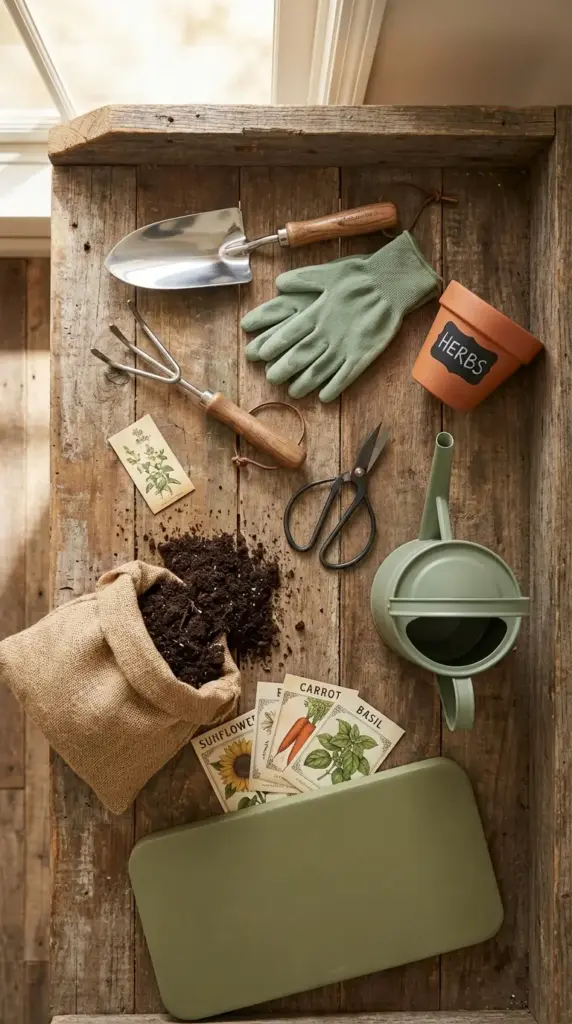
1. A Good Trowel (Hand Shovel) This is your most-used tool. Full stop. Look for one with a stainless steel head and a comfortable grip handle. The Fiskars Ergo Trowel (around $12 to $15) is a solid beginner option that won’t bend or break on you.
2. Garden Gloves Please don’t skip the gloves. Your hands will thank you. Look for gloves with reinforced fingertips and a snug fit — loose gloves are actually more annoying than no gloves. The Foxgloves brand makes gorgeous ones that feel almost like a second skin, around $20 to $25.
3. A Watering Can or Garden Hose with an Adjustable Nozzle For small container gardens, a 2-gallon watering can is perfect. For raised beds or larger spaces, invest in a hose with a multi-pattern nozzle — the “shower” setting is gentlest on seedlings and newly transplanted starts.
4. A Hand Cultivator (Three-Pronged Claw) This little tool is wildly underrated. It loosens compacted soil, breaks up clumps, and makes weeding so much easier. Usually $8 to $12 and worth every penny.
5. A Pruning Shears / Garden Scissors For harvesting, deadheading, and trimming. Fiskars and Felco both make reliable options. Expect to spend $15 to $30 for a pair that’ll last years.
6. A Garden Kneeler or Knee Pads Your knees are not going to forgive you if you skip this. A simple foam kneeling pad runs about $10 to $15 and makes a huge difference during long planting sessions.
7. Plant Markers or Labels You will forget what you planted where. I promise. Simple wooden stakes and a permanent marker work perfectly. Or grab some cute chalkboard markers for a more aesthetic look — usually $8 to $15 for a set.
8. A Garden Trug or Harvest Basket For carrying tools, harvesting produce, and generally feeling like the most put-together gardener on the block. Functional and adorable. Look for ones in natural materials like seagrass or wood for that elevated aesthetic.
What you DON’T need as a beginner:
- A full-size spade (unless you’re doing in-ground gardening)
- A rototiller
- Expensive electric tools
- A wheelbarrow (until your garden grows significantly)
- Seventeen different fertilizers
Keep it simple. Add tools as your garden grows.
Best Soil, Compost, and Fertilizer Choices for Vegetable Gardens
Okay, I need you to hear me on this one because soil is where most beginners either win or lose their garden before it even starts.
This is not the place to cut corners.
For Raised Beds:
The gold standard mix for raised bed vegetable gardening is called “Mel’s Mix” — developed by square foot gardening pioneer Mel Bartholomew. It’s:
- ⅓ blended compost
- ⅓ peat moss or coconut coir
- ⅓ coarse vermiculite
This combination creates a light, fluffy, nutrient-rich growing medium that drains well, holds moisture, and gives roots room to grow freely.
If mixing your own feels like too much, Miracle-Gro Performance Organics Raised Bed Mix and FoxFarm Ocean Forest Potting Soil are two of the most consistently recommended bagged options for beginners. Expect to pay $15 to $25 per bag — and yes, you’ll need several bags for a standard 4×8 raised bed.
Quick math: a 4×8 raised bed that’s 10 inches deep needs approximately 26.7 cubic feet of soil. Most bags are 1 to 2 cubic feet, so plan accordingly before your shopping trip.
For In-Ground Gardens:
Start with a soil test (seriously, do this first — kits are $15 to $20 at Home Depot or free through your local cooperative extension office). Then amend based on results.
Most in-ground garden soil benefits from:
- 2 to 4 inches of compost worked into the top 12 inches of soil
- A balanced organic fertilizer worked in at planting time
For Containers:
Never use straight garden soil or raised bed mix in containers — it compacts too much and drains poorly. Use a high-quality potting mix specifically labeled for containers. FoxFarm Happy Frog and Espoma Organic Potting Mix are both excellent choices.
Compost: The Single Best Thing You Can Add to Any Garden
I cannot overstate how important compost is. It improves soil structure, feeds beneficial microorganisms, adds nutrients, and helps soil retain moisture.
Your options:
Bagged compost: Look for “aged” or “finished” compost — not raw or partially composted material. Brands like Black Kow, Charlie’s Compost, and Coast of Maine are widely available and consistently good.
Homemade compost: If you have the space and inclination, a simple backyard compost bin is one of the best long-term investments you can make. Kitchen scraps + yard waste = free, incredible soil amendment. It takes 3 to 6 months to produce finished compost, so start one now for next season.
Worm castings: This is the caviar of compost. Expensive (around $20 to $30 for a small bag) but incredibly concentrated. A little goes a long way — mix a small amount into your planting holes or use it as a top dressing.
Fertilizer: Keep It Simple
For most beginner vegetable gardens, you don’t need a complicated fertilizer regimen. Here’s what actually works:
At planting time: Work a balanced slow-release organic fertilizer (like Espoma Garden-Tone or Dr. Earth Vegetable Fertilizer) into your soil. These release nutrients gradually over the season so you’re not constantly reapplying.
During the growing season: For heavy feeders like tomatoes and peppers, a liquid fertilizer every 2 to 3 weeks during peak growing season makes a noticeable difference. Fish emulsion (yes, it smells, but it works) or Tomato-Tone are both reliable choices.
One thing to avoid as a beginner: over-fertilizing. More is not better with fertilizer. Too much nitrogen produces lush, leafy plants with very little fruit. Follow package directions and resist the urge to add extra.
Raised Bed Materials: Wood, Metal, or Fabric?
This question comes up constantly and the answer genuinely depends on your priorities.
Let me break it down honestly:


Wood Raised Beds
The most popular choice — and for good reason. Wood looks beautiful, blends naturally into outdoor spaces, and is relatively affordable.
Best wood choices for raised beds:
- Cedar — the gold standard. Naturally rot-resistant, can last 10 to 20 years, smells amazing. Expect to pay a premium — a cedar 4×8 kit runs $80 to $200+
- Redwood — similar to cedar, beautiful grain, but harder to find outside the West Coast
- Douglas Fir — more affordable than cedar, lasts about 5 to 7 years before showing significant rot
Avoid pressure-treated lumber for vegetable gardens — older formulations contained arsenic, and while newer versions (ACQ-treated) are considered safer, many gardeners prefer to err on the side of caution with food crops.
Metal Raised Beds (Galvanized Steel or Corten)
These are having a major moment right now — and honestly, they deserve it.
Galvanized steel beds are sleek, modern, incredibly durable (lasting 20+ years), and look absolutely stunning in a well-designed outdoor space. They heat up faster in spring (great for early planting) but can also get very hot in peak summer in warmer climates like LA or Atlanta.
Brands like Birdies Garden Beds and Vego Garden make beautiful, high-quality metal beds. Prices range from $100 to $400+ depending on size.
If your home aesthetic leans modern, minimalist, or farmhouse-chic, metal beds are a gorgeous investment.
Fabric Grow Bags
The most affordable and flexible option. 5-gallon to 25-gallon fabric bags run anywhere from $5 to $30 and work surprisingly well for tomatoes, peppers, potatoes, and herbs.
The major advantage? Air pruning. When roots reach the fabric wall, they’re naturally pruned, which encourages a denser, healthier root system.
The downside: they dry out fast — sometimes needing water twice a day in peak summer heat. And they don’t look as polished as wood or metal.
Best for: beginners on a tight budget, renters, or anyone who wants to test the waters before committing to a permanent structure.
Watering Systems for Busy Women
Let’s be honest — inconsistent watering is one of the top reasons beginner gardens fail.
Life gets busy. You forget a day. Then two days. Then your tomatoes are stressed, your lettuce has bolted, and you’re feeling guilty about a garden that was supposed to bring you joy.
The solution is to automate as much of the watering as possible.
Drip Irrigation Systems
This is the most efficient watering method available for home vegetable gardens. Drip systems deliver water directly to the root zone of each plant, reducing water waste by up to 50% compared to overhead watering and keeping foliage dry (which reduces disease).
A basic drip irrigation kit for a 4×8 raised bed runs about $25 to $50 and can be connected to a programmable timer (around $20 to $30) so your garden waters itself while you’re at work, at the gym, or on a weekend trip.
This setup is genuinely life-changing for busy gardeners. Set it, forget it, come home to a thriving garden.
Soaker Hoses
A simpler, more affordable alternative to drip irrigation. Soaker hoses weep water slowly along their entire length, delivering moisture directly to the soil.
They’re less precise than drip systems but much easier to set up — just snake the hose through your bed and connect it to your outdoor spigot. A 25-foot soaker hose runs about $15 to $25.
Best for: in-ground gardens and larger raised beds where you want broad, even coverage.
Self-Watering Planters
For container gardeners, self-watering planters are an absolute game changer. They have a built-in water reservoir at the bottom that wicks moisture up to the roots as needed — meaning you might only need to refill the reservoir every 3 to 7 days instead of watering daily.
Brands like Lechuza, EarthBox, and Bloem make beautiful self-watering planters that look gorgeous on a patio or balcony. Prices range from $30 to $150+ depending on size and style.
Where to Shop for Affordable Gardening Supplies
You don’t have to spend a fortune. Here’s where to find the best deals:
In-Store:
- Home Depot and Lowe’s — great for soil, raised bed kits, basic tools, and seeds. Watch for spring sales in March and April when garden centers are fully stocked
- Walmart Garden Center — surprisingly solid selection of affordable basics
- Local nurseries and garden centers — slightly pricier but the staff knowledge is invaluable for beginners, and plant quality is often superior
Online:
- Amazon — convenient for tools, drip irrigation kits, grow bags, and specialty items
- Gardener’s Supply Company (gardeners.com) — my personal favorite for quality raised bed kits, stylish tools, and innovative garden products
- Etsy — for handmade plant markers, decorative garden signs, and unique accessories that add personality to your space
- Seed Savers Exchange (seedsavers.org) and Baker Creek Heirloom Seeds (rareseeds.com) — for high-quality, heirloom, and organic seeds at reasonable prices
Budget Hacks:
- Facebook Marketplace and Nextdoor are goldmines for used raised bed materials, tools, and even free compost or wood chips
- Dollar Tree carries surprisingly useful garden basics — plant markers, small tools, and seed starting supplies
- End-of-season sales in August and September can get you 50 to 70% off tools, planters, and supplies for next year
Stylish Garden Tools and Accessories That Double as Outdoor Decor
Because why shouldn’t your garden tools be as cute as your kitchen tools?
This is where gardening meets home decor — and honestly, it’s one of my favorite intersections.
Stylish tool sets to consider:
- Burgon & Ball Sophie Conran Collection — pastel-colored, beautifully designed tools that look like they belong in an editorial shoot. Around $40 to $80 for a set
- Barebones Living Garden Tools — gorgeous matte black finish with leather accents. Very aesthetic, very durable. Sets run $60 to $120
- Sneeboer Dutch Garden Tools — handmade in the Netherlands, these are heirloom-quality tools with a beautiful traditional look. An investment at $50 to $100+ per piece, but they last a lifetime
Decorative accessories that elevate your garden’s look:
- Ceramic or terracotta plant markers — so much prettier than plastic stakes
- A vintage-style metal watering can in sage green, dusty rose, or matte black
- Woven seagrass garden trugs for harvesting and carrying tools
- Copper plant labels — they develop a beautiful patina over time
- A wooden potting bench — functional workspace AND a stunning garden focal point
Your garden is an extension of your home. There’s absolutely no reason it can’t be as intentional and beautiful as any room inside it.
The bottom line? You need less than you think, but quality matters more than quantity.
Invest in a few good tools, get your soil right from the start, set up a simple watering system, and shop smart. That foundation will carry you through season after season.
✨ You’re doing amazing — keep going! Click Next below because the next section is all about garden care made simple — how to build a realistic weekly routine that keeps your vegetable garden thriving without taking over your life. We’re talking watering schedules, natural pest control, and how to handle the most common beginner mistakes before they derail your whole season. It’s practical, it’s doable, and it might just be the most useful section in this entire guide. See you there! 🌿

GIPHY App Key not set. Please check settings