

 The Home Growns
How to Design a Beautiful and Functional Vegetable Garden Layout
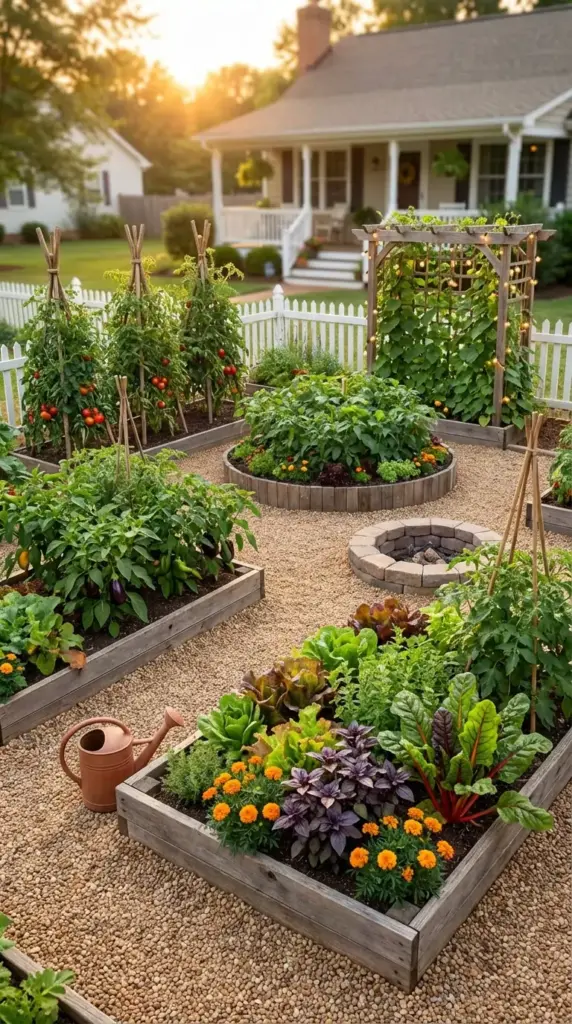
I remember the first time I saw a truly well-designed vegetable garden in person. It stopped me dead in my tracks.
It wasn’t just a garden. It was like someone had taken their living room aesthetic and brought it completely outside.
That moment changed how I thought about vegetable gardening forever. Because up until then, I thought “functional” and “beautiful” were two separate things. Turns out? They don’t have to be.
The Basics of Garden Bed Shapes
Most beginners default to a plain rectangle and call it a day. And honestly, there’s nothing wrong with that — rectangular beds are practical, easy to build, and simple to maintain.
But if you want your garden to feel intentional and designed, it’s worth knowing your options.
Here are the four most popular garden bed shapes:
Rectangular Beds The classic. Easy to build, easy to plan around, and works with almost any yard layout. Most beginner gardeners start here and never look back — and that’s totally valid.
Circular Beds These add a soft, organic feel to your outdoor space. They work beautifully as a centerpiece in a larger yard and pair really well with a cottage or bohemian home aesthetic. The downside? They can be trickier to build and harder to maximize space in.
Keyhole Beds Okay, this one is underrated and I will die on that hill. A keyhole bed is a circular bed with a narrow path cut into the center — like a keyhole shape. It gives you access to every single inch of the bed without stepping on your soil. For small spaces, it’s genius.
Cottage-Style Beds These are more free-form and relaxed — think irregular shapes, mixed plantings, flowers tucked in with vegetables. If your home decor leans romantic, vintage, or maximalist, this style will feel right at home in your backyard.
Blending Aesthetics With Function
Here’s the thing about garden design that took me way too long to figure out: beauty and function are not enemies.
In fact, the most productive gardens I’ve ever seen are also the most visually intentional ones.
Think of your garden the way an interior designer thinks about a room. Every element should serve a purpose AND look good doing it.
A few principles I swear by:
- Define your edges. Clean borders — whether it’s stone, wood, metal edging, or even a row of herbs — instantly make a garden look more polished and put-together.
- Create visual flow. Your eye should move naturally through the space. Varying plant heights, textures, and colors helps with this.
- Leave breathing room. Overcrowded gardens look messy AND underperform. Negative space is your friend, both visually and horticulturally.
Color, Texture, and Height: Designing Like an Interior Designer
This is where gardening gets really fun — especially if you love home decor and design.
Think about your garden in three layers, just like you would when styling a bookshelf or a living room vignette:
The High Layer (Back or Center) Tall plants like indeterminate tomatoes (up to 6 feet), pole beans, or corn go here. They create drama and vertical interest. In a rectangular bed, place these at the north end so they don’t shade shorter plants.
The Mid Layer (Middle) Medium-height plants like peppers (18-24 inches), bush beans, and eggplant fill this zone. These are your workhorses — productive, manageable, and visually grounding.
The Low Layer (Front or Edges) Low-growing plants like lettuce, herbs, strawberries, and radishes line the front. They soften the edges of your beds and make the whole design feel lush and intentional.
Now add color. Don’t underestimate this.
- Deep purple basil next to bright red tomatoes? Stunning.
- Yellow pear tomatoes alongside dark green kale? Chef’s kiss.
- Rainbow chard is basically a decorative plant that you can also eat — it comes in red, yellow, orange, and white stems.
Texture matters too. Mix broad-leafed plants like squash with feathery ones like carrots or dill. The contrast makes everything look more intentional and designed.
Companion Planting 101: Which Vegetables Grow Best Together
Okay, companion planting is one of those topics where I went from total skeptic to complete believer.
The idea is simple: some plants genuinely help each other grow when planted nearby. Others? They’re basically frenemies and will stunt each other’s growth.


Here are the most reliable companion planting combinations for beginners:
The Three Sisters 🌽 Corn, beans, and squash. This is a Native American planting method that’s been used for centuries — and it works. Corn provides a structure for beans to climb, beans fix nitrogen in the soil, and squash leaves shade the ground to retain moisture and suppress weeds. It’s basically a perfect little ecosystem.
Tomatoes + Basil This is the most famous pairing in the garden world. Basil is believed to repel aphids, whiteflies, and tomato hornworms while potentially improving tomato flavor. Plus they look gorgeous together. Plant basil about 12 inches away from your tomato plants.
Carrots + Onions These two are a classic buddy duo. Onions repel carrot flies, and carrots repel onion flies. They’re basically protecting each other. Plant them in alternating rows for best results.
Peppers + Marigolds Marigolds are the unsung heroes of the vegetable garden. They repel nematodes, aphids, and a whole host of other pests — and they add a gorgeous pop of orange and yellow color to your beds. Plant them as a border around your pepper plants.
What NOT to plant together:
- Tomatoes and fennel — fennel is basically toxic to most vegetables. Keep it far away or in its own container.
- Onions and beans — they stunt each other’s growth
- Cucumbers and sage — sage inhibits cucumber growth
Spacing Guidelines to Maximize Yield Without Overcrowding
This is the mistake I see constantly with beginner gardeners — and I made it myself for years.
Overcrowding your plants doesn’t give you more vegetables. It gives you fewer. Plants compete for water, nutrients, and light when they’re too close together, and everybody loses.
Here are the spacing guidelines you actually need to know:
| Vegetable | Spacing Needed |
|---|---|
| Tomatoes (indeterminate) | 24-36 inches apart |
| Tomatoes (determinate/bush) | 18-24 inches apart |
| Peppers | 18 inches apart |
| Zucchini/Squash | 36-48 inches apart |
| Cucumbers | 12 inches apart (on a trellis) |
| Lettuce | 6-8 inches apart |
| Carrots | 3-4 inches apart |
| Kale/Chard | 12-18 inches apart |
| Basil | 12 inches apart |
| Radishes | 2-3 inches apart |
Zucchini spacing always shocks people. Those plants get HUGE. I once planted four zucchini plants thinking I was being conservative — they took over half my raised bed by August.
One zucchini plant per household is genuinely enough. I’m only half joking. 😂
Pathways, Borders, and Decorative Elements
This is the part where your garden goes from “nice” to “wait, did you hire someone?”
Pathways serve two purposes: they give you access to your beds without compacting the soil, and they define the structure of your garden visually.
Popular pathway materials include:
- Pea gravel — affordable, great drainage, looks clean and modern
- Stepping stones — charming and customizable, works great in cottage-style gardens
- Wood chips or bark mulch — natural, soft underfoot, and suppresses weeds between beds
- Brick pavers — more permanent, very polished, great for formal garden designs
Aim for pathways that are at least 18 inches wide — enough to walk comfortably and maneuver a watering can or small wheelbarrow.
Borders and edging are what separate a designed garden from a random one. Even a simple metal landscape edging strip (around $20 to $30 for a 20-foot roll at most hardware stores) makes an enormous visual difference.
Decorative elements are where you get to have fun and show your personality:
- Painted plant markers or chalkboard stakes — functional and adorable
- A small trellis or obelisk as a focal point in the center of a bed
- Terracotta pots clustered near the entrance of your garden
- Solar fairy lights strung along a fence or trellis for evening ambiance 🌟
- A vintage watering can or weathered wooden sign as a garden vignette
These little details are what make your garden feel like an extension of your home — not just a patch of dirt where food happens to grow.
Designing a vegetable garden layout is genuinely one of the most creative and satisfying parts of the whole process. You don’t need a landscape architecture degree or a big budget — you just need a little intention and a willingness to think about your garden as a designed space.
Start with your bed shape, layer your plants by height, add some companion planting magic, and finish with pathways and details that make you smile every time you walk outside.
That’s really all it takes.
🥦 Keep that momentum going! Click Next below because in the next section, we’re getting into one of the most practical parts of this whole guide — exactly which vegetables to plant as a beginner, and when to plant them based on where you live. Whether you’re in Atlanta or Minneapolis, we’ve got a planting timeline that’ll set you up for your best harvest yet. Don’t miss it!

GIPHY App Key not set. Please check settings