

 The Home Growns
Choosing the Best Vegetable Garden Type for Your Space and Lifestyle
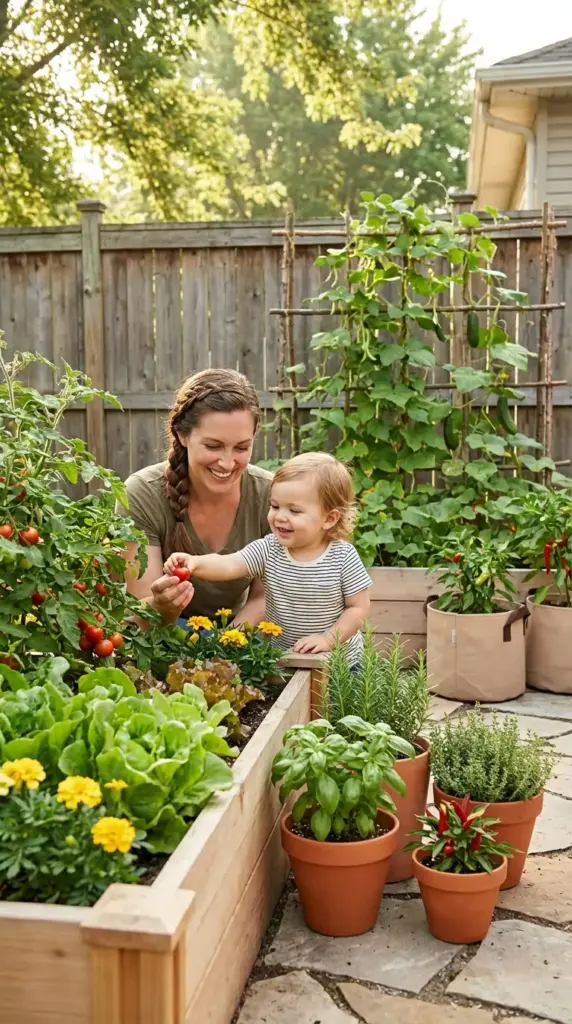
Can I be honest with you for a second? When I first started researching garden types, I went down a rabbit hole so deep I almost gave up before I even started.
There are so many options. And everyone online seems to have a strong opinion about which one is “the best.”
Here’s what I’ve learned after years of trial and error: the best garden type is the one that actually works for YOUR life. Full stop.
The Most Popular Vegetable Garden Types (A Quick Breakdown)
Before we get into the nitty-gritty, let me give you a quick lay of the land.
There are five main types of vegetable gardens most beginners will choose from:
- Raised bed gardens — elevated planting boxes filled with custom soil mix
- In-ground gardens — traditional planting directly into your existing yard soil
- Container gardens — growing vegetables in pots, buckets, or planters
- Vertical gardens — growing upward using trellises, walls, or stacked planters
- Square foot gardens — a highly organized grid system that maximizes small spaces
Each one has its place. And honestly? A lot of gardeners (myself included) end up mixing two or three of these together over time.
Raised Bed Gardens: The Fan Favorite for Good Reason
I’ll be upfront — raised beds are my personal ride-or-die.
They look gorgeous, they’re easy to manage, and you have complete control over your soil quality. That last part is huge for beginners.
The average raised bed is about 4 feet wide by 8 feet long and 10 to 12 inches deep. That size lets you reach the center from either side without stepping on your soil — which matters more than you’d think.
Pros:
- Better drainage than in-ground gardens
- Fewer weeds (seriously, it’s a game changer)
- Warmer soil means earlier planting in spring
- Looks beautiful and intentional in your outdoor space
Cons:
- Upfront cost can run $100 to $300+ depending on materials
- Needs to be refilled with fresh compost each season
- Not ideal if you want to grow large quantities
If you care about your garden looking as good as it performs, raised beds are absolutely the move.
In-Ground Gardens: Old School But Still Solid
In-ground gardening is the OG. It’s how our grandmothers did it, and there’s something really grounding (pun intended) about planting directly into the earth.
It’s also the most budget-friendly option — basically free if you already have decent yard soil.
But here’s the thing nobody warns you about: most urban and suburban soil is not great. Like, at all.
In cities like Chicago, Philadelphia, and Washington DC, soil can contain old construction debris, compacted clay, or even traces of lead from older infrastructure. Before you plant anything in-ground, get a soil test. You can grab a basic kit at Home Depot for around $15 to $20, or send a sample to your local cooperative extension office for a more detailed analysis.
Pros:
- Low to no startup cost
- Great for large-scale growing
- Deep-rooted vegetables like carrots and potatoes thrive here
Cons:
- Soil quality is unpredictable
- More weeding required
- Harder on your back (all that bending!)
Container Gardens: The City Girl’s Best Friend
Okay, if you’re living in a New York City apartment, a Philly row home, or a DC condo with a balcony — container gardening might literally be your only option. And that’s totally fine!
You can grow a surprisingly productive vegetable garden in containers. I’ve seen people grow tomatoes, peppers, lettuce, herbs, and even cucumbers in pots on a fire escape.
The key is choosing the right container size for each vegetable:
- Tomatoes need at least a 5-gallon pot (10-gallon is better)
- Lettuce and herbs do great in shallow 6 to 8 inch containers
- Peppers are happy in a 3 to 5 gallon pot
- Cucumbers need at least a 5-gallon container with a small trellis
Pros:


- Perfect for small spaces, balconies, and patios
- Portable — move them to follow the sun
- Great for renters who can’t modify their space
Cons:
- Dries out faster — you may need to water daily in summer
- Limited root space restricts some plants
- Can get pricey if you’re buying lots of quality pots
Vertical Gardens: Small Space, Big Impact
This one is for my design-loving, space-challenged ladies. 🙌
Vertical gardening is exactly what it sounds like — you grow UP instead of out. Think wall-mounted planters, pallet gardens, tiered shelving, or trellises against a fence.
It’s one of the most aesthetically stunning garden styles, and it works incredibly well in tight urban spaces.
Great vegetables for vertical growing include:
- Pole beans and peas — natural climbers
- Cucumbers — love a trellis
- Cherry tomatoes — with proper support
- Lettuce and herbs — perfect for wall-mounted pocket planters
One thing to watch: vertical gardens dry out even faster than containers, so a drip irrigation system or self-watering setup is worth considering from the start.
Square Foot Gardening: The Overachiever’s Dream
Okay, I have a soft spot for square foot gardening because it is so satisfying for type-A personalities.
Developed by Mel Bartholomew in the 1980s, the method divides your garden bed into a grid of 1-foot squares, with each square dedicated to a specific plant based on its spacing needs.
For example:
- 1 tomato plant per square
- 4 lettuce plants per square
- 9 spinach plants per square
- 16 radishes per square
It maximizes every single inch of your growing space and virtually eliminates guesswork for beginners. If you’re the kind of person who loves a good spreadsheet, this method will feel like home.
Which Garden Type Fits Your Lifestyle and Budget?
Let me make this super simple for you.
| Your Situation | Best Garden Type |
|---|---|
| Small urban space or balcony | Container or Vertical |
| Tight budget, have a yard | In-Ground |
| Want beauty + function | Raised Bed |
| Love organization and efficiency | Square Foot |
| Renting, can’t modify space | Container or Vertical Pallet |
Time is also a huge factor. Raised beds and square foot gardens tend to require less ongoing maintenance once established. In-ground gardens need more consistent weeding and soil care.
If you’re a busy mom juggling work, kids, and everything else — raised beds or containers will give you the most garden for the least amount of daily effort.
Kid-Friendly Garden Types for Moms Who Want to Involve Their Children
This is one of my favorite topics because gardening with kids is genuinely magical.
The best garden types for little ones are raised beds and containers — both are at a manageable height, easy to access, and low-risk for little hands.
A few tips that have worked really well:
- Give each child their own small container or raised bed section. Ownership = investment. Kids take way more interest when it’s “their” plant.
- Start with fast-growing vegetables like radishes (ready in 25 days!), lettuce, or cherry tomatoes so they don’t lose interest waiting.
- Let them pick the seeds. A trip to the garden center where they choose their own packet is half the fun.
Studies show that kids who grow their own food are significantly more likely to eat vegetables — including ones they previously refused. So there’s a parenting win hiding in that garden bed! 🥕
Choosing your garden type doesn’t have to be stressful. Start with what fits your space, your budget, and your life right now. You can always expand and experiment later — that’s honestly the best part of gardening.
The “perfect” garden is the one you’ll actually show up for.
🌱 Psst — don’t go anywhere! Hit that Next button below because the next section is where things get really fun. We’re diving into how to design a vegetable garden layout that’s both beautiful AND functional — think Pinterest-worthy raised beds, clever companion planting combos, and how to style your garden like a pro. You’re going to want to save that one.

GIPHY App Key not set. Please check settings