

 The Home Growns
7. Tulip + Greenery Combos That Elevate Simple Blooms
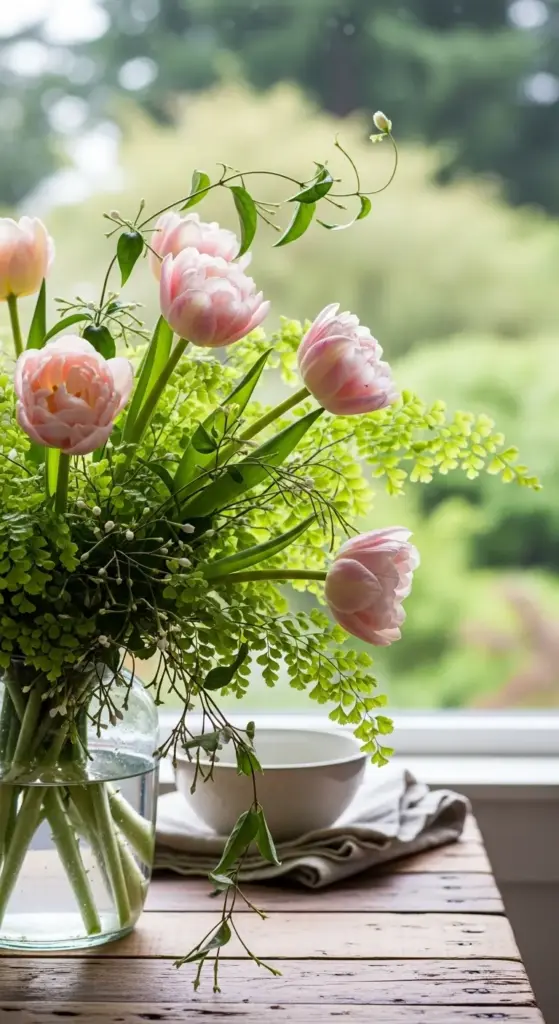
I used to think greenery was just filler—the boring stuff florists tossed in to stretch expensive blooms.
Then I paired ‘Angelique’ tulips with nothing but eucalyptus and watched my sister gasp like I’d hired a professional.
Turns out the right leaves don’t just support flowers—they transform them.
Delicate Companions That Whisper, Not Shout
Trailing jasmine is my secret weapon for romantic arrangements.
Those tiny white flowers and slender vines weave between tulip stems like nature’s lace.
I tucked some into a mason jar arrangement last spring and my husband actually noticed the greenery.
High praise from a man who once asked if tulips grew on trees. True story.
Maidenhair fern brings this impossibly delicate texture that makes tulips look luxurious.
But fair warning—it wilts fast if stems aren’t fully submerged.
I lost an entire batch during a dinner party prep because I got lazy with water levels.
Now I dunk the whole fern upside down for 30 seconds before arranging.
Game changer.
And smilax? That wiry vine looks unassuming in the bunch.
But once you loosen its tendrils around tulip stems, it creates this effortless garden-picked vibe.
No stiff, grocery-store bouquet energy here.
When Greens Steal the Show (And How to Stop It)
I learned the hard way that not all greenery plays nice with tulips’ elegance.
Brought home a bunch of monster monstera leaves once—thought they’d look modern and bold.
Instead they completely swallowed my delicate pink tulips like a floral black hole.
Lesson learned: tulips need airy, fine-textured greens.
Nothing wider than your thumb.
Ruscus? Too stiff.
Lemon leaf? Too glossy and loud.
Stick to greens with movement—things that sway when you walk past the vase.
Your tulips should remain the divas of the arrangement.
Greens are just the backup dancers.
Foraging Like a Seattle Pro (Even If You’re Not in Seattle)
Living near woods or parks? You’ve got free floral supplies growing wild.


Salal leaves are everywhere in Pacific Northwest gardens—and they last forever in water.
Wipe the undersides with a damp cloth first to remove dust.
Oregon grape has these gorgeous holly-like leaves with subtle yellow flowers in spring.
Snip branches carefully—never strip a single plant bare.
And vine maple in early fall? Those burgundy-tinged leaves pair stunningly with deep purple tulips.
Just avoid anything with milky sap (like spurge) or strong odors.
And please don’t forage from protected parks or private property without permission.
I once got gently scolded by a very nice Seattle gardener for eyeing her salal patch.
Now I just ask. Most people say yes and share pruning tips too.
The 60-Second Greenery Prep Trick Nobody Talks About
Here’s the bacteria secret: greens often carry more gunk than tulip stems.
Dirt. Sap. Invisible microbes.
If you toss them straight in your vase, they’ll cloud the water fast and choke your tulips.
My quick fix:
Fill a bowl with cool water.
Swish each greenery stem for 10 seconds while gently rubbing the lower 3 inches.
Then recut stems underwater at a 45-degree angle.
Only then add them to your vase.
Finally add tulips last—they’re more delicate and shouldn’t sit in murky water while you prep greens.
This tiny ritual added nearly three extra days to my arrangements last season.
Worth the minute of effort, I promise.
Greenery isn’t an afterthought.
It’s the quiet magic that makes tulips look like they belong exactly where you placed them.
And when you nail the combo? People will assume you spent a fortune at a fancy florist.
Next up—let’s talk about the holy grail for busy folks: low-maintenance tulip centerpieces that look amazing with almost zero effort. Perfect for when you’d rather be sipping wine with guests than fussing with stems all night. 😊


GIPHY App Key not set. Please check settings