

 The Home Growns
5. Unexpected Vessels: Beyond Traditional Vases
I once spent $45 on a “designer” vase that looked like a melted ice cream cone.
My tulips lasted two days and the whole thing tipped over when the cat sneezed.
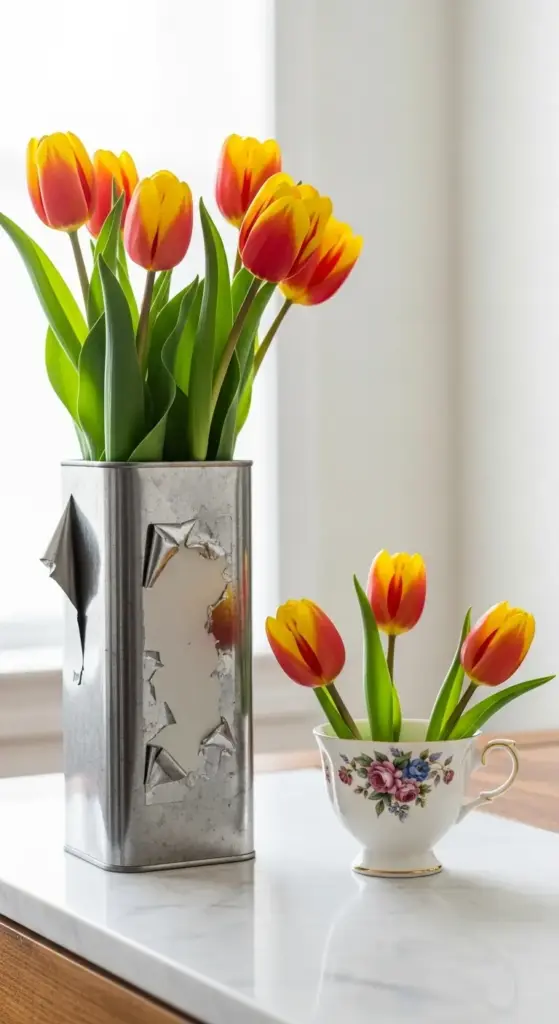
Meanwhile, the $3 thrifted olive oil tin on my counter? Held tulips upright for a full week.
Go figure.
Teacups, Tins, and Other Kitchen Castaways
My favorite tulip vessel lives in my kitchen junk drawer: an empty olive oil tin with the label carefully peeled off.
Rinse it well (nobody wants greasy stems), fill with water, and drop in 5–7 short tulip stems.
The narrow opening naturally supports stems without floral tape.
Plus that rustic metal look against soft petals? Unexpected magic.
Vintage teacups work beautifully too—but only for short-stemmed tulips.
I learned this after cramming full-length stems into my grandma’s delicate china cup.
Looked like a floral traffic jam.
Now I trim stems to just 4–5 inches for teacup arrangements.
Place three mismatched cups on a tray for instant charm.
Thrifted ceramic pitchers are my secret weapon for big, loose arrangements.
The wide mouth lets tulips sprawl naturally while the narrow neck provides subtle support.
I found a speckled cream pitcher at a Seattle Goodwill for $1.99.
It’s held tulips every spring for three years running.
Shallow Bowls + Floral Frogs = Game Changer
Here’s a trick most beginners miss: tulips don’t always need height.
A low shallow bowl arrangement with a floral frog (that spiky metal disc florists use) creates this gorgeous sprawling effect perfect for dining tables.
I was skeptical until I tried it for a dinner party.
Dropped the frog in a white ceramic bowl, added water, then pushed 20 tulip stems into the pins at varying angles.
The result looked expensive and intentional—like something from a Martha Stewart spread.
Guests kept complimenting it while actually being able to see each other across the table.
No more vase blocking conversation!
Floral frogs cost like $8 online and work forever.
Way cheaper than buying new vases every season.
Just make sure your bowl is heavy enough not to tip when stems get top-heavy.
Learned that one during a dramatic tulip avalanche mid-dinner. Awkward.
Wine Bottles Get a Makeover
Empty wine bottles are everywhere in my house (hey, I’m only human).
Instead of recycling them, I’ve tried three finishes:


Raw: Just rinse and use as-is. The green glass looks gorgeous with yellow tulips.
Painted: Matte black spray paint transforms them into modern vessels. Let dry 24 hours so paint doesn’t flake in water.
Sandblasted: Took a few bottles to a local maker who blasted off the labels. Frosted glass with tulips inside? Dreamy.
Pro tip: Always remove labels completely.
I once left a tiny paper edge and it slowly disintegrated into sad confetti floating around my stems.
Not the aesthetic.
Wine bottles work best when you trim tulip stems to match the bottle height.
Too long and they flop over the narrow neck.
Too short and they disappear inside.
Aim for stems that extend 6–8 inches above the bottle rim.
Why Shape Trumps Size Every Time
Here’s the truth nobody tells you: vessel shape affects tulip longevity more than size.
A narrow-necked bottle keeps stems clustered, reducing water loss.
A wide bowl exposes more stem surface to air, speeding up dehydration.
I tested this accidentally when I moved tulips from a cylinder vase to a fishbowl.
Same water. Same room. Same tulips.
The fishbowl arrangement drooped 36 hours faster.
The tight neck of the cylinder created a humid microclimate around the stems.
Who knew?
For longest-lasting tulips in unconventional vessels:
Choose containers with openings 2–4 inches wide.
Avoid super-wide bowls unless you’re using a floral frog to keep stems bunched.
And always—always—wash vessels thoroughly before use.
Bacteria hiding in that vintage pitcher is the real reason your tulips died fast.
Not bad luck.
Trust me on this one.
Finding beauty in ordinary objects makes flower arranging feel accessible again.
No fancy tools required—just curiosity and a willingness to see potential in what you already own.
Which brings me to my favorite trick for making tulips look expensive without spending a dime… color blocking. Wait until you see what happens when you group single-color bunches together. 😊

GIPHY App Key not set. Please check settings