

 The Home Growns
2. The Famous “Penny Trick” Explained (Does It Really Work?)
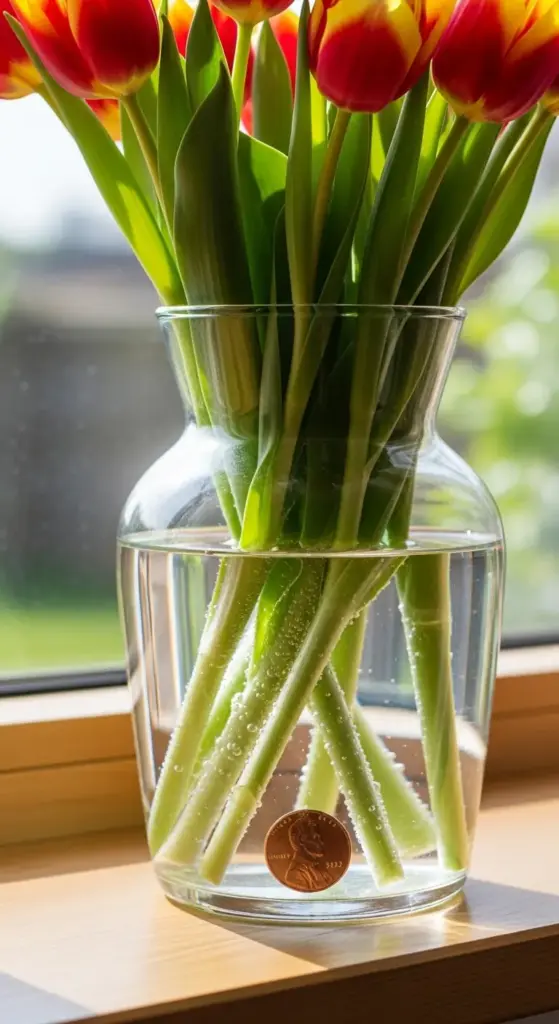
I’ll be real with you—I rolled my eyes the first time someone told me to toss a penny in my tulip vase.
What am I, a wishing well? I thought.
But after watching $28 worth of ‘Menton’ tulips go limp before my book club arrived, I was desperate enough to try anything.
Even loose change.
The Copper Science Behind the Magic
Turns out there’s actual botany happening here.
Copper ions from the penny slowly leach into the water and supposedly interfere with ethylene production—that’s the gas flowers release when they’re stressed or aging.
Less ethylene means slower wilting.
It also creates a slightly hostile environment for bacteria that gunk up stem ends.
Think of it like a tiny bodyguard swimming around your tulip stems.
But—and this is critical—not all pennies are created equal.
Which Pennies Actually Work (Spoiler: Your Jar of Change Might Be Useless)
Post-1982 pennies? Mostly zinc with a thin copper coating.
They’ll help a tiny bit, but you’re basically adding metallic confetti.
You want pre-1982 pennies—those are 95% pure copper and noticeably heavier.
I keep a little baggie of them in my junk drawer specifically for flower emergencies.
Just one per vase does the trick.
Drop it in before adding water so it starts releasing ions immediately.
And please wash it first—nobody wants mystery grime in their arrangement.
My Three-Apartment NYC Penny Test (The Results Surprised Me)
I got weirdly scientific about this.
Same tulip variety. Same vase type. Same stem cut angle.
But three different water sources:


Apartment 1: Old pipes, hard water, slight metallic taste. Penny worked like a charm—tulips stayed perky 6 days.
Apartment 2: Fancy filtered tap water. Penny helped but only added about 2 extra days of freshness.
Apartment 3: Softened water from building system. Penny did almost nothing. Tulips drooped by day 3 regardless.
Moral of the story? Water quality matters more than the penny itself.
The trick works best when your tap water isn’t already heavily treated.
If you’re on well water or have older plumbing, you’ll see dramatic results.
If your building has a whole-house filtration system? Might not notice much difference.
What to Use When You’re Fresh Out of Pennies
No copper coin handy? Try these alternatives I’ve tested:
A crushed aspirin (acetylsalicylic acid mimics the copper effect somewhat).
A teaspoon of vodka (kills bacteria but won’t help with ethylene—use sparingly or stems get tipsy).
Or just grab commercial flower food—it’s basically sugar + acidifier + bleach in precise ratios.
Honestly? For tulips specifically, I’ve found the penny beats all three.
But for mixed bouquets with delicate blooms, I stick with proper flower food.
Don’t try the bleach trick you saw on Pinterest—way too easy to overdose and cook your stems.
Learned that one the hard way after a very sad funeral arrangement incident. Oops.
The penny trick isn’t magic.
But it’s a cheap, easy droopy tulip fix that absolutely extends vase life when conditions cooperate.
And at this point, I’ll take any help I can get—especially when tulip season’s so short.
Speaking of short-lived beauty… ever tried arranging tulips in a mason jar only to have them look like a sad bouquet from a gas station? Yeah, me too. Let’s fix that next. 😊




GIPHY App Key not set. Please check settings